
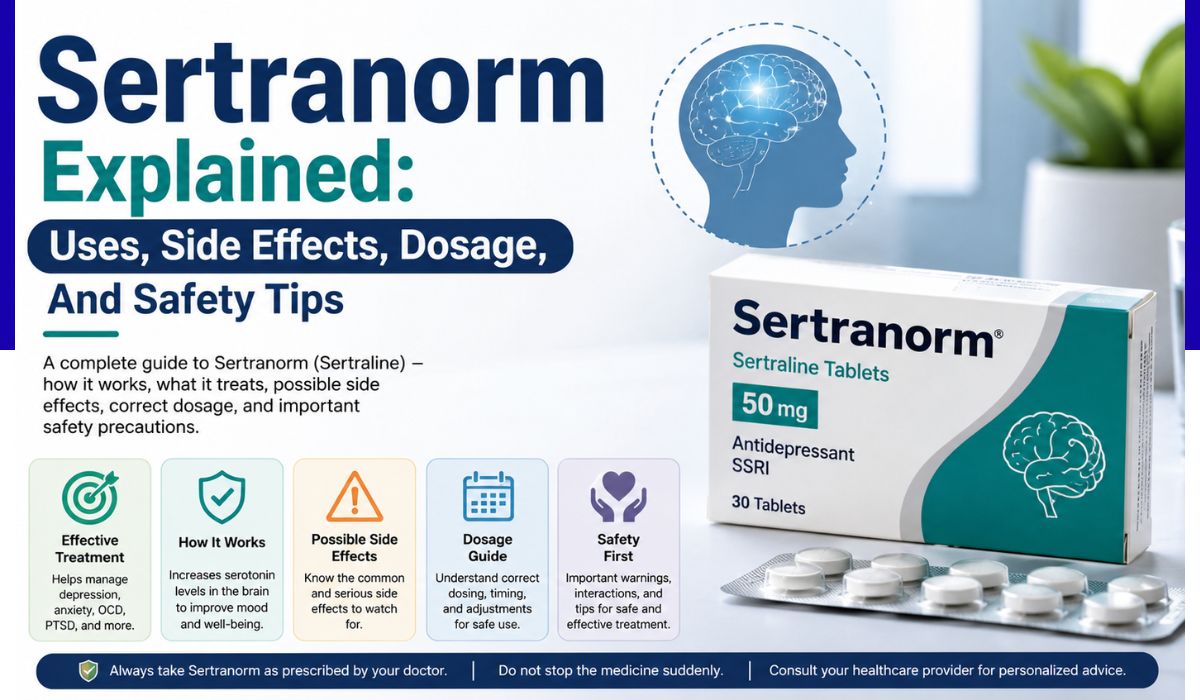
Sertranorm is a prescription medicine that contains sertraline, a widely used antidepressant from the Selective Serotonin Reuptake Inhibitor (SSRI) family. Doctors commonly prescribe Sertranorm for depression, anxiety disorders, panic attacks, obsessive-compulsive disorder, and several other mental health conditions. Over the years, sertraline-based medicines have become some of the most recognized treatments for emotional and mood-related disorders because they help improve serotonin activity in the brain.
Many people searching for information about Sertranorm want clear answers about how it works, how long it takes to help, what side effects to expect, and whether the medication is safe for long-term use. Those are important questions because antidepressants affect brain chemistry gradually and require careful use. Understanding the benefits and risks can help patients feel more prepared and confident during treatment.
This detailed guide explains everything you should know about Sertranorm in simple language. From dosage and side effects to drug interactions and safety tips, this article is designed to give readers trustworthy, practical, and easy-to-understand information for 2026.
Quick Bio Information About Sertranorm
| Quick Fact | Details |
|---|---|
| Generic Name | Sertraline |
| Brand Mentioned | Sertranorm |
| Drug Class | SSRI Antidepressant |
| Main Use | Depression And Anxiety Disorders |
| Common Form | Tablets |
| Typical Starting Dose | 25–50 mg Daily |
| Maximum Dose | 200 mg Daily |
| Prescription Required | Yes |
| Time To Feel Benefits | Usually 4–6 Weeks |
| Common Side Effects | Nausea, Headache, Insomnia |
| Serious Risk | Serotonin Syndrome |
| Approved For OCD | Yes |
| Used For PTSD | Yes |
| Alcohol Recommended? | No |
| Pregnancy Caution | Yes |
| Withdrawal Possible | Yes |
| Can Cause Sexual Side Effects | Yes |
| Once Daily Medicine | Usually Yes |
What Is Sertranorm?
Sertranorm is a medication that contains sertraline hydrochloride as its active ingredient. Sertraline belongs to a group of medicines called SSRIs, which are commonly used to treat depression and anxiety-related conditions. SSRIs work differently from older antidepressants because they mainly target serotonin, a chemical messenger connected to mood, emotions, sleep, and stress response.
Unlike sedatives or tranquilizers, Sertranorm does not instantly calm a person or create a “high.” Instead, it works slowly over time to improve emotional balance and reduce distressing symptoms. Doctors may prescribe it for both short-term symptom relief and long-term management, depending on the condition being treated.
Sertranorm is usually available in tablet form, although oral concentrate versions may also exist in some regions. Most people take it once daily, either in the morning or evening.
How Sertranorm Works In The Brain
Sertranorm increases serotonin levels in the brain by blocking the reabsorption of serotonin into nerve cells. This process allows more serotonin to remain active between brain cells, improving communication within areas that regulate mood and emotions.
extSerotoninReuptakeInhibitionightarrowextIncreasedSerotoninActivityext{Serotonin Reuptake Inhibition} ightarrow ext{Increased Serotonin Activity}
Although the chemical effect begins quickly, emotional improvement takes longer because the brain needs time to adapt. This is why many people do not feel major benefits during the first week or two. Over time, brain receptors adjust to the increased serotonin activity, which may help reduce symptoms of depression, anxiety, panic, and obsessive thinking.
Research also suggests that long-term SSRI use may support neuroplasticity, which refers to the brain’s ability to adapt and form healthier communication patterns. This may explain why many patients gradually feel emotionally steadier after several weeks of consistent treatment.
Conditions Treated With Sertranorm
Doctors prescribe Sertranorm for several mental health conditions. One of the most common is Major Depressive Disorder, which may involve persistent sadness, hopelessness, low energy, and loss of interest in daily life.
Sertranorm is also approved for Panic Disorder, where people experience sudden episodes of intense fear accompanied by symptoms like chest tightness, dizziness, sweating, or a racing heart. Many individuals with panic disorder worry constantly about future attacks, and treatment may help reduce both fear and attack frequency.
Another common use is Social Anxiety Disorder. People with this condition often feel extreme nervousness in social situations and fear embarrassment or judgment. Sertranorm may help reduce excessive fear and self-consciousness over time.
The medication is also used for Obsessive-Compulsive Disorder (OCD), Post-Traumatic Stress Disorder (PTSD), and Premenstrual Dysphoric Disorder (PMDD). In OCD, it may help reduce intrusive thoughts and repetitive behaviors. In PTSD, it may help lessen flashbacks, nightmares, and emotional hyperarousal.
How Long Sertranorm Takes To Work
One of the biggest concerns patients have is how quickly Sertranorm starts helping. While some people notice mild improvement within the first two weeks, full benefits often take four to six weeks or longer.
During the early stages of treatment, some symptoms may temporarily feel worse before improving. For example, anxiety, restlessness, nausea, or sleep problems can appear during the first few weeks. This happens because the brain is adjusting to changing serotonin levels.
Consistency matters greatly. Missing doses or stopping treatment too early can interfere with progress. Doctors usually recommend taking the medication daily at the same time to maintain stable levels in the body.
People often experience gradual improvement rather than sudden changes. Small signs such as improved sleep, reduced panic, or slightly better energy may appear first before major mood improvement occurs.
Recommended Dosage And Proper Use
The standard starting dose for many adults is 50 mg once daily. However, some conditions such as panic disorder may begin at 25 mg daily to reduce the chance of side effects during the adjustment period.
25 mg→50 mg→200 mg Maximum Daily Dose25\text{ mg} \rightarrow 50\text{ mg} \rightarrow 200\text{ mg Maximum Daily Dose}
Doctors may gradually increase the dose depending on symptom response and tolerance. The maximum recommended daily dose is generally 200 mg. Dose adjustments are usually made slowly, often at intervals of at least one week.
Sertranorm can usually be taken with or without food. Some people prefer taking it in the morning to avoid sleep problems, while others take it in the evening if it causes daytime tiredness.
If a dose is missed, it should be taken as soon as remembered unless the next scheduled dose is very close. Doubling doses is not recommended.
Common Side Effects Of Sertranorm
Like most antidepressants, Sertranorm can cause side effects, especially during the first few weeks of treatment. Common reactions include nausea, diarrhea, headache, dizziness, dry mouth, sweating, insomnia, and fatigue.
Some people notice appetite changes or mild weight changes over time. Sexual side effects are also relatively common and may include decreased libido, delayed ejaculation, erectile dysfunction, or difficulty reaching orgasm.
For many patients, side effects become milder after the body adjusts to the medication. Taking the medicine with food may help reduce nausea, while maintaining a regular sleep schedule may improve insomnia.
Although side effects can be uncomfortable, many people find that the emotional benefits eventually outweigh the temporary adjustment symptoms.
Serious Side Effects And Warning Signs
Serious side effects from Sertranorm are less common but still important to understand. One of the most serious risks is Serotonin Syndrome, a potentially dangerous condition caused by excessive serotonin activity.
Symptoms may include high fever, muscle rigidity, rapid heartbeat, heavy sweating, agitation, confusion, and tremors. Emergency medical care is necessary if these symptoms appear.
Another important concern involves suicidal thoughts, particularly in teenagers, young adults, and people during the first weeks of treatment or after dose changes. Family members are often advised to monitor mood and behavior closely during this period.
Rare but serious risks may also include seizures, abnormal bleeding, severe allergic reactions, hyponatremia, and heart rhythm changes known as QT prolongation.
Drug Interactions And Medicines To Avoid
Sertranorm can interact with several medications and supplements. One of the most dangerous combinations involves Monoamine Oxidase Inhibitors (MAOIs), which can dramatically increase serotonin levels and trigger Serotonin Syndrome.
Other serotonergic medicines such as tramadol, triptans, or certain migraine treatments may also increase serotonin-related risks. Combining Sertranorm with blood-thinning medications like warfarin, aspirin, or NSAIDs can raise the risk of bleeding.
Alcohol is generally not recommended while taking Sertranorm because it may worsen dizziness, drowsiness, and impaired judgment. Herbal supplements like St. John’s Wort should also be avoided due to increased serotonergic activity.
Grapefruit juice may affect medication levels in some individuals, so patients should discuss dietary concerns with their healthcare provider.
Who Should Use Sertranorm Carefully
Certain groups require additional caution when using Sertranorm. Older adults may face a higher risk of low sodium levels and bleeding complications. Patients with liver disease may process the medication more slowly, leading to increased drug exposure.
People with seizure disorders or bipolar disorder also require careful monitoring. In bipolar disorder, antidepressants may sometimes trigger manic episodes if not properly managed.
Pregnancy and breastfeeding require individualized medical decisions. Studies suggest that using SSRIs late in pregnancy may increase the risk of complications such as Persistent Pulmonary Hypertension Of The Newborn (PPHN). Because sertraline can pass into breast milk, doctors weigh risks and benefits carefully.
Children and adolescents may use Sertranorm for OCD, but close supervision is important due to the higher risk of behavioral changes and suicidal thinking.
Stopping Sertranorm Safely
Abruptly stopping Sertranorm can cause withdrawal-like symptoms commonly called Antidepressant Discontinuation Syndrome. These symptoms may include dizziness, nausea, irritability, anxiety, flu-like feelings, and unusual sensations sometimes described as “brain zaps.”
Because of this, doctors usually recommend gradually lowering the dose rather than stopping suddenly. Tapering allows the brain to adjust slowly to changing serotonin levels.
Some people mistakenly stop treatment once they feel better, but depression and anxiety symptoms can return if medication is discontinued too early. Following a healthcare provider’s plan is important for safe discontinuation.
Overdose Symptoms And Emergency Care
A Sertranorm overdose can range from mild to life-threatening depending on the amount taken and whether other substances were involved. Common overdose symptoms include vomiting, confusion, tremors, drowsiness, and rapid heartbeat.
Severe overdose cases may involve seizures, fainting, abnormal heart rhythms, or Serotonin Syndrome. Mixing Sertranorm with alcohol or other antidepressants significantly increases overdose risk.
There is no specific antidote for sertraline overdose. Treatment mainly involves supportive medical care, airway protection, heart monitoring, and symptom management. Activated charcoal may sometimes be used shortly after ingestion.
Anyone suspected of overdose should seek emergency medical attention immediately.
Safety Tips For Everyday Use
Using Sertranorm safely involves more than simply taking the correct dose. Patients should avoid suddenly changing their dose without medical advice and should keep regular follow-up appointments to monitor progress.
Healthy habits may also improve treatment outcomes. Good sleep, regular physical activity, therapy, stress management, and social support can complement medication benefits. Many mental health professionals recommend combining antidepressants with counseling for better long-term improvement.
It is also important to avoid self-medicating with alcohol or recreational drugs while taking SSRIs. These substances can worsen mood symptoms and increase side-effect risks.
Patients who experience severe mood changes, suicidal thoughts, or unusual physical symptoms should contact a healthcare provider promptly.
Storage And Disposal Information
Sertranorm should generally be stored at room temperature away from moisture, direct sunlight, and extreme heat. Bathrooms may not be ideal storage locations because humidity can affect tablet quality.
The medicine should remain in its original container with the cap tightly closed. Keeping it out of reach of children and pets is essential.
Unused or expired medication should preferably be disposed of through pharmacy take-back programs. If those programs are unavailable, many safety guidelines recommend mixing tablets with undesirable substances such as used coffee grounds before placing them in household trash.
Flushing medication down the toilet is usually discouraged unless specifically instructed by local authorities.
Final Thoughts
Sertranorm is an important SSRI medication that helps many people manage depression, anxiety disorders, OCD, PTSD, panic disorder, and PMDD. While it can be highly effective, successful treatment requires patience, consistency, and medical supervision.
Like all antidepressants, Sertranorm has both benefits and risks. Most side effects are mild and temporary, but serious reactions can occur in rare cases. Understanding dosage instructions, interaction risks, and warning signs can help patients use the medication more safely and confidently.
Mental health treatment is rarely one-size-fits-all. Some people respond very well to sertraline-based medicines, while others may need alternative approaches. Working closely with a qualified healthcare provider remains the best way to find safe and effective treatment for emotional and psychological well-being.
FAQs About Sertranorm
Is Sertranorm Addictive?
Sertranorm is not considered physically addictive like opioids or sedatives. However, stopping suddenly can cause withdrawal-like symptoms because the brain adapts to the medication over time.
Can Sertranorm Cause Weight Gain?
Some people experience mild weight gain during long-term treatment, while others may notice appetite loss or slight weight reduction early in treatment.
Can Sertranorm Make Anxiety Worse At First?
Yes. Temporary increases in anxiety, nervousness, or restlessness can happen during the first few weeks as the body adjusts to changing serotonin levels.
Is It Safe To Drink Coffee While Taking Sertranorm?
Moderate caffeine intake is usually acceptable for many people, but too much caffeine may worsen anxiety, jitteriness, or sleep problems.
Can Sertranorm Affect Sleep?
Yes. Some people experience insomnia, while others feel tired or sleepy. The timing of the dose may help reduce these effects.
What Happens If A Dose Is Missed?
If remembered soon, the missed dose may be taken. If it is almost time for the next dose, the missed dose should be skipped. Double dosing is not recommended.
Are Sexual Side Effects Permanent?
Sexual side effects often improve after stopping treatment, but rare cases of long-lasting symptoms have been reported in medical safety reviews.
How Long Should Someone Stay On Sertranorm?
Treatment length varies depending on the condition and individual response. Some people use it for several months, while others may require longer-term treatment under medical supervision.
Recommended For You: What Does Poop Look Like With Diverticulitis? Common Signs And Stool Changes