
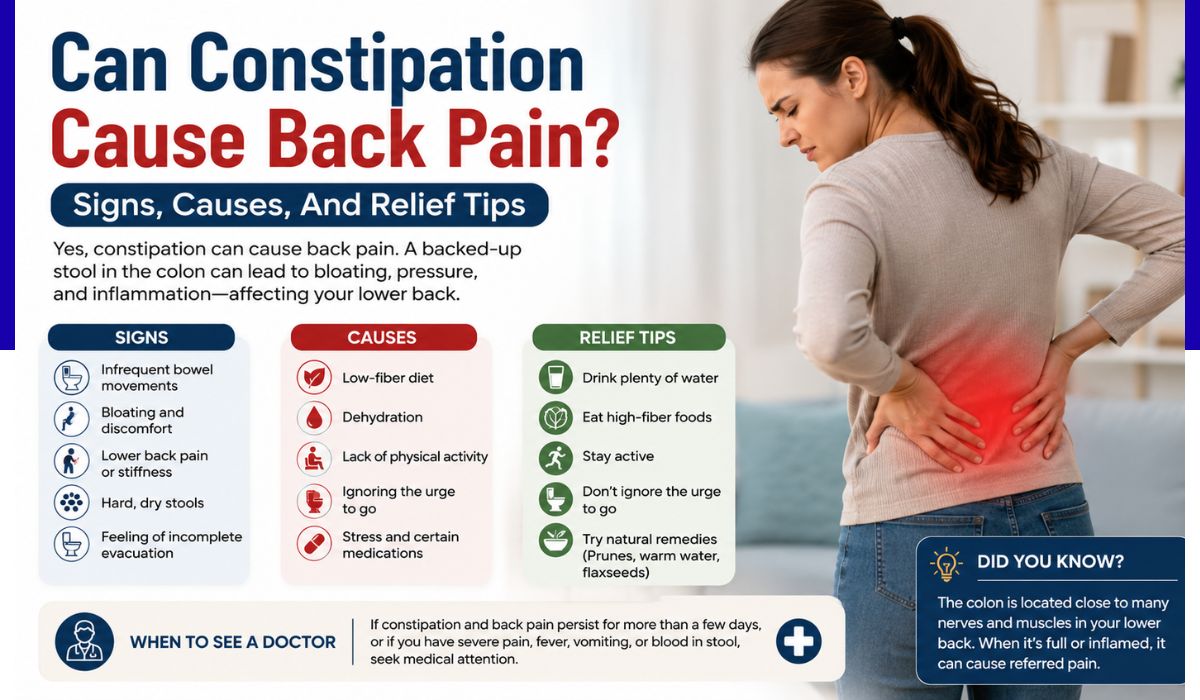
Can Constipation Cause Back Pain
Constipation is one of the most common digestive problems in the world, yet many people are surprised to learn that it can sometimes affect far more than the stomach. If you have ever experienced lower back pain while struggling to have a bowel movement, you may have wondered whether the two problems are connected. The answer is yes. In many cases, constipation and lower back pain can happen together, especially when stool buildup creates pressure inside the abdomen and pelvis.
For some people, the discomfort feels like a dull ache in the lower spine. Others experience bloating, cramping, stiffness, or pain that improves after passing stool. While mild constipation-related back pain is usually temporary, severe symptoms may sometimes point to a more serious condition that needs medical attention.
Understanding the link between digestion and spinal discomfort can help you identify symptoms early and find the right relief. This guide explains why constipation can cause back pain, what the symptoms feel like, when to worry, and the best ways to feel better naturally and medically.
Quick Bio Information
| Topic | Helpful Fact |
|---|---|
| Main Symptom | Constipation can sometimes cause lower back pain |
| Common Pain Area | Lower back and pelvic region |
| Main Cause | Pressure from stool buildup |
| Common Digestive Symptom | Bloating and abdominal discomfort |
| Severe Complication | Fecal impaction |
| Typical Pain Type | Dull aching or pressure-like pain |
| Relief Sign | Pain often improves after bowel movement |
| Risk Group | Older adults and inactive individuals |
| Common Trigger | Low-fiber diet |
| Hydration Role | Dehydration worsens constipation |
| Helpful Food | Prunes and high-fiber fruits |
| Helpful Activity | Walking and light exercise |
| Gas Connection | Trapped gas may increase back discomfort |
| Medical Warning Sign | Blood in stool |
| Emergency Symptom | Inability to pass gas or stool |
| Common Related Condition | IBS |
| Helpful Habit | Regular bathroom schedule |
| Important Muscle | Psoas muscle |
| Long-Term Prevention | Balanced diet and hydration |
| When To See A Doctor | Severe or persistent pain |
Can Constipation Really Cause Back Pain?
Yes, constipation can cause back pain, especially in the lower back. When stool remains in the colon for too long, it becomes hard and difficult to pass. As the intestines fill with trapped stool and gas, pressure builds inside the abdomen. This pressure may affect nearby nerves, muscles, and tissues connected to the lower spine.
The colon sits close to the pelvic region and lower back muscles. When constipation becomes severe, the swelling and pressure in the digestive tract may irritate the nerves around the lumbar spine. This is why some people feel soreness, heaviness, or aching pain in the lower back during episodes of constipation.
In many cases, the pain improves after a bowel movement because the pressure inside the intestines decreases. However, persistent pain should never be ignored because other health conditions may also be involved.
Why Constipation Can Lead To Lower Back Pain
The connection between constipation and lower back pain is easier to understand when you look at how closely the digestive system and spine work together. The intestines, pelvic floor muscles, abdominal muscles, and lower spine all share nerve pathways and physical space inside the body.
When stool builds up in the colon, the intestines can stretch and become swollen. This pressure may push against nearby structures, including nerves that affect the lower back. In some people, constipation also causes muscle tension. Straining during bowel movements can tighten the lower back muscles and pelvic floor, creating discomfort that feels similar to a muscle injury.
Another possible cause is referred pain. This happens when pain from one area of the body is felt somewhere else. The digestive organs and lower spine share nerve connections, so the brain may interpret bowel discomfort as back pain.
The psoas muscle may also play a role. This deep muscle connects the spine to the hips and sits near the intestines. A tight or irritated psoas muscle can contribute to both digestive discomfort and lower back pain.
What Constipation Back Pain Feels Like
Constipation-related back pain usually develops slowly and often feels different from pain caused by injury. Most people describe it as a dull ache, pressure, or tightness in the lower back. The discomfort may spread into the hips or pelvic area and sometimes becomes worse after eating or sitting for long periods.
Many people notice that the pain improves after passing gas or having a bowel movement. This is an important clue that the digestive system may be involved.
Some individuals also experience abdominal cramping, bloating, and a heavy feeling in the stomach. Severe constipation may create sharp pains if the intestines become overly stretched or irritated.
Unlike back pain caused by lifting injuries, constipation back pain usually comes with digestive symptoms at the same time.
Common Symptoms That May Happen Together
Constipation and back pain often appear alongside other symptoms that affect the digestive system. One of the most common signs is bloating. When stool and gas remain trapped in the intestines, the stomach may feel swollen, hard, or uncomfortable.
Many people also experience hard stools, straining during bowel movements, and the sensation that they cannot completely empty their bowels. Abdominal pressure may increase throughout the day, especially after meals.
Gas buildup can also contribute to discomfort. Trapped gas sometimes creates pressure that radiates toward the lower back or sides of the body. Nausea, fatigue, and reduced appetite may develop if constipation becomes severe.
In some cases, rectal irritation or mild bleeding may occur because of straining and hard stool.
Severe Constipation And Fecal Impaction
One of the more serious complications of constipation is fecal impaction. This condition occurs when a large mass of dry, hard stool becomes stuck in the rectum or colon and cannot pass naturally.
Fecal impaction can cause significant lower back pain because the impacted stool places strong pressure on nearby nerves and tissues. The pain may become constant and more intense than ordinary constipation discomfort.
People with fecal impaction may also experience nausea, vomiting, abdominal swelling, and the inability to pass gas or stool. Some individuals leak small amounts of liquid stool around the blockage, which can be confusing because it may appear like diarrhea.
Older adults, people with low mobility, and those who ignore constipation for long periods are at greater risk of developing fecal impaction.
Other Conditions Linked To Constipation And Back Pain
Although constipation itself can cause back pain, sometimes both symptoms are caused by another health problem. Irritable bowel syndrome, often called IBS, commonly causes constipation, bloating, abdominal discomfort, and referred pain in the lower back.
Pregnancy can also contribute to both symptoms because hormonal changes slow digestion while added weight places stress on the spine and pelvis.
Certain medications, including opioid pain medicines, iron supplements, and some antidepressants, may trigger constipation and muscle stiffness at the same time.
In rare cases, spinal nerve compression, tumors, infections, or colon disorders may lead to constipation and severe back pain together. This is why ongoing or unexplained symptoms should always be evaluated by a healthcare professional.
When You Should See A Doctor
Most constipation-related back pain improves after the bowels begin moving normally again. However, certain symptoms should never be ignored.
Severe abdominal pain, vomiting, fever, or the inability to pass stool may indicate a bowel blockage or another serious problem. Blood in the stool, sudden weight loss, or severe lower back pain that continues after constipation improves should also be evaluated quickly.
You should also seek medical care if constipation lasts more than a few weeks or keeps returning regularly. Chronic constipation can sometimes point to underlying digestive disorders, medication side effects, or neurological conditions.
Pain accompanied by numbness, leg weakness, or loss of bladder control requires emergency medical attention because it may involve spinal nerve problems.
Natural Ways To Relieve Constipation And Back Pain
Many mild cases of constipation improve with simple lifestyle changes. Drinking enough water is one of the most effective ways to soften stool naturally. When the body is dehydrated, the colon absorbs extra water from waste, making stool dry and difficult to pass.
Increasing fiber intake can also help regulate bowel movements. Fiber adds bulk to stool and helps it move through the intestines more easily. Fruits, vegetables, oats, and whole grains are especially helpful.
Gentle movement is another powerful remedy. Walking stimulates the intestines and may reduce both constipation and muscle stiffness in the lower back. Stretching exercises and warm compresses can also relax tight muscles and ease discomfort.
Creating a regular bathroom routine helps train the digestive system to work more consistently.
Foods That Support Better Digestion
Diet plays a major role in preventing constipation and reducing related back pain. Some foods naturally improve digestion because they contain fiber, water, and nutrients that support healthy bowel movements.
Prunes are widely known for their natural laxative effect. Kiwi, apples, pears, berries, and leafy greens are also excellent choices. Oatmeal, chia seeds, flaxseeds, and beans provide soluble fiber that helps soften stool.
At the same time, some foods may worsen constipation. Highly processed snacks, fried foods, excessive cheese, and fast food often slow digestion and contribute to harder stool.
Many people also benefit from limiting sugary drinks and increasing plain water intake throughout the day.
Medical Treatments For Constipation
If home remedies do not work, medical treatments may be necessary. Stool softeners and fiber supplements are commonly used for short-term relief. Osmotic laxatives help draw water into the intestines, making stool easier to pass.
Doctors sometimes recommend stimulant laxatives for temporary use, but overusing them can weaken normal bowel function over time.
Severe constipation may require enemas or professional treatment to remove impacted stool safely. In rare situations, additional testing may be needed to identify digestive disorders, nerve problems, or structural issues affecting the colon.
The best treatment depends on the underlying cause, which is why persistent symptoms should always be properly evaluated.
Can Gas Cause Back Pain Too?
Yes, trapped gas can sometimes contribute to back pain. Gas buildup stretches the intestines and creates pressure inside the abdomen. This pressure may radiate toward the lower back, sides, or even the shoulders in some cases.
People often describe gas-related back pain as sharp, crampy, or shifting discomfort. Unlike muscle injuries, the pain may improve after burping, passing gas, or having a bowel movement.
Gas pain and constipation frequently happen together because slow-moving digestion allows gas to remain trapped longer in the intestines.
How Long Constipation Back Pain Usually Lasts
The duration of constipation back pain depends on the severity of the constipation and the underlying cause. Mild discomfort may improve within hours after a bowel movement, while more severe constipation can cause pain lasting several days.
Pain that disappears after the digestive system returns to normal is usually less concerning. However, pain that continues despite regular bowel movements may point to another issue involving the muscles, kidneys, spine, or digestive tract.
Tracking symptoms carefully can help identify patterns and determine whether constipation is truly the cause.
Preventing Constipation And Back Pain
Preventing constipation often prevents the related back pain as well. Staying hydrated is one of the simplest but most important habits. Most adults benefit from consistent daily water intake, especially during hot weather or physical activity.
Daily movement also supports healthy digestion. Sitting for long periods slows bowel activity and may increase pressure on the lower back. Even short walks after meals can help stimulate digestion.
Stress management matters too. Anxiety and stress can disrupt the connection between the brain and digestive system, leading to slower bowel movements and muscle tension.
A balanced diet rich in fiber, healthy fats, fruits, and vegetables remains one of the best long-term prevention strategies.
Final Thoughts
Can constipation cause back pain? In many cases, yes. The connection between the digestive system and lower back is stronger than many people realize. Stool buildup, bloating, trapped gas, muscle tension, and nerve pressure can all contribute to discomfort in the lower spine.
Fortunately, most constipation-related back pain improves once digestion returns to normal. Healthy eating, hydration, physical activity, and proper bathroom habits can make a major difference.
Still, severe symptoms should never be ignored. Persistent pain, vomiting, fever, blood in the stool, or difficulty passing gas may signal a more serious problem that requires medical care.
Understanding how constipation affects the body allows people to respond early, reduce discomfort, and protect both digestive and spinal health.
FAQs About Can Constipation Cause Back Pain
Can Constipation Cause Severe Lower Back Pain?
Yes, severe constipation can sometimes cause significant lower back pain, especially when stool buildup creates pressure inside the colon or leads to fecal impaction. Persistent severe pain should be evaluated by a doctor.
Does Back Pain From Constipation Go Away After Pooping?
In many cases, yes. The pain often improves after a bowel movement because pressure inside the intestines decreases. If pain continues, another condition may be involved.
Can Trapped Gas Cause Lower Back Pain?
Yes, trapped gas can create pressure that radiates into the lower back and abdomen. The pain may feel sharp, crampy, or uncomfortable until the gas passes.
How Do I Know If My Back Pain Is From Constipation?
Back pain linked to constipation usually appears alongside bloating, hard stools, abdominal pressure, and difficulty passing stool. The pain may improve after a bowel movement.
Can Constipation Press On Nerves?
Yes, severe stool buildup can sometimes press on nearby nerves in the pelvic and lower spinal area, leading to discomfort or referred pain.
Is Constipation-Related Back Pain Dangerous?
Most cases are mild and temporary. However, severe pain, fever, vomiting, blood in stool, or inability to pass gas may indicate a more serious condition.
Can IBS Cause Constipation And Back Pain Together?
Yes, irritable bowel syndrome can cause constipation, bloating, abdominal discomfort, and referred lower back pain in some individuals.
What Is The Fastest Natural Relief For Constipation?
Drinking water, eating fiber-rich foods, walking, and using gentle movement often help stimulate bowel movements naturally and safely.
Recommended For You: Jaw Pain On One Side: What It Means And When You Should Worry