
Changes in your poop can tell you a lot about your digestive health. While many stool changes are harmless and temporary, some can point to a more serious condition inside the colon. One condition that often changes the appearance, texture, and smell of stool is Diverticulitis. Many people notice unusual bowel movements before they even realize something is wrong.
If you have ever wondered, “What Does Poop Look Like With Diverticulitis?” you are not alone. During a diverticulitis flare-up, stool can become thin, hard, loose, bloody, dark, or covered in mucus. These changes happen because inflamed pouches inside the colon affect how waste moves through the digestive tract.
Understanding these stool changes can help you recognize symptoms earlier and know when medical attention may be necessary. In this guide, you will learn how diverticulitis affects stool color, shape, texture, smell, and bowel habits. You will also discover treatment options, warning signs, recovery tips, and ways to help prevent future flare-ups.
Table of Contents
ToggleQuick Bio Information About Diverticulitis And Stool Changes
| Topic | Helpful Information |
|---|---|
| Medical Condition | Diverticulitis |
| Affected Area | Colon |
| Common Age Group | Adults Over 40 |
| Main Cause | Inflamed Diverticula |
| Common Symptom | Lower Left Belly Pain |
| Stool Color Changes | Red, Maroon, Black |
| Stool Texture | Hard, Loose, Watery |
| Stool Shape | Thin Or Pellet-Like |
| Mucus In Stool | Common During Flare-Ups |
| Fever | Often Present |
| Nausea | Possible |
| Diarrhea | Common In Some Cases |
| Constipation | Very Common |
| Bleeding Risk | Mild To Severe |
| Emergency Sign | Black Tarry Stool |
| Diagnosis Tool | CT Scan |
| Common Treatment | Antibiotics And Diet Changes |
| Recovery Time | Days To Weeks |
| Prevention Tip | High-Fiber Diet |
| Long-Term Outlook | Usually Good With Treatment |
What Is Diverticulitis And Why Does It Affect Your Poop?
Diverticulitis develops when small pouches called diverticula become inflamed or infected. These pouches form in weak spots of the colon wall and are especially common as people age. Having the pouches alone is called diverticulosis. When those pouches become swollen or infected, the condition becomes diverticulitis.
The inflammation can make the colon narrow and irritated. Because stool passes directly through the colon, even mild swelling can change the way poop looks and moves. Some people experience constipation, while others develop diarrhea or frequent bowel movements.
The condition often causes lower left abdominal pain, bloating, nausea, fever, and changes in bowel habits. Stool changes may appear suddenly during flare-ups and improve once inflammation settles down.
What Does Normal Poop Look Like?
Before understanding diverticulitis poop, it helps to know what healthy stool usually looks like. Normal stool is generally medium to dark brown because of bile and bilirubin produced during digestion. It is usually soft but formed, shaped like a smooth sausage, and easy to pass without pain.
Healthy poop should not contain visible blood, excessive mucus, or a black tar-like appearance. Mild odor is normal, but stool should not smell unusually foul or rotten.
Doctors often use the Bristol Stool Chart to describe stool consistency. Ideal stool usually falls in the middle range, meaning it is smooth, soft, and formed. Any major change in stool color, shape, or texture lasting more than a few days deserves attention.
What Does Poop Look Like With Diverticulitis?
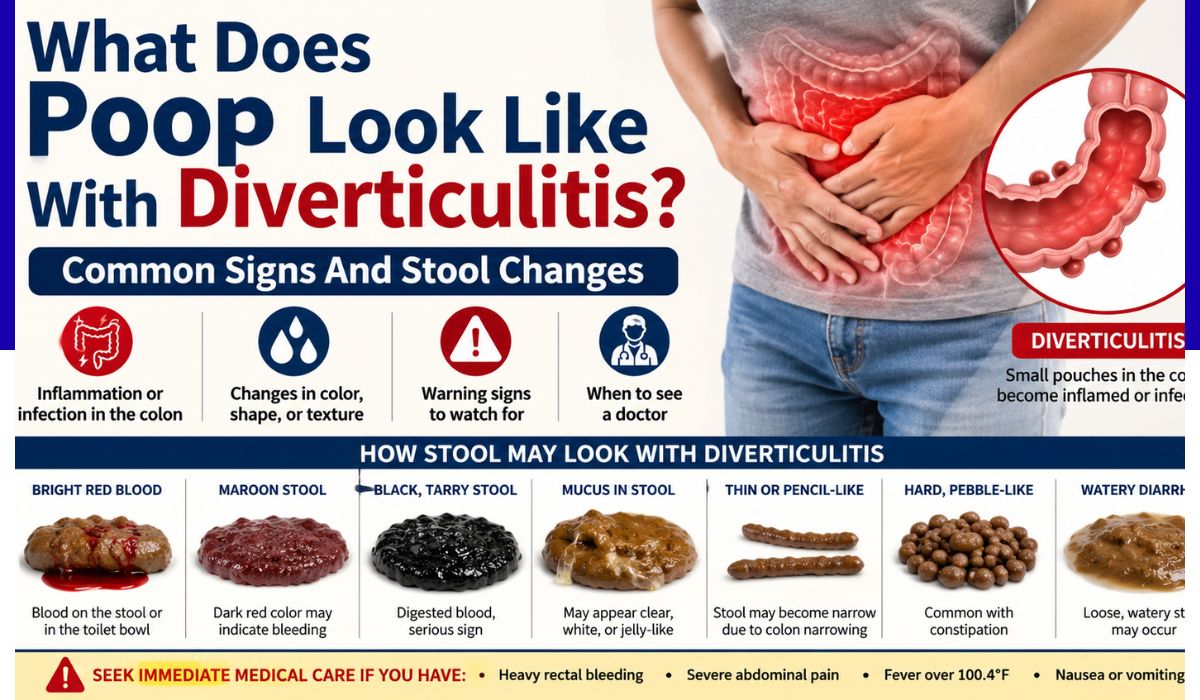
Diverticulitis can change stool in several noticeable ways. Some people develop hard pebble-like stool from constipation, while others experience loose watery diarrhea. Stool may become unusually thin, irregular, or coated in mucus.
One of the most alarming symptoms is blood in stool. Bright red streaks, maroon stool, or black tarry stool may appear when inflamed pouches bleed. The appearance often depends on where the bleeding occurs inside the digestive tract.
Not every person experiences the same symptoms. Mild diverticulitis may cause only slight bowel changes, while severe flare-ups can create dramatic differences in stool appearance and bathroom habits.
Blood In Stool With Diverticulitis
Blood in stool is one of the clearest warning signs of diverticulitis complications. Bright red blood often appears on toilet paper, in the toilet bowl, or on the surface of stool. This usually means bleeding is happening lower in the colon.
Dark maroon stool may suggest bleeding slightly higher in the digestive tract. Black tarry stool can occur when blood spends more time moving through the intestines and becomes digested along the way.
Although bleeding may come from diverticulitis, it can also happen with hemorrhoids, anal fissures, colon polyps, or other digestive conditions. Heavy bleeding, dizziness, weakness, or fainting should always be treated as a medical emergency.
Thin, Narrow, Or Pellet-Like Stool
Many people ask why diverticulitis changes stool shape. The answer is usually inflammation and narrowing inside the colon. Swelling can reduce the space available for stool to pass normally.
Some people notice pencil-thin stool that looks narrow and flat. Others develop small hard pellets that resemble rabbit droppings. These stool changes are more common during constipation or severe inflammation.
Occasional narrow stool is not always dangerous. However, stool that stays thin for weeks may need medical evaluation because colon narrowing can sometimes signal scar tissue or even colon cancer.
Constipation, Diarrhea, And Mucus In Stool
Diverticulitis often disrupts normal bowel patterns. Some people become severely constipated and strain during bowel movements. Hard stool can irritate inflamed pouches and increase pain or bleeding.
Other people develop diarrhea because inflammation speeds up bowel activity. Loose watery stool may occur several times a day during active infection.
Mucus in stool is another common symptom. The colon naturally produces mucus to protect itself, but irritation can trigger excess production. This mucus may look clear, white, or jelly-like and can appear on stool or toilet paper.
Does Diverticulitis Change Stool Smell?
Many people notice a stronger or more unpleasant stool odor during diverticulitis flare-ups. Infection, bleeding, and inflammation can all affect the smell of bowel movements.
Bloody stool often smells metallic or unusually strong. Diarrhea caused by infection may also create a sour or foul odor. While odor alone is not enough to diagnose diverticulitis, sudden changes combined with pain or fever should not be ignored.
If stool smells unusually bad along with worsening abdominal pain, vomiting, or fever, it could signal a more serious infection or complication.
Other Symptoms That Happen Alongside Stool Changes
Poop changes rarely happen alone. Most people with diverticulitis experience additional digestive symptoms that help doctors identify the condition.
Lower left abdominal pain is one of the most common symptoms. The pain may feel sharp, cramp-like, or constant. Some people also experience bloating, nausea, vomiting, fever, chills, fatigue, or tenderness in the abdomen.
Bathroom habits may also change dramatically. Some people go several days without a bowel movement, while others suddenly need to rush to the bathroom many times each day.
When Diverticulitis Becomes An Emergency
Certain symptoms require immediate medical attention. Heavy rectal bleeding is one of the biggest warning signs. Black tarry stool combined with weakness or dizziness may indicate dangerous internal bleeding.
Severe abdominal pain that suddenly worsens could suggest a perforation, abscess, or bowel obstruction. High fever, rapid heartbeat, vomiting, or inability to pass stool or gas also require urgent care.
Complications from diverticulitis can become life-threatening if left untreated. Early treatment greatly lowers the risk of severe infection and long-term damage.
How Doctors Diagnose Diverticulitis
Doctors use several tests to confirm diverticulitis and rule out other digestive problems. Blood tests often show signs of infection or inflammation. Stool tests may check for bleeding or bacterial infection.
CT scans are one of the most useful tools because they allow doctors to see swollen pouches, abscesses, or bowel thickening inside the colon.
Colonoscopy is usually avoided during active flare-ups because inflamed tissue can become more vulnerable to injury. Once symptoms improve, doctors may recommend colonoscopy to examine the colon more carefully.
Treatment And Stool Recovery
Most people recover well with proper treatment. Mild cases may improve with rest, fluids, and temporary diet changes. More serious infections sometimes require antibiotics.
Doctors often recommend starting with clear liquids to allow the colon to rest. As symptoms improve, low-fiber foods like rice, toast, eggs, yogurt, and cooked vegetables are slowly added back.
During recovery, stool gradually returns to normal. Bleeding and mucus usually disappear first, while constipation or irregular bowel habits may take longer to improve.
Best Foods During A Diverticulitis Flare-Up
Food choices can strongly affect symptoms during recovery. In the early stages of a flare-up, clear liquids such as broth, gelatin, water, and electrolyte drinks may help reduce stress on the digestive system.
Once pain improves, soft low-fiber foods become easier to tolerate. Oatmeal, mashed potatoes, applesauce, white rice, and lean poultry are commonly recommended.
As healing continues, fiber is slowly reintroduced to help prevent constipation. Fruits, vegetables, beans, and whole grains can support long-term colon health when added gradually.
Modern research also shows that nuts, seeds, and popcorn do not increase diverticulitis risk for most people, despite older beliefs.
Preventing Future Diverticulitis Flare-Ups
After one episode of diverticulitis, many people want to reduce the chance of another flare-up. Healthy daily habits can make a major difference.
A high-fiber diet helps stool move more easily through the colon and reduces pressure inside the intestines. Drinking enough water keeps stool soft and easier to pass.
Exercise, maintaining a healthy weight, and avoiding smoking may also lower risk. Long-term constipation should be treated because straining increases pressure on the colon wall.
Stress management may also help some people because digestive symptoms often worsen during periods of anxiety or poor sleep.
Conditions That Can Cause Similar Stool Changes
Not every stool change means diverticulitis. Several digestive conditions can cause blood, mucus, constipation, or diarrhea.
Hemorrhoids may cause bright red blood on toilet paper. Irritable Bowel Syndrome can trigger constipation, diarrhea, and mucus without infection. Inflammatory Bowel Disease may also cause abdominal pain and bloody stool.
Persistent stool changes should always be evaluated by a healthcare professional, especially if symptoms continue for several weeks.
Final Thoughts
Understanding What Does Poop Look Like With Diverticulitis can help you recognize important digestive warning signs earlier. Diverticulitis can change stool color, shape, texture, smell, and frequency in several ways, especially during active flare-ups.
While some stool changes are mild and temporary, others may signal bleeding, infection, or serious complications that require immediate care. Paying attention to your bowel habits can provide valuable clues about your digestive health.
The good news is that most people recover well with proper treatment, healthy diet changes, hydration, and medical support. If you notice persistent blood in stool, severe pain, black tarry stool, or sudden changes in bowel habits, it is always best to seek professional medical advice promptly.
FAQs About What Does Poop Look Like With Diverticulitis
Can Diverticulitis Cause Yellow Stool?
Yes, some people notice yellow stool during digestive upset or diarrhea. However, yellow stool is less common than bloody, dark, or mucus-covered stool with diverticulitis.
Does Diverticulitis Always Cause Blood In Stool?
No. Many people with mild diverticulitis never see blood. Blood usually appears when inflammation irritates or damages blood vessels in the colon.
How Long Do Stool Changes Last?
Mild stool changes may improve within several days after treatment begins. More severe cases may take weeks before bowel habits return to normal.
Can Diverticulitis Cause Floating Stool?
Sometimes. Floating stool may happen because of gas, diet changes, or digestive disruption during flare-ups. Persistent floating stool should be discussed with a doctor.
What Does Mucus In Stool Look Like?
Mucus often appears clear, white, or jelly-like. It may coat the stool or appear separately in the toilet bowl.
Is Diarrhea Or Constipation More Common?
Both are common. Some people experience constipation during flare-ups, while others develop diarrhea because of irritation and inflammation.
Can Stool Return To Normal After Treatment?
Yes. Most people see their stool gradually return to normal after inflammation improves and the colon heals.
Should Thin Stool Always Be Checked By A Doctor?
Occasional thin stool is usually harmless, but persistent narrow stool should be evaluated to rule out colon narrowing or other digestive conditions.
Recommended For You: Swollen Eyelid Causes, Symptoms, And The Best Ways To Treat It