
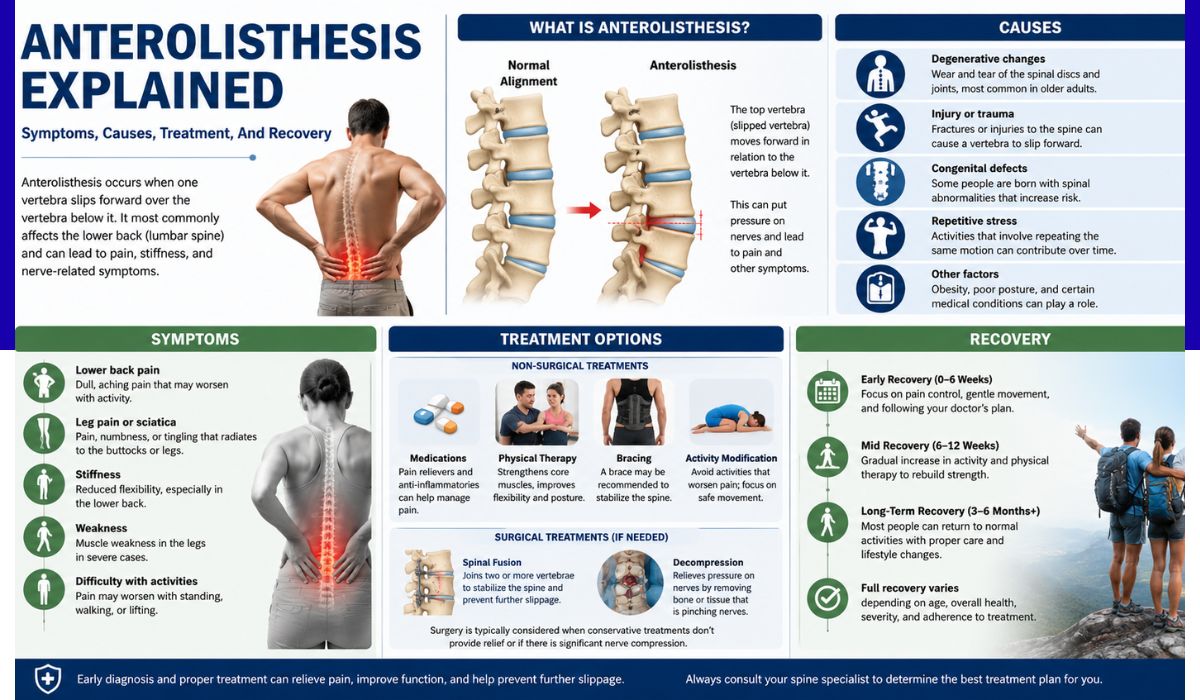
Back pain is one of the most common health problems in the world, but not all back pain has the same cause. One condition that often affects the lower spine is anterolisthesis. This condition happens when one vertebra slips forward over the vertebra below it. Although the movement may seem small, it can place pressure on nerves, affect posture, and cause ongoing pain or mobility issues.
Anterolisthesis most commonly develops in the lower back, especially in the L4-L5 and L5-S1 regions of the spine. Some people experience mild discomfort, while others deal with severe nerve pain, weakness, or trouble walking. In many cases, early treatment can help manage symptoms and improve quality of life.
Understanding anterolisthesis is important because the condition can worsen over time if left untreated. The good news is that modern treatments, exercises, and lifestyle changes can help many people recover successfully. This guide explains the symptoms, causes, diagnosis, treatment options, recovery process, and prevention strategies in a clear and easy-to-understand way.
Quick Bio Information About Anterolisthesis
| Quick Fact | Information |
|---|---|
| Medical Name | Anterolisthesis |
| Condition Type | Spinal Alignment Disorder |
| Common Location | Lower Back |
| Most Affected Vertebrae | L4-L5 And L5-S1 |
| Main Symptom | Lower Back Pain |
| Other Symptoms | Tingling, Weakness, Numbness |
| Common Age Group | Adults Over 50 |
| Main Cause | Degenerative Spine Changes |
| Injury Risk | Sports And Heavy Lifting |
| Diagnosis Method | X-Ray, MRI, CT Scan |
| Mild Treatment | Rest And Physical Therapy |
| Severe Treatment | Spinal Surgery |
| Recovery Time | Weeks To Months |
| Can It Cause Sciatica? | Yes |
| Can It Affect Walking? | Yes |
| Preventable? | Often Partly Preventable |
| Common Exercise | Core Strengthening |
| Surgery Success Rate | Often High In Severe Cases |
What Is Anterolisthesis?
Anterolisthesis is a spinal condition where one vertebra moves forward compared to the vertebra underneath it. The spine normally stays aligned through the support of discs, ligaments, muscles, and joints. When these structures weaken or become damaged, spinal instability can develop.
Anterolisthesis is a form of spondylolisthesis. The term “spondylolisthesis” describes any slipping of the vertebrae, while “anterolisthesis” specifically refers to forward slippage. This condition is different from retrolisthesis, where the vertebra moves backward.
The condition usually affects the lumbar spine because the lower back carries much of the body’s weight and handles daily movement. When vertebrae shift out of place, nearby nerves may become compressed. This can trigger pain, tingling sensations, numbness, or weakness in the legs.
Doctors classify anterolisthesis into four grades based on how far the vertebra has slipped forward. Grade 1 is mild, while Grade 4 indicates severe slippage. Understanding the grade helps doctors decide on the most appropriate treatment plan.
Common Symptoms Of Anterolisthesis
The symptoms of anterolisthesis can vary greatly depending on the amount of vertebral slippage and whether nerves are affected. Some people may have only mild back pain, while others experience severe discomfort that limits daily activities.
One of the most common symptoms is persistent lower back pain. The pain may feel dull and aching or sharp during movement. Many people notice that pain worsens after standing for long periods, lifting objects, or bending backward.
As the condition progresses, nerve compression can cause tingling or numbness in the buttocks, legs, or feet. Some people also develop sciatica, which causes pain that travels from the lower back down the leg.
Muscle tightness and spasms are also common. The body sometimes tries to stabilize the spine by tightening nearby muscles, which may increase stiffness and discomfort. In severe cases, anterolisthesis may affect walking, balance, and coordination.
Serious symptoms can occur if spinal nerves become heavily compressed. These symptoms may include bladder or bowel dysfunction, severe leg weakness, or difficulty controlling movement. These warning signs require immediate medical attention.
Causes Of Anterolisthesis
There are several possible causes of anterolisthesis, and the condition may develop slowly or suddenly depending on the underlying issue.
Degenerative anterolisthesis is one of the most common forms. As people age, spinal discs lose water content and flexibility. Ligaments weaken, joints wear down, and the spine becomes less stable. Over time, this wear and tear can allow one vertebra to slip forward.
Trauma is another major cause. Falls, sports injuries, or car accidents may fracture or damage spinal structures. When the spine loses stability after an injury, slippage can occur.
Repeated physical stress also increases the risk. Athletes involved in gymnastics, football, wrestling, and weightlifting place repeated strain on the lower spine. Construction workers and individuals who frequently lift heavy objects may face similar risks.
Some children are born with spinal abnormalities that increase the likelihood of vertebral slippage later in life. Rarely, tumors or infections affecting the spine can weaken spinal support structures and lead to anterolisthesis.
Risk Factors That Increase The Chances Of Anterolisthesis
Certain factors make some individuals more likely to develop anterolisthesis. Aging remains one of the strongest risk factors because the spine naturally degenerates over time.
Women over age 50 appear to develop degenerative spinal changes more frequently than men. Hormonal changes and reduced bone density may contribute to this increased risk.
People with weak core muscles are also more vulnerable. The abdominal and lower back muscles play a major role in supporting spinal alignment. Poor muscle strength may increase spinal instability.
Excess body weight places additional pressure on the lower spine. Obesity can worsen existing spinal conditions and speed up degenerative changes. Poor posture, smoking, and physically demanding jobs may also increase the likelihood of developing anterolisthesis.
Individuals with osteoporosis face higher risks because weakened bones are more prone to fractures and instability. Genetics may also play a role in some cases.
How Doctors Diagnose Anterolisthesis
Diagnosing anterolisthesis usually begins with a detailed physical examination and a discussion of symptoms. Doctors may ask questions about pain levels, mobility problems, previous injuries, and lifestyle habits.
During the physical exam, healthcare providers often test reflexes, muscle strength, flexibility, and walking ability. They may also look for signs of nerve compression, such as numbness or weakness in the legs.
Imaging tests are essential for confirming the diagnosis. X-rays are commonly used to identify vertebral slippage and determine its severity. MRI scans help doctors examine soft tissues, spinal discs, and nerve compression. CT scans provide detailed images of bones and fractures.
Doctors use a grading system to measure the severity of slippage. Grade 1 involves up to 25% slippage, while Grade 4 involves severe displacement of the vertebra. The grade helps guide treatment decisions and recovery expectations.
Treatment Options For Mild Anterolisthesis
Many mild cases of anterolisthesis improve with conservative treatment. The primary goal is to reduce pain, stabilize the spine, and improve mobility.
Rest is often recommended during the early stages of treatment. Avoiding activities that strain the lower back can help reduce inflammation and prevent worsening slippage. However, prolonged bed rest is usually discouraged because it may weaken muscles further.
Doctors commonly prescribe nonsteroidal anti-inflammatory drugs to reduce pain and swelling. Muscle relaxants or steroid injections may also help in certain cases.
Physical therapy is one of the most effective treatments for mild-to-moderate anterolisthesis. A physical therapist may guide patients through exercises that strengthen the core, improve posture, and increase spinal stability.
Back braces may provide temporary support for the lower spine. While braces can reduce pain during movement, they are usually used alongside exercise therapy rather than as a long-term solution.
Surgical Treatment For Severe Cases
Surgery may become necessary when conservative treatments fail or when nerve compression becomes severe. Persistent pain, worsening weakness, or difficulty walking may indicate the need for surgical treatment.
One common procedure is decompression surgery. During this operation, surgeons remove tissue or bone pressing on the nerves. This helps relieve nerve pain and restore movement.
Spinal fusion is another widely used procedure for anterolisthesis. Surgeons join unstable vertebrae together using rods, screws, or bone grafts. Over time, the bones heal into a single solid structure that stabilizes the spine.
Recovery from surgery varies depending on the individual and the complexity of the procedure. Many patients need physical therapy after surgery to rebuild strength and improve flexibility. Full recovery may take several months, but surgery often significantly reduces pain and improves mobility.
Best Exercises For Anterolisthesis Recovery
Exercise plays an important role in recovery and long-term spinal health. The right exercises can strengthen muscles that support the spine and reduce pressure on affected vertebrae.
Core-strengthening exercises are especially helpful because strong abdominal muscles improve spinal stability. Pelvic tilts, bridges, and gentle planks are often recommended for people with mild symptoms.
Stretching exercises may improve flexibility and reduce muscle tightness. Hamstring stretches, hip stretches, and gentle lower back mobility exercises can relieve stiffness and improve posture.
Low-impact activities such as swimming, cycling, and walking are usually safer than high-impact sports. These activities improve circulation and muscle strength without placing excessive stress on the spine.
Certain exercises should be avoided, especially during flare-ups. Heavy lifting, twisting motions, deep back bends, and high-impact workouts may worsen symptoms or increase vertebral instability.
Recovery Time And Long-Term Outlook
Recovery from anterolisthesis depends on several factors, including the severity of slippage, overall health, and treatment approach. Mild cases often improve within several weeks or months through conservative care.
People who follow physical therapy programs consistently usually recover more successfully. Strengthening exercises and healthy movement patterns help stabilize the spine and reduce future flare-ups.
Surgical recovery takes longer but may provide significant relief for severe cases. Most patients gradually return to normal activities over several months. Some individuals may continue to experience occasional stiffness or mild discomfort, especially after prolonged activity.
Long-term outcomes are generally better when treatment begins early. Ignoring symptoms may increase the risk of chronic pain or permanent nerve damage.
Possible Complications Of Untreated Anterolisthesis
Untreated anterolisthesis can lead to serious complications over time. Chronic back pain is one of the most common problems. Persistent instability in the spine may gradually worsen discomfort and limit daily activities.
Nerve compression can also become more severe. This may result in numbness, muscle weakness, burning sensations, or loss of coordination in the legs. In some cases, permanent nerve damage may occur.
Severe spinal instability can affect posture and walking ability. Some people develop abnormal movement patterns that place additional stress on nearby joints and muscles.
Rare but serious complications include bladder or bowel dysfunction caused by spinal nerve compression. These symptoms require urgent medical evaluation because they may indicate severe nerve involvement.
Tips To Prevent Anterolisthesis And Protect The Spine
Although not all cases are preventable, healthy habits can reduce the risk of spinal problems. Maintaining strong abdominal and back muscles is one of the best ways to support spinal stability.
Good posture also matters. Sitting with proper back support, avoiding slouching, and lifting heavy objects correctly can reduce unnecessary stress on the lower spine.
Regular low-impact exercise helps maintain flexibility and muscle strength. Walking, swimming, yoga, and stretching routines may improve spinal health while lowering injury risk.
Maintaining a moderate weight can reduce pressure on the lumbar spine. A balanced diet rich in calcium, vitamin D, and protein also supports bone health and muscle function.
People who work physically demanding jobs should use proper lifting techniques and avoid repetitive strain whenever possible.
When To See A Doctor
Mild back pain sometimes improves with rest, but ongoing symptoms should not be ignored. Medical attention is important if lower back pain lasts for several weeks or worsens over time.
Individuals should also see a doctor if they experience tingling, numbness, leg weakness, or pain traveling down the legs. These symptoms may suggest nerve compression.
Sudden changes in bladder or bowel control, severe walking difficulties, or rapidly worsening weakness require immediate emergency care. Early diagnosis and treatment can prevent long-term complications and improve recovery outcomes.
Final Thoughts
Anterolisthesis is a spinal condition that can affect comfort, movement, and overall quality of life. While the condition may sound alarming, many people manage symptoms successfully through early diagnosis, proper treatment, and healthy lifestyle habits.
Understanding the causes, symptoms, and treatment options allows individuals to make informed decisions about their spinal health. Conservative care often works well for mild cases, while surgery may provide relief for severe instability or nerve compression.
Protecting the spine through exercise, good posture, and safe movement habits can lower the risk of future problems. Most importantly, paying attention to warning signs and seeking medical care early can help prevent complications and support a smoother recovery.
FAQs About Anterolisthesis
Is Anterolisthesis Serious?
Anterolisthesis can range from mild to severe. Mild cases may cause only occasional discomfort, while severe slippage can compress nerves and affect mobility. Early treatment often improves outcomes significantly.
Can Anterolisthesis Heal On Its Own?
Mild cases sometimes improve with rest, exercise, and physical therapy. However, the vertebra usually does not move completely back into place without treatment.
Is Walking Good For Anterolisthesis?
Gentle walking is often beneficial because it improves circulation, flexibility, and muscle strength without placing too much pressure on the spine.
Can Exercise Make Anterolisthesis Worse?
Certain exercises can worsen symptoms if they place excessive stress on the lower back. High-impact sports and heavy lifting should usually be avoided during recovery.
Is Surgery Always Necessary?
No. Many people recover successfully with conservative treatments such as medication, exercise, and physical therapy. Surgery is typically reserved for severe or persistent cases.
Can Anterolisthesis Cause Sciatica?
Yes. If the slipped vertebra compresses nearby nerves, pain may travel down the legs, causing sciatica symptoms.
How Long Does Recovery Take?
Recovery time varies widely. Mild cases may improve within weeks, while surgical recovery can take several months.
Can Young People Develop Anterolisthesis?
Yes. Young athletes involved in activities that place stress on the lower back may develop the condition, especially after repeated spinal strain.
Recommended For You: Cartilage Piercing Guide: Types, Healing Time, And Aftercare Tips