
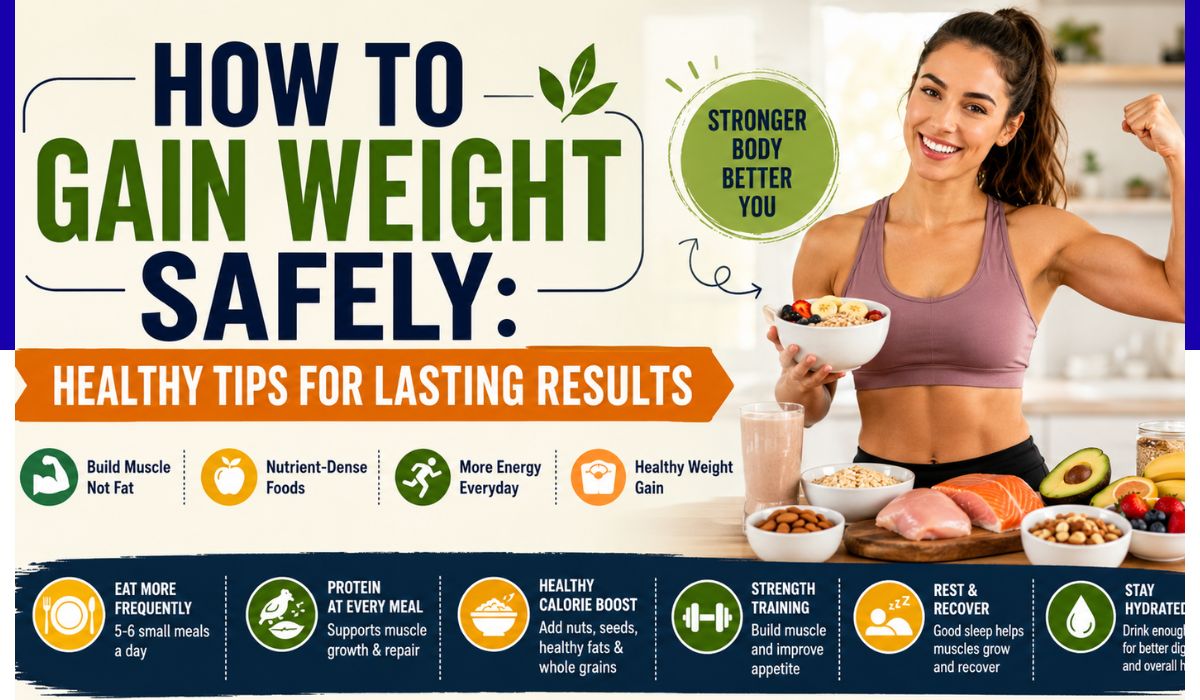
Learning How To Gain Weight safely is just as important as learning how to lose weight. Many people struggle with being underweight due to fast metabolism, poor appetite, medical conditions, or busy lifestyles. In 2026, health experts continue to emphasize that weight gain should never come from random overeating or junk food, but from a balanced and structured nutrition plan.
Healthy weight gain means building a stronger body, improving energy levels, and increasing muscle mass while keeping fat gain under control. This article will guide you through a complete, easy-to-follow approach to How To Gain Weight Safely, using simple language, practical methods, and science-based advice.
Quick Bio Information
Quick Bio Box 1: Healthy weight gain requires a calorie surplus combined with nutrient-rich foods, not junk food.
Quick Bio Box 2: Protein is essential for turning extra calories into muscle instead of fat.
Quick Bio Box 3: A safe calorie surplus is usually gradual, not extreme or sudden.
Quick Bio Box 4: Strength training helps direct weight gain toward muscle development.
Quick Bio Box 5: Fast metabolism is a common reason some people struggle to gain weight.
Quick Bio Box 6: Healthy fats like olive oil and nuts provide dense calories in small portions.
Quick Bio Box 7: Frequent meals help people who struggle with low appetite consume more calories.
Quick Bio Box 8: Smoothies are an effective way to increase calorie intake without feeling overly full.
Quick Bio Box 9: Sleep plays a major role in muscle recovery and weight gain success.
Quick Bio Box 10: Weight gain should focus on both health and body composition, not just scale numbers.
Quick Bio Box 11: Skipping meals is one of the most common barriers to healthy weight gain.
Quick Bio Box 12: Whole foods provide vitamins and minerals that support long-term health.
Quick Bio Box 13: Children and teenagers require balanced nutrition for proper growth and development.
Quick Bio Box 14: Hydration is essential even during calorie-rich eating plans.
Quick Bio Box 15: Consistency over time produces better results than rapid weight gain attempts.
Quick Bio Box 16: Healthy weight gain avoids excessive sugar and processed foods.
Quick Bio Box 17: Individual calorie needs vary based on age, gender, and activity level.
Quick Bio Box 18: Professional guidance is recommended if weight gain is difficult despite effort.
What It Means To Gain Weight Safely
Safe weight gain is not about eating everything in sight. It means creating a controlled calorie surplus while focusing on nutrient-rich foods that support muscle growth and overall health. When people understand How To Gain Weight properly, they avoid unhealthy fat gain and instead improve body strength and energy.
Unhealthy weight gain usually comes from processed foods, sugar-heavy snacks, and lack of physical activity. This can increase the risk of obesity, diabetes, and heart disease. Safe weight gain focuses on balance, where the body receives enough calories along with vitamins, minerals, protein, and healthy fats.
Why Some People Struggle To Gain Weight
Many individuals find it difficult to gain weight even when they eat more. One common reason is a naturally fast metabolism, which burns calories quickly. Others may have poor appetite due to stress, anxiety, or irregular eating habits.
Some people face digestive issues that affect nutrient absorption, while others are highly active and burn more calories throughout the day. Genetics also plays a role in body composition and weight distribution.
Understanding these reasons is the first step in learning How To Gain Weight effectively and safely.
Understanding Calorie Surplus For Weight Gain
To gain weight, the body must consume more calories than it burns. This is known as a calorie surplus. Without it, weight gain is not possible, no matter how healthy the food is.
A moderate calorie surplus is usually best because it allows gradual weight gain without excessive fat storage. Experts often suggest increasing daily intake slowly rather than overeating suddenly.
When people follow a structured approach to How To Gain Weight, they usually aim for steady progress rather than fast, unhealthy results. This helps maintain long-term health and stable energy levels.
Best Foods For Healthy Weight Gain
Food quality is just as important as calorie quantity. Nutrient-rich foods help the body grow stronger instead of just heavier.
Foods like whole grains, lean meats, eggs, dairy products, fruits, vegetables, nuts, seeds, and healthy oils are essential for safe weight gain. These foods provide protein for muscle growth, carbohydrates for energy, and healthy fats for long-term calorie support.
Choosing the right foods is one of the most important parts of learning How To Gain Weight the healthy way.
Protein As The Foundation Of Weight Gain
Protein plays a key role in building muscle mass, repairing tissues, and supporting healthy weight gain. Without enough protein, most of the extra calories may turn into fat instead of lean muscle.
Foods like chicken, fish, eggs, lentils, beans, milk, yogurt, and lean beef are excellent sources of protein. People who want to improve their body composition while learning How To Gain Weight should prioritize protein in every meal.
Protein also helps control hunger, making it easier to maintain a structured eating plan.
Eating More Frequently Throughout The Day
One simple strategy for weight gain is increasing meal frequency. Instead of three large meals, many experts recommend eating five to six smaller meals daily.
This approach helps the body receive a steady flow of calories and nutrients. It also improves digestion and prevents feeling overly full.
When people adopt this habit, they find it easier to follow How To Gain Weight without forcing large meals that feel uncomfortable.
Healthy Fats And Complex Carbohydrates
Healthy fats and complex carbohydrates are powerful tools for weight gain. Fats provide concentrated energy, while carbohydrates fuel the body and support physical activity.
Foods like avocados, olive oil, nuts, seeds, oats, brown rice, and whole grain bread are excellent choices. These foods allow people to increase calorie intake without relying on unhealthy junk food.
Balancing fats and carbs is a key principle in How To Gain Weight effectively and sustainably.
Smart Snacks For Daily Calorie Boost
Snacking is a helpful strategy for increasing calorie intake without overwhelming the stomach. Healthy snacks can include yogurt, fruit with nut butter, trail mixes, cheese, oats, and smoothies.
These snacks are easy to prepare and can be consumed between meals to maintain energy levels throughout the day.
Adding smart snacks into daily routine is a practical step in learning How To Gain Weight without stress or strict dieting.
High-Calorie Smoothies And Drinks
Liquid calories are extremely useful for people who struggle with appetite. Smoothies made with milk, bananas, oats, peanut butter, and yogurt can provide a high number of calories in a small volume.
These drinks are easy to digest and can significantly increase daily calorie intake. However, water intake should still remain consistent for proper hydration.
Using calorie-rich beverages is one of the most effective modern methods in How To Gain Weight strategies.
Strength Training For Healthy Body Mass
Exercise plays an important role in healthy weight gain. Strength training helps convert extra calories into muscle instead of fat.
Activities like weight lifting, resistance training, push-ups, and bodyweight exercises help build a strong and balanced physique. Exercise also improves appetite and metabolism control.
When combined with proper nutrition, strength training becomes a powerful tool in How To Gain Weight safely.
Importance Of Sleep And Recovery
Sleep is often overlooked but is essential for weight gain. During sleep, the body repairs muscles, balances hormones, and supports growth.
Lack of sleep can reduce appetite and slow down muscle development. Adults should aim for 7 to 9 hours of quality sleep per night.
Proper rest is a hidden but crucial factor in mastering How To Gain Weight effectively.
Common Mistakes That Prevent Weight Gain
Many people fail to gain weight because they rely on junk food, skip meals, or eat irregularly. Others avoid exercise, thinking it will prevent weight gain, which is incorrect.
Another common mistake is expecting quick results. Healthy weight gain takes time and consistency.
Avoiding these mistakes is essential for anyone learning How To Gain Weight in a sustainable way.
Special Considerations For Different Groups
Children, athletes, and pregnant women have different nutritional needs. Children require energy-rich meals to support growth, while athletes need more protein for muscle repair.
During pregnancy, calorie needs increase gradually to support both mother and baby. In all cases, food quality and balance remain important.
These special cases show that How To Gain Weight is not one-size-fits-all but depends on individual needs.
Tracking Progress And Staying Consistent
Monitoring progress helps ensure that weight gain is healthy and steady. People can track body weight weekly, observe energy levels, and note changes in strength.
Consistency is more important than speed. Small improvements over time lead to long-term success.
Tracking helps people stay motivated while following How To Gain Weight properly.
When To Seek Professional Advice
If someone struggles to gain weight despite eating more, it may be important to consult a healthcare professional. Underlying conditions such as thyroid issues, digestive disorders, or nutrient deficiencies may be present.
Professional guidance ensures that weight gain is safe and personalized.
This step is important for anyone serious about learning How To Gain Weight effectively.
Conclusion
Understanding How To Gain Weight Safely is about more than just eating more food. It requires balance, patience, and the right combination of nutrition, exercise, and lifestyle habits. When done correctly, weight gain can improve strength, energy, and overall well-being.
The key is to focus on long-term health rather than quick fixes. By choosing nutrient-rich foods, staying consistent, and supporting the body with proper rest and activity, anyone can achieve healthy and sustainable weight gain results.
FAQs About How To Gain Weight
How Can I Gain Weight Naturally
You can gain weight naturally by eating more whole foods, increasing meal frequency, and focusing on protein, healthy fats, and complex carbohydrates. Consistency is key for long-term results.
What Foods Help In Healthy Weight Gain
Foods like nuts, dairy, eggs, lean meats, whole grains, fruits, and healthy oils are excellent for safe and effective weight gain.
Can I Gain Weight Without Eating Junk Food
Yes, healthy weight gain is possible without junk food by following a balanced diet rich in nutrients and calories.
How Long Does It Take To Gain Weight Safely
Safe weight gain usually takes weeks to months depending on metabolism, diet consistency, and activity level.
Is Exercise Important For Weight Gain
Yes, strength training helps build muscle mass and ensures weight gain is healthy rather than just fat accumulation.
Why Am I Not Gaining Weight Even After Eating More
Possible reasons include fast metabolism, high activity levels, stress, or medical conditions affecting nutrient absorption.
Can Smoothies Help In Weight Gain
Yes, calorie-rich smoothies are one of the easiest ways to increase daily calorie intake without feeling too full.
Recommended For You: FUPAs Meaning In Health And Body Image: Everything You Should Know