
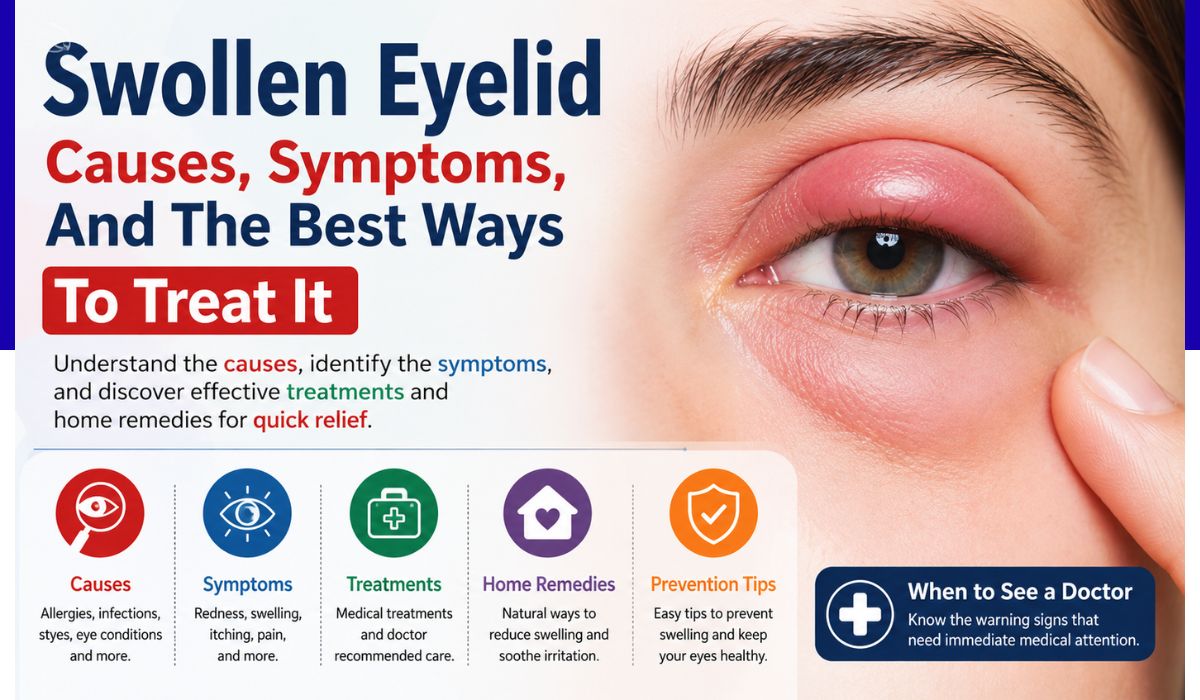
A swollen eyelid can appear suddenly and make everyday activities uncomfortable. Some people wake up with one swollen eye after sleeping, while others notice redness, itching, or pain developing throughout the day. In many cases, eyelid swelling is mild and temporary. However, it can sometimes signal an infection, allergy, or another medical condition that needs proper treatment.
Because the skin around the eyes is very thin and sensitive, even minor irritation can lead to noticeable puffiness. A swollen eyelid may affect the upper eyelid, lower eyelid, or both. Some people experience only mild swelling, while others may have pain, discharge, blurred vision, or tenderness.
Understanding the real cause of a swollen eyelid is important because treatment depends on what triggered the problem. Allergies, styes, blepharitis, eye infections, blocked oil glands, and even thyroid conditions can all play a role. The good news is that most cases improve with simple care, proper hygiene, and early treatment.
This guide explains swollen eyelid causes, symptoms, treatment options, prevention tips, and warning signs you should never ignore. It also covers practical home remedies and the latest eye care advice for 2026.
Quick Bio Information About Swollen Eyelids
| Topic | Helpful Information |
|---|---|
| Medical Name | Eyelid Edema |
| Common Symptom | Puffiness Around The Eye |
| Main Cause | Fluid Buildup In Eyelid Tissue |
| Common Trigger | Allergies |
| Painful Swelling | Often Linked To A Stye |
| Painless Lump | Usually A Chalazion |
| Red Eyes | Common With Pink Eye |
| Itching | Frequently Caused By Allergies |
| Warm Compress | Helps Blocked Oil Glands |
| Cold Compress | Best For Allergic Swelling |
| Artificial Tears | Help Dry And Irritated Eyes |
| Contact Lenses | May Worsen Symptoms |
| Makeup Irritation | Can Trigger Swelling |
| Emergency Warning Sign | Vision Loss |
| Serious Infection | Orbital Cellulitis |
| Common In Children | Pink Eye And Allergies |
| Recovery Time | Depends On The Cause |
| Prevention Tip | Avoid Rubbing Eyes |
What Is A Swollen Eyelid?
A swollen eyelid happens when fluid collects in the soft tissues around the eye. The swelling may appear puffy, red, irritated, or tender depending on the underlying cause. Sometimes only one eyelid is affected, while other cases involve both eyes.
The condition itself is not a disease. Instead, it is usually a symptom of another issue affecting the eye or surrounding skin. Swelling can develop quickly after exposure to allergens or slowly over several days due to infection or inflammation.
Some people confuse a swollen eyelid with normal morning puffiness. Mild puffiness after sleep often improves within a short time. True eyelid swelling usually lasts longer and may come with discomfort, redness, itching, or discharge.
Common Swollen Eyelid Symptoms
The symptoms of a swollen eyelid vary from person to person. Mild cases may only cause puffiness, while more serious cases can affect vision and eye movement.
Many people experience redness around the eyelid area along with irritation or warmth. Itching is especially common in allergy-related swelling. Infections may cause pain, tenderness, or yellow discharge.
Some swollen eyelids feel heavy and make it difficult to fully open the eye. Others may create a burning sensation or increased sensitivity to light. Crusting around the eyelashes is another common sign, especially with blepharitis.
If vision becomes blurry or the eye starts bulging outward, medical attention is important because these symptoms may signal a deeper infection.
Allergies And Swollen Eyelids
Allergies are one of the most common swollen eyelid causes. The eyes react quickly to allergens because the tissues are extremely sensitive.
Pollen, dust mites, pet dander, smoke, mold, makeup products, and skincare ingredients can all trigger eyelid swelling. Seasonal allergies often cause both eyes to become itchy, watery, and puffy at the same time.
Many people also develop allergic reactions from contact lenses or certain eye drops. Rubbing the eyes repeatedly can make the swelling even worse because it irritates the delicate skin around the eyelids.
Cold compresses and antihistamine medications often help reduce allergy-related swelling. Avoiding the trigger is also important for long-term relief.
Eye Infections And Inflammation
Several infections and inflammatory conditions can lead to swollen eyelids. One of the most common is blepharitis, which causes inflammation along the eyelash line. People with blepharitis often notice crusting, burning, oily eyelids, and irritation.
Pink eye, also called conjunctivitis, is another major cause. Viral conjunctivitis usually creates redness and watery discharge, while bacterial conjunctivitis may produce thick yellow mucus.
A stye is a painful red lump caused by an infected oil gland near the eyelashes. It often resembles a small pimple and can make the eyelid swollen and tender. A chalazion is different because it develops from a blocked oil gland and is usually less painful.
Orbital cellulitis is a rare but serious infection that affects tissues deeper around the eye. This condition requires immediate medical care because it can threaten vision.
Why Only One Eyelid May Swell
Many people search for answers after waking up with only one swollen eyelid. In most cases, one-sided swelling is linked to a local issue rather than a whole-body condition.
A stye is one of the most common reasons. Insect bites, scratches, clogged glands, and mild infections may also affect only one eye. Sometimes sleeping on one side of the face can temporarily trap fluid and create puffiness.
One swollen eyelid is not always serious, but pain, fever, worsening redness, or vision changes should never be ignored.
Upper Eyelid Vs Lower Eyelid Swelling
The location of the swelling can provide clues about the cause. Upper eyelid swelling is often connected to allergies, eye rubbing, or styes near the lash line.
Lower eyelid swelling may be more noticeable with fluid retention, sinus pressure, or irritation under the eye. Some infections can affect both upper and lower eyelids at the same time.
People with chronic allergies may notice puffiness below the eyes every morning. On the other hand, a painful swollen upper eyelid is more commonly linked to a stye or infection.
Home Remedies For Swollen Eyelids
Simple home remedies often provide relief for mild eyelid swelling. A warm compress is one of the best treatments for blocked oil glands and styes. Applying a clean warm cloth over the eye for about fifteen minutes helps loosen debris and improve drainage.
Cold compresses work better for allergy-related swelling because they calm inflammation and reduce puffiness. Many people also find relief by gently cleaning the eyelids with warm water and diluted baby shampoo.
Artificial tears can soothe dryness and irritation, especially during allergy season or long screen use. Resting the eyes and avoiding eye makeup or contact lenses gives the skin time to heal naturally.
Good hygiene is extremely important. Dirty towels, expired makeup, and touching the eyes with unwashed hands can worsen the condition.
Medical Treatments For Swollen Eyelids
Medical treatment depends entirely on the underlying cause. Bacterial infections may require antibiotic eye drops, ointments, or oral medications. Viral infections usually improve with supportive care rather than antibiotics.
Doctors sometimes prescribe antihistamines for allergy-related eyelid swelling. Steroid eye drops may also be used carefully in severe inflammatory conditions.
Large chalazions that do not improve on their own may require drainage by an eye specialist. Orbital cellulitis often needs urgent hospital treatment with strong antibiotics because the infection can spread quickly.
Professional evaluation is important if symptoms continue getting worse or fail to improve within a few days.
When To See A Doctor
Most swollen eyelids improve within a short time, but certain symptoms require immediate medical attention. Severe pain, fever, double vision, or sudden vision loss should never be ignored.
An eye that bulges outward or becomes difficult to move may signal a serious infection involving deeper tissues. Swelling that spreads across the face can also indicate a dangerous condition.
Parents should be especially careful with children because eye infections may worsen quickly. Any swollen eyelid combined with fever or lethargy deserves prompt medical care.
Seeking treatment early often prevents complications and speeds up recovery.
How Long Does A Swollen Eyelid Last?
The recovery time depends on the cause. Mild allergy swelling may disappear within hours after avoiding the trigger. Styes often improve within a few days, especially with warm compresses.
Chalazions sometimes last several weeks because blocked glands drain slowly. Viral infections can remain for one to two weeks, while bacterial infections usually improve quickly after antibiotics begin.
Chronic blepharitis may come and go over time, especially without proper eyelid hygiene. Understanding the cause helps people set realistic expectations for healing.
Swollen Eyelids In Children
Children often develop swollen eyelids from allergies, rubbing their eyes, pink eye, or insect bites. Because kids frequently touch their faces, bacteria can easily spread around the eyes.
Most mild cases improve quickly, but parents should watch carefully for fever, worsening redness, or trouble opening the eye. Young children may not explain their symptoms clearly, so visible swelling deserves attention.
Using clean compresses and encouraging proper handwashing can help prevent repeated infections in children.
How To Prevent Swollen Eyelids
Preventing swollen eyelids starts with good eye hygiene and healthy daily habits. Washing hands before touching the eyes lowers the risk of infection. Removing makeup before sleep also prevents blocked glands and irritation.
People who wear contact lenses should clean them properly and replace them as recommended. Old makeup products should be thrown away regularly because bacteria can grow inside them.
Managing allergies early may reduce frequent puffiness and itching. Avoiding excessive eye rubbing is equally important because constant friction irritates the delicate eyelid skin.
Simple preventive habits often make a major difference over time.
Modern Eye Care And New Insights For 2026
Eye doctors are seeing more cases of irritated and swollen eyelids connected to modern lifestyle habits. Increased screen time, poor sleep, air pollution, and heavy cosmetic use may all contribute to eye irritation.
Digital eye strain can also worsen dryness and rubbing, which may trigger inflammation around the eyelids. In recent years, specialists have focused more on eyelid hygiene routines as part of preventive eye care.
New preservative-free artificial tears and gentle cleansing products have become more popular because they reduce irritation for sensitive eyes. Doctors also encourage early treatment for chronic inflammation to prevent recurring eyelid problems.
These updated approaches help people manage symptoms more effectively while protecting long-term eye health.
Final Thoughts
A swollen eyelid may seem alarming at first, but most cases are mild and treatable. Allergies, infections, blocked glands, and irritation are among the most common causes, and many people improve with simple home care and proper hygiene.
Still, it is important to pay attention to warning signs like severe pain, fever, vision changes, or worsening swelling. Early treatment can prevent complications and protect eye health.
Understanding the difference between temporary irritation and a more serious condition helps people respond confidently and safely. Whether the swelling comes from allergies, a stye, or everyday irritation, proper care and good eye habits can make recovery faster and more comfortable.
FAQs About Swollen Eyelids
Can Lack Of Sleep Cause A Swollen Eyelid?
Yes, lack of sleep can cause puffiness around the eyes because fluid collects more easily when the body is tired. However, severe swelling usually has another cause such as allergies or irritation.
Is A Swollen Eyelid Contagious?
The swelling itself is not contagious, but infections like bacterial or viral pink eye can spread to others through direct contact.
Should I Use Ice Or Heat On A Swollen Eyelid?
Cold compresses work best for allergies and puffiness, while warm compresses help styes and blocked oil glands drain more effectively.
Can Stress Cause Swollen Eyes?
Stress may contribute indirectly by worsening allergies, increasing eye rubbing, and disrupting sleep patterns, all of which can lead to swollen eyelids.
How Fast Can A Swollen Eyelid Heal?
Minor swelling from irritation or allergies may improve within hours. Infections and chalazions often take several days or weeks to fully heal.
Can Dehydration Cause Puffy Eyelids?
Yes, dehydration can contribute to puffiness because the body may retain fluid when hydration levels are low.
Are Swollen Eyelids Dangerous?
Most swollen eyelids are harmless, but severe pain, fever, eye bulging, or vision changes may indicate a serious infection that requires immediate medical attention.
Can Makeup Cause A Swollen Eyelid?
Yes, expired makeup or allergic reactions to cosmetic ingredients can irritate the eyelids and cause redness, itching, and swelling.
Recommended For You: Kill Tooth Pain Nerve in 3 Seconds Permanently: Truth, Relief, And Safe Treatment Options