
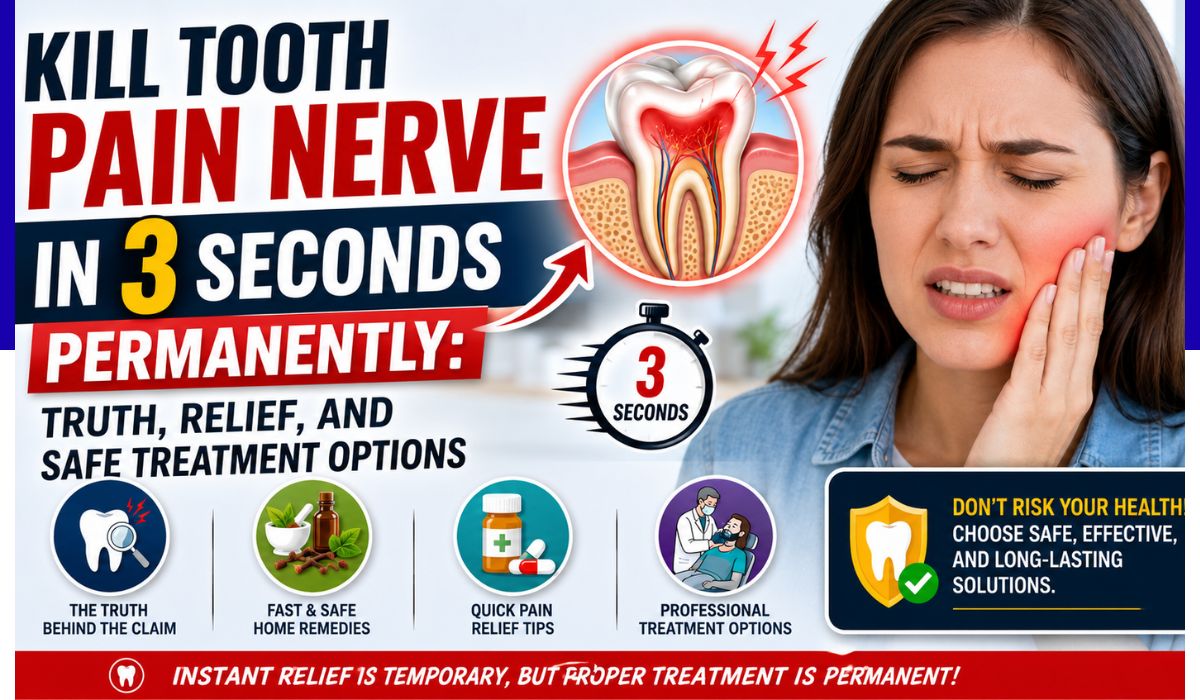
Severe tooth pain can feel unbearable. It often appears suddenly, becomes worse at night, and makes it difficult to eat, sleep, or even focus on daily tasks. When people experience intense discomfort, many search online for ways to “Kill Tooth Pain Nerve in 3 Seconds Permanently.” The idea of instant relief sounds comforting, especially during a dental emergency, but the truth is more complicated.
There is no medically proven way to permanently destroy a tooth nerve in only three seconds using a home remedy. Most viral tips found online only numb the area temporarily or hide symptoms for a short time. In some cases, these dangerous DIY methods can even damage the gums, worsen infection, or lead to tooth loss.
The good news is that there are safe ways to relieve tooth pain quickly while you arrange proper dental treatment. Understanding what causes tooth nerve pain, how to manage it safely, and when to see a dentist can protect both your comfort and your long-term oral health. This guide explains everything you need to know in simple, easy-to-understand language.
Quick Bio Information
| Topic | Helpful Fact |
|---|---|
| Main Cause | Deep Tooth Decay Often Triggers Nerve Pain |
| Common Symptom | Throbbing Or Sharp Tooth Pain |
| Fast Relief | Cold Compresses May Reduce Swelling |
| Temporary Remedy | Clove Oil Can Briefly Numb Pain |
| Permanent Solution | Root Canal Or Extraction |
| Emergency Sign | Facial Swelling Requires Immediate Care |
| Pain Trigger | Hot And Cold Foods Often Increase Sensitivity |
| Night Pain | Toothaches Commonly Feel Worse At Night |
| Hidden Risk | Pain May Stop When The Nerve Dies |
| Prevention | Fluoride Toothpaste Protects Enamel |
| Common Infection | Dental Abscesses Can Spread Quickly |
| Safe Rinse | Warm Saltwater Helps Reduce Bacteria |
| Dangerous Myth | Aspirin Should Never Be Placed On Gums |
| Recovery Time | Root Canal Soreness Usually Lasts A Few Days |
| Dental Habit | Teeth Grinding Can Damage Nerves |
| Oral Health Tip | Regular Checkups Prevent Severe Decay |
| Common Treatment | Fillings Stop Cavities Before Nerve Damage |
| Pain Medicine | Ibuprofen Helps Reduce Inflammation |
| Emergency Care | Difficulty Swallowing Needs Urgent Attention |
| Long-Term Health | Healthy Gums Protect Tooth Roots |
Can You Really Kill Tooth Pain Nerve In 3 Seconds Permanently?
The short answer is no. No safe home treatment can permanently kill a tooth nerve in three seconds. Tooth nerves sit deep inside the dental pulp, protected by hard enamel and dentin. Because of this strong protection, oils, rinses, or over-the-counter gels cannot instantly destroy the nerve permanently.
Many online claims confuse temporary numbness with permanent treatment. Products like clove oil or benzocaine may briefly numb pain signals, but they do not solve the infection, decay, or nerve damage causing the pain. Once the numbing effect fades, the discomfort usually returns.
Permanent relief only comes from professional dental procedures such as root canals or tooth extractions. These treatments remove infected tissue safely and stop the source of pain rather than simply covering it up.
What Causes Tooth Nerve Pain?
Tooth nerve pain usually develops when the inner pulp becomes irritated, inflamed, or infected. The pulp contains sensitive nerves and blood vessels, which is why even a small problem can cause severe discomfort.
Deep cavities are one of the most common causes. When bacteria break through the enamel and reach the pulp, the nerve becomes inflamed. Cracked or broken teeth can also expose the nerve to air, bacteria, and temperature changes.
Gum disease is another major factor. Receding gums expose the roots of teeth, increasing sensitivity and irritation. Teeth grinding, sports injuries, and untreated dental infections may also lead to painful nerve damage.
In some cases, pain spreads beyond the tooth and travels into the jaw, ear, or head. This is why toothaches can sometimes feel much larger than the affected area itself.
What Tooth Nerve Pain Feels Like
Tooth nerve pain can appear in different ways depending on the underlying problem. Some people feel a sharp stabbing sensation when drinking cold water, while others experience constant throbbing pain that worsens throughout the day.
Many patients notice increased sensitivity to hot or cold foods. Others feel pressure while chewing or biting down. A damaged nerve may also cause pain that wakes you during the night.
Sometimes the pain comes and goes. This can happen when inflammation temporarily settles before flaring up again. In more serious cases, swelling, pus, or a bad taste in the mouth may signal an abscess or spreading infection.
Understanding these symptoms early can help prevent more severe complications later.
Why Tooth Pain Often Gets Worse At Night
Many people notice that toothaches become more intense at bedtime. This happens for several reasons. When you lie down, blood flow to the head increases slightly, which can create extra pressure around inflamed nerves.
At night, there are also fewer distractions competing for your attention. During the day, work and activities may partially distract you from discomfort, but nighttime silence makes pain feel stronger.
Grinding teeth during sleep can also worsen irritation. People who clench their jaws unconsciously may wake up with sharper pain or headaches.
Sleeping with your head elevated and applying a cold compress to the cheek may help reduce nighttime discomfort temporarily.
Safe Ways To Relieve Tooth Nerve Pain Quickly At Home
Although you cannot permanently kill a tooth nerve at home, several safe methods may help reduce pain temporarily.
A cold compress placed against the outside of the cheek can numb the area and reduce swelling. Over-the-counter pain relievers like ibuprofen may also ease inflammation and discomfort.
Saltwater rinses remain one of the simplest and safest remedies. Warm saltwater helps reduce bacteria and soothe irritated tissue. Clove oil contains eugenol, a natural compound with mild numbing properties that may provide short-term comfort.
Hydrogen peroxide rinses diluted with water may help reduce bacteria, though they should never be swallowed. Peppermint tea bags cooled in the refrigerator can also provide gentle soothing effects for sensitive gums.
Soft foods are usually easier to tolerate during tooth pain episodes. Avoiding extremely hot, cold, sugary, or acidic foods may prevent additional irritation.
Dangerous DIY Remedies You Should Avoid
The internet is filled with risky dental hacks promising instant relief. Some people attempt to place aspirin directly on gums, believing it will “burn away” the pain. In reality, aspirin can cause chemical burns and damage soft tissue.
Harsh chemicals like bleach, alcohol, or hydrogen peroxide used improperly may seriously injure the mouth. Some viral videos even recommend heating needles or using glue on broken teeth, which can create severe infections.
Trying to “kill” the nerve yourself may delay proper dental care and allow the underlying problem to worsen. What begins as a small cavity could eventually become a dangerous abscess requiring emergency treatment.
Safe pain management should always focus on temporary comfort until a qualified dentist can evaluate the tooth properly.
Professional Treatments That Actually Work
Professional dental treatment is the only true solution for long-term tooth nerve pain relief. The most common procedure is a root canal. During this treatment, the dentist removes infected pulp, cleans the canals, and seals the tooth to prevent further infection.
Modern root canals are far more comfortable than many people expect. Local anesthesia numbs the area completely, and most patients feel relief soon after treatment.
If a tooth is too damaged to save, extraction may become necessary. Removing the tooth eliminates the infected nerve permanently. Dentists may later recommend implants, bridges, or dentures to restore function.
For less severe cases, fillings or crowns may protect the tooth before nerve damage becomes irreversible. Early treatment often prevents more expensive procedures later.
How Long Recovery Usually Takes
Pain relief after dental treatment depends on the severity of the infection and the type of procedure performed. Many patients feel immediate improvement after a root canal because the infected nerve has been removed.
Some mild soreness may remain for several days as surrounding tissues heal. Tooth extractions often require one to two weeks for full healing, though severe pain typically improves much sooner.
Soft foods, hydration, and proper oral hygiene help speed recovery. Dentists may recommend avoiding smoking, alcohol, or crunchy foods during healing.
If pain becomes worse instead of better after treatment, patients should contact their dentist promptly to rule out complications.
When Tooth Pain Becomes A Dental Emergency
Certain symptoms should never be ignored. Facial swelling, fever, difficulty swallowing, or pus around the tooth may signal a serious infection that requires urgent treatment.
A spreading dental infection can sometimes move into surrounding tissues and become dangerous. Severe throbbing pain that keeps you awake for multiple nights may also indicate advanced nerve damage.
Broken teeth caused by trauma should receive immediate attention, especially if bleeding or exposed nerves are visible. Fast treatment can sometimes save the tooth and prevent infection.
If swelling affects breathing or swallowing, emergency medical care may be necessary.
Can A Tooth Nerve Die On Its Own?
A tooth nerve can eventually die if infection or trauma cuts off its blood supply. Interestingly, pain may temporarily decrease once the nerve dies completely. However, this does not mean the problem is cured.
Dead teeth can still contain dangerous bacteria inside the root system. Without treatment, infection may spread into the jawbone and surrounding tissues.
Signs of a dying tooth may include dark discoloration, swelling, bad breath, or persistent sensitivity. Even if pain suddenly disappears, a dental evaluation is still necessary.
Ignoring a dead tooth often leads to larger problems and more costly treatment later.
Best Painkillers For Tooth Nerve Pain
Ibuprofen is often considered one of the best medications for tooth nerve pain because it reduces both pain and inflammation. Acetaminophen may also help relieve discomfort, especially for people who cannot take anti-inflammatory drugs.
Some dentists recommend alternating ibuprofen and acetaminophen for stronger temporary relief, though medication instructions should always be followed carefully.
Painkillers only manage symptoms. They do not eliminate infection or repair damaged teeth. If pain keeps returning, professional dental care remains essential.
People with stomach ulcers, kidney disease, pregnancy concerns, or certain medications should speak with a healthcare professional before taking pain relievers.
How To Prevent Tooth Nerve Pain In The Future
Good oral hygiene remains the best defense against tooth nerve pain. Brushing twice daily with fluoride toothpaste helps protect enamel and prevent cavities from reaching the pulp.
Daily flossing removes bacteria between teeth where toothbrushes cannot reach. Regular dental cleanings also help identify small problems before they become painful emergencies.
Limiting sugary drinks and acidic foods protects enamel from erosion. Wearing a mouthguard during sports or nighttime grinding may prevent cracks and fractures.
Many serious dental problems begin silently without pain. Preventive care is usually easier, less painful, and less expensive than emergency treatment.
Why Online “Instant Cure” Claims Continue To Spread
The promise of instant pain relief attracts millions of desperate readers online. Tooth pain can feel overwhelming, especially late at night when dental offices are closed. Social media platforms often spread exaggerated claims quickly because dramatic solutions gain attention.
Unfortunately, many viral remedies are unsupported by science. Some may provide a temporary numbing effect, leading people to believe the problem has been “fixed.” In reality, untreated infection often continues growing beneath the surface.
Reliable dental information should always come from qualified professionals and evidence-based medical sources. Understanding the difference between symptom relief and true treatment helps people make safer choices.
Final Thoughts
Searching for ways to “Kill Tooth Pain Nerve In 3 Seconds Permanently” is understandable when severe pain strikes suddenly. However, no instant home remedy can safely and permanently destroy a tooth nerve. Most quick fixes only mask symptoms for a short time while the underlying problem continues to worsen.
The safest approach is combining temporary pain relief methods with prompt professional dental care. Cold compresses, saltwater rinses, and over-the-counter medications may help you stay comfortable until treatment is available, but they should never replace a proper dental evaluation.
Tooth pain is your body’s warning sign that something needs attention. Listening to that signal early can prevent infections, save teeth, and protect your overall health for years to come.
FAQs About Kill Tooth Pain Nerve In 3 Seconds Permanently
Can Salt Kill Tooth Pain Instantly?
Salt cannot permanently kill tooth pain, but warm saltwater rinses may temporarily reduce bacteria and soothe irritated gums. This can provide mild short-term comfort.
Is Clove Oil Safe For Tooth Pain?
Clove oil is generally safe when used carefully in small amounts. It contains natural numbing compounds that may temporarily relieve pain, but excessive use can irritate gum tissue.
Why Does Tooth Pain Come And Go?
Pain may fluctuate because inflammation changes throughout the day. Temperature, pressure, infection, and even body position can affect symptoms.
Can Antibiotics Stop Tooth Nerve Pain?
Antibiotics may reduce infection temporarily, but they do not remove damaged nerve tissue. Most infected teeth still require dental procedures like root canals or extraction.
What Happens If You Ignore Tooth Pain?
Ignoring tooth pain may allow infection to spread deeper into the tooth and jaw. This can lead to abscesses, swelling, bone damage, or tooth loss.
Why Is Tooth Pain Worse When Lying Down?
Lying flat increases blood flow and pressure around inflamed nerves, which can make pain feel stronger at night.
Can A Dead Tooth Still Hurt?
Yes. Even if the nerve dies, surrounding tissues may remain infected or inflamed, causing continued discomfort and swelling.
How Quickly Should You See A Dentist For Severe Tooth Pain?
Persistent or severe tooth pain should ideally be evaluated within 24 to 48 hours, especially if swelling, fever, or difficulty eating develops.
Recommended For You: Lip Flip Before And After: What Results Can You Really Expect?