
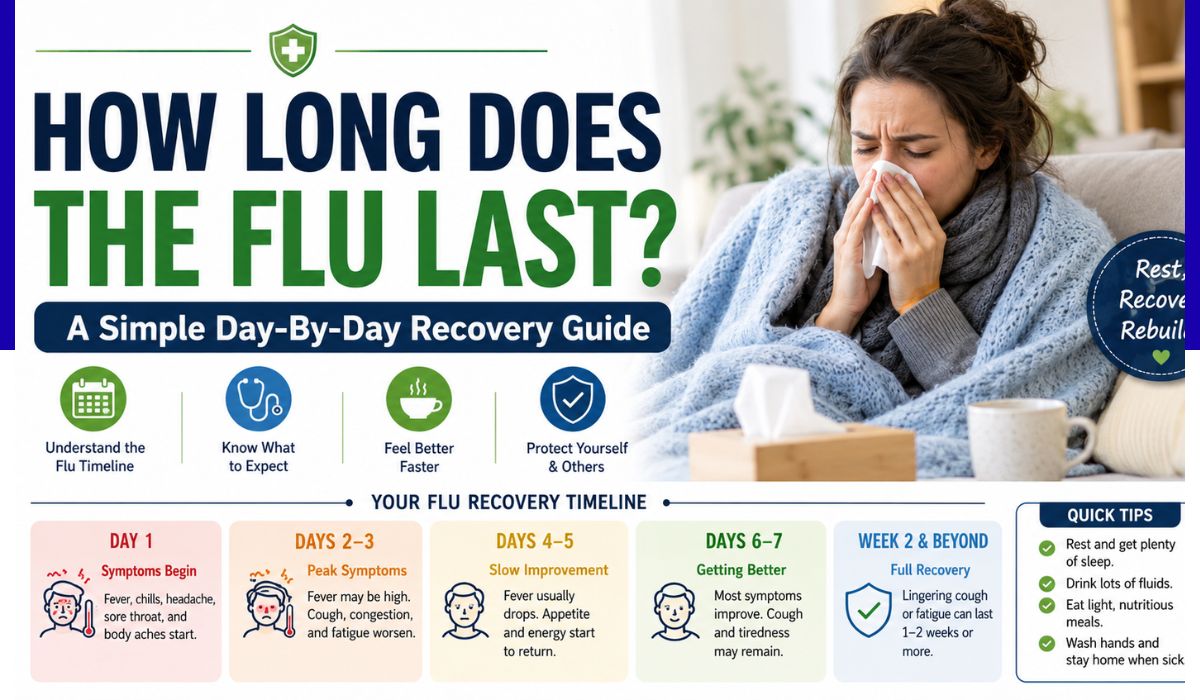
Few illnesses can make a person feel as miserable as the flu. One day you may feel perfectly fine, and the next day you are dealing with fever, chills, body aches, exhaustion, coughing, and a pounding headache. Because flu symptoms can appear suddenly and feel intense, one of the most common questions people ask is: How Long Does The Flu Last?
For most healthy adults, the flu usually lasts around five to seven days, although some symptoms like tiredness and coughing may continue for a couple of weeks. However, recovery time can vary depending on age, immune health, vaccination status, and whether complications develop. Understanding the typical flu recovery timeline can help you know what to expect and when it may be time to see a doctor.
This guide explains everything you need to know about flu duration, symptoms, contagious periods, treatment options, and recovery tips in a clear and easy-to-understand way.
Quick Bio Information About The Flu
| Flu Fact | Details |
|---|---|
| Medical Name | Influenza |
| Main Cause | Influenza Virus |
| Common Types | Influenza A And B |
| Usual Duration | 5 To 7 Days |
| Incubation Period | 1 To 4 Days |
| Most Common Symptom | Fever |
| Typical Fever Range | 100°F To 104°F |
| Most Contagious Period | First 3 To 4 Days |
| Main Spread Method | Coughing And Sneezing |
| Common Age Groups Affected | All Ages |
| Higher Risk Groups | Seniors And Young Children |
| Possible Complication | Pneumonia |
| Vaccine Available | Yes |
| Best Prevention Method | Annual Flu Shot |
| Recovery Support | Rest And Hydration |
| Antiviral Medication | Tamiflu |
| Common Pain Reliever | Tylenol |
| Flu Season Peak | Fall And Winter |
What Is The Flu?
The flu, also called influenza, is a contagious viral infection that mainly affects the nose, throat, and lungs. Unlike the common cold, the flu often appears suddenly and causes stronger symptoms. Influenza viruses spread easily through tiny droplets released when infected people cough, sneeze, or talk. The virus can also spread when someone touches contaminated surfaces and then touches their face.
Most seasonal flu cases are caused by Influenza A and Influenza B viruses. These viruses change slightly every year, which is why annual flu vaccines are recommended. While many people recover without serious problems, the flu can sometimes lead to complications like pneumonia, especially in older adults, young children, pregnant women, and people with chronic medical conditions.
How Long Does The Flu Last On Average?
The average flu lasts between five and seven days in healthy adults. Some people start feeling better after only a few days, while others may continue experiencing weakness or coughing for up to two weeks.
The first few days are usually the worst because symptoms tend to peak quickly. Fever, chills, muscle pain, and exhaustion are often strongest during the early stage of the illness. After that, symptoms gradually improve as the immune system fights off the infection.
People who receive yearly flu vaccines may experience milder symptoms and recover faster. On the other hand, people with weakened immune systems may have longer recovery periods and a higher risk of complications.
Common Flu Symptoms
Flu symptoms usually appear very quickly. Many people can even remember the exact hour they started feeling sick. One moment they feel normal, and the next they feel exhausted and feverish.
The most common flu symptoms include fever, chills, body aches, sore throat, dry cough, headaches, congestion, and severe fatigue. Some people also experience nausea, vomiting, or diarrhea, especially children.
Unlike a mild cold, the flu often causes deep muscle pain and overwhelming tiredness. Many people describe flu fatigue as feeling too weak to even get out of bed. These symptoms are signs that the immune system is actively fighting the virus.
Day 1 Of The Flu
The first day of the flu often begins suddenly. Fever may rise quickly, and chills can appear within hours. Many people also notice headaches, sore throat, and intense body aches.
Fatigue usually starts early and may feel extreme. Even simple activities like walking or eating can feel exhausting. Some people lose their appetite during this stage because the body focuses its energy on fighting the infection.
During Day 1, the virus is highly contagious. Resting early and avoiding contact with others can help prevent spreading the illness.
Days 2 To 3 Of The Flu
Days two and three are usually the hardest part of the flu recovery timeline. Fever may remain high, coughing often becomes worse, and muscle aches can feel severe. Congestion, sweating, and headaches are also common during this stage.
The body uses enormous amounts of energy to fight influenza, which explains why people often sleep much more than usual. Dehydration can also become a concern because fever causes fluid loss.
Drinking water, warm soups, and electrolyte drinks becomes especially important during these days. Some people use over-the-counter medications like Advil or Aleve to manage fever and discomfort.
Days 4 To 5 Of The Flu
Around Days 4 and 5, many people begin noticing small improvements. Fever often decreases, appetite slowly returns, and body aches become less intense. However, coughing and tiredness may still remain.
Even though symptoms improve, the body is still recovering internally. This is why doctors recommend continuing to rest rather than immediately returning to a busy routine. Pushing the body too hard too early may delay recovery and increase exhaustion.
Some people may still feel dizzy or weak during this phase, especially if they are not eating or drinking enough fluids.
Days 6 To 7 Of The Flu
By the end of the first week, most healthy adults begin feeling much better. Fever is usually gone, headaches improve, and energy slowly returns. However, many people still experience lingering coughing or mild fatigue.
This recovery stage is sometimes frustrating because people may look healthy but still feel tired inside. The immune system continues repairing inflammation caused by the virus even after major symptoms disappear.
People with mild flu cases may fully recover during this stage, while others need another week before feeling completely normal again.
Lingering Symptoms After The Flu
One reason people ask “How Long Does The Flu Last” is because some symptoms continue even after the infection itself has improved. Fatigue is the most common lingering symptom. A dry cough may also remain for one or two weeks.
This happens because the airways stay irritated even after the virus is mostly gone. The body also needs time to rebuild energy levels after days of fighting infection.
Sleep, hydration, and good nutrition can help speed recovery. Most lingering symptoms improve gradually without additional treatment.
How Long Is The Flu Contagious?
People with the flu can spread the virus before they even realize they are sick. In many cases, a person becomes contagious about one day before symptoms begin.
The flu is usually most contagious during the first three to four days of illness. However, some adults remain contagious for about a week. Young children and people with weakened immune systems may spread the virus even longer.
Doctors generally recommend staying home until fever has been gone for at least 24 hours without using fever-reducing medications. This helps reduce the spread of influenza in schools, workplaces, and public places.
Flu Vs Common Cold
Many people confuse the flu with the common cold because both illnesses affect the respiratory system. However, flu symptoms are usually much stronger and appear more suddenly.
Colds often develop gradually with mild sneezing, congestion, and sore throat. The flu, by comparison, commonly causes high fever, severe fatigue, chills, and strong body aches.
Another major difference is recovery time. A cold may feel annoying but usually does not leave people bedridden. The flu often interrupts daily life for several days because symptoms are much more intense.
When The Flu Becomes Serious
Although most people recover safely at home, flu complications can sometimes become dangerous. Warning signs include difficulty breathing, chest pain, confusion, severe dehydration, blue lips, or fever lasting longer than several days.
People over 65, pregnant women, young children, and individuals with conditions like asthma, diabetes, or heart disease have a greater risk of complications. Pneumonia is one of the most serious flu-related illnesses and may require hospital treatment.
Anyone experiencing worsening symptoms after initially improving should contact a healthcare professional quickly.
Best Flu Treatments And Recovery Tips
There is no instant cure for influenza, but supportive care can make recovery easier and help the body heal faster. Rest remains one of the most important treatments because the immune system needs energy to fight the virus.
Drinking plenty of fluids helps prevent dehydration caused by fever and sweating. Warm tea, broth, soups, and electrolyte drinks may soothe sore throats and improve comfort.
Pain relievers such as Tylenol can reduce fever and body aches. Some high-risk patients may also receive antiviral medications like Xofluza if treatment begins early enough.
Good sleep, light meals, humidified air, and avoiding smoking can also support faster healing.
How To Prevent The Flu
Prevention is still the best defense against influenza. Annual flu vaccines reduce the risk of severe illness and lower hospitalization rates. Even if vaccinated people still catch the flu, symptoms are often milder and shorter.
Regular handwashing remains one of the easiest and most effective ways to reduce virus spread. Avoiding close contact with sick individuals and disinfecting commonly touched surfaces can also help.
Healthy habits such as exercise, stress management, proper sleep, and balanced nutrition support immune function throughout flu season.
Why Flu Recovery Feels Different For Everyone
No two flu recoveries are exactly the same. Some people bounce back within a few days, while others feel drained for weeks. Several factors influence recovery time, including age, immune strength, chronic illnesses, sleep quality, and hydration.
Vaccinated individuals often recover more quickly because their immune systems already recognize part of the virus. Children may recover faster physically but remain contagious longer. Older adults sometimes experience longer fatigue because the immune response naturally weakens with age.
Understanding these differences helps explain why one person may recover quickly while another struggles longer with coughing or weakness.
Final Thoughts
So, How Long Does The Flu Last? For most healthy adults, flu symptoms usually improve within five to seven days, although tiredness and coughing may continue for a couple of weeks. The first few days are typically the hardest, but gradual improvement often begins after fever decreases.
Knowing the typical flu recovery timeline can help reduce anxiety and guide better decisions about rest, treatment, and medical care. While the flu can feel overwhelming, most people recover fully with hydration, sleep, and supportive care.
The best approach is prevention through vaccination, healthy habits, and early attention to symptoms. Taking care of the body during flu season can reduce both the severity and duration of illness while helping protect the people around you.
FAQs About How Long Does The Flu Last
Can The Flu Last Longer Than A Week?
Yes. While many people recover within seven days, coughing and fatigue can continue for one or two weeks after the main infection improves.
Why Am I Still Tired After The Flu?
Flu viruses place heavy stress on the immune system. Even after fever disappears, the body may still need time to rebuild energy and repair inflammation.
How Long Should I Stay Home With The Flu?
Most people should stay home until they are fever-free for at least 24 hours without using fever-reducing medication.
Can You Get The Flu Twice In One Season?
Yes. Different flu strains circulate every season, so it is possible to recover from one strain and later catch another.
Does The Flu Go Away On Its Own?
Most healthy adults recover naturally with rest, hydration, and supportive care. However, some people may need medical treatment if complications develop.
Is Vomiting Common With The Flu?
Vomiting and diarrhea are more common in children but can also occur in adults, especially with certain influenza strains.
Can Antiviral Drugs Shorten The Flu?
Yes. Prescription antiviral medications may reduce symptom severity and shorten illness duration if started within the first 48 hours.
What Is The Difference Between The Flu And A Cold?
The flu usually causes sudden fever, body aches, and severe fatigue, while colds are generally milder and develop more slowly.
Recommended For You: Define FUPA: What It Means And Why People Talk About It