
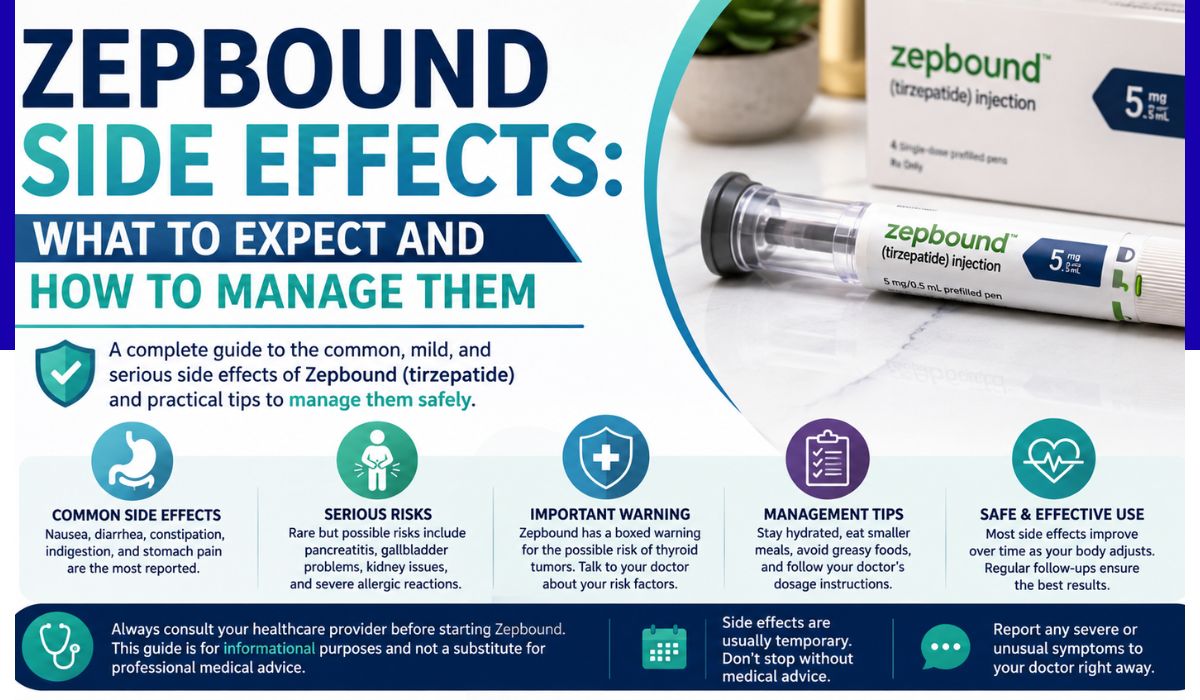
Zepbound Side Effects are an important topic for anyone starting treatment with this weight loss medication. Zepbound has become widely used for managing obesity and related health conditions, but like all prescription drugs, it can cause unwanted reactions in the body. Understanding these effects early helps patients feel more prepared, reduce anxiety, and manage symptoms more effectively. This article explains everything in a simple, clear way so you know exactly what to expect from the beginning of treatment to long-term use.
Quick Bio Information Boxes
Quick Bio Box 1: Zepbound Contains Tirzepatide And Is Used For Weight Management In Adults With Obesity Or Weight Related Conditions.
Quick Bio Box 2: Zepbound Works By Activating GLP-1 And GIP Hormone Receptors To Reduce Appetite And Slow Digestion.
Quick Bio Box 3: The Most Common Zepbound Side Effects Are Nausea, Vomiting, Diarrhea, And Constipation.
Quick Bio Box 4: Zepbound Side Effects Are Usually Strongest During The First Few Weeks Of Treatment.
Quick Bio Box 5: Digestive Symptoms Occur Because The Medication Slows Stomach Emptying.
Quick Bio Box 6: Dose Increases May Temporarily Worsen Zepbound Side Effects Before The Body Adjusts.
Quick Bio Box 7: Fatigue And Dizziness Can Occur In Some Users During Early Treatment.
Quick Bio Box 8: Injection Site Reactions Such As Redness Or Itching Are Generally Mild.
Quick Bio Box 9: Hair Loss May Occur Due To Rapid Weight Loss Rather Than The Medication Itself.
Quick Bio Box 10: Severe Side Effects Include Pancreatitis, Gallbladder Problems, And Kidney Issues.
Quick Bio Box 11: Zepbound Carries A Boxed Warning For A Possible Risk Of Thyroid Tumors.
Quick Bio Box 12: People With MEN2 Or Medullary Thyroid Cancer Should Avoid Zepbound.
Quick Bio Box 13: Staying Hydrated Helps Reduce Kidney Related Risks During Treatment.
Quick Bio Box 14: Eating Smaller Meals Can Reduce Nausea And Digestive Discomfort.
Quick Bio Box 15: Zepbound May Reduce The Effectiveness Of Oral Birth Control Pills.
Quick Bio Box 16: Side Effects Often Improve As The Body Adjusts To Treatment Over Time.
What Zepbound Is And How It Works In The Body
Zepbound is a prescription medication that contains tirzepatide, a compound that works on two important hormone systems in the body. It affects GLP-1 and GIP receptors, which play a role in appetite control, digestion speed, and blood sugar regulation. By slowing down how quickly food leaves the stomach and reducing hunger signals in the brain, it helps people feel full sooner and eat less. While this mechanism supports weight loss, it also explains why many Zepbound Side Effects are related to digestion and stomach comfort.
Why Zepbound Side Effects Happen In The First Place
Zepbound Side Effects often occur because the body is adjusting to changes in digestion and appetite regulation. When stomach emptying slows, food stays in the stomach longer, which can trigger nausea, bloating, or discomfort. Hormonal shifts also affect how the brain responds to hunger and fullness. For many users, these changes feel unusual at first, but they usually become easier to manage as the body adapts over time.
Common Zepbound Side Effects Most People Experience
The most frequently reported Zepbound Side Effects are related to the digestive system. These include nausea, vomiting, diarrhea, constipation, stomach pain, and indigestion. Some people also experience gas, burping, or a feeling of fullness even after small meals. These symptoms are usually mild to moderate and tend to improve as treatment continues. They are most noticeable during the early weeks or after a dose increase.
What Happens During The First Weeks Of Treatment
During the first few weeks, Zepbound Side Effects are often at their strongest because the body is still adjusting. Many users report mild nausea after meals, changes in bowel movements, or reduced appetite that feels stronger than expected. These early reactions are a normal part of the adjustment process. Healthcare providers typically start patients on a low dose to help reduce discomfort and allow the body to adapt gradually.
Side Effects After Dose Increases And Adjustments
As the dosage increases, Zepbound Side Effects may temporarily return or become more noticeable. This is because each dose adjustment introduces a stronger effect on digestion and appetite signals. Some patients may feel nausea or fatigue again for a short period. However, these symptoms usually settle down as the body becomes familiar with the new dose level. Slow dose progression is one of the key strategies used to improve tolerance.
Less Common But Noticeable Side Effects
While digestive issues are the most common, other Zepbound Side Effects can also appear. Some people report fatigue, dizziness, or mild injection site reactions such as redness or itching. Hair thinning has also been reported, although it is often linked to rapid weight loss rather than the medication itself. These effects are generally temporary and improve as the body stabilizes during treatment.
Serious Zepbound Side Effects That Require Attention
Although rare, some Zepbound Side Effects can be serious and require immediate medical care. These include severe stomach pain that could signal pancreatitis, signs of gallbladder problems such as upper abdominal pain, or symptoms of dehydration leading to kidney issues. Severe allergic reactions may also occur in rare cases, causing swelling, difficulty breathing, or rash. These conditions require prompt medical evaluation to prevent complications.
Thyroid Cancer Warning And What It Means For Patients
Zepbound carries a boxed warning related to a potential risk of thyroid tumors based on animal studies. While this has not been confirmed in humans, patients with a personal or family history of medullary thyroid cancer or Multiple Endocrine Neoplasia Syndrome Type 2 should avoid this medication. Symptoms such as a lump in the neck, hoarseness, or difficulty swallowing should always be checked by a doctor. This warning is precautionary but important for patient safety.
Digestive System Reactions And Why They Are So Common
Most Zepbound Side Effects come from changes in the digestive system. Because the medication slows stomach emptying, food digestion becomes more gradual. This can lead to nausea, bloating, constipation, or diarrhea depending on how the body reacts. These effects are usually temporary and can often be managed by eating smaller meals, avoiding fatty foods, and staying well hydrated throughout the day.
Kidney Health And Dehydration Risks During Treatment
Kidney-related Zepbound Side Effects are usually not caused directly by the medication but can result from dehydration. If nausea, vomiting, or diarrhea become severe, fluid loss may affect kidney function. Symptoms such as reduced urination, dark urine, or swelling should be taken seriously. Maintaining hydration and reporting persistent digestive issues early can help prevent complications.
Gallbladder And Pancreas-Related Concerns
In rare cases, Zepbound Side Effects may involve the gallbladder or pancreas. Gallstones or gallbladder inflammation can cause sharp pain in the upper abdomen, while pancreatitis may cause severe, persistent stomach pain that radiates to the back. These conditions require immediate medical attention. Although uncommon, they are important risks that patients should understand before starting treatment.
How To Manage Zepbound Side Effects Effectively
Managing Zepbound Side Effects often involves simple lifestyle adjustments. Eating smaller meals, avoiding heavy or greasy foods, and eating slowly can significantly reduce nausea and discomfort. Drinking enough water helps prevent constipation and dehydration. Many patients also find that sticking to a consistent routine and avoiding overeating makes symptoms more manageable over time. Doctors may also adjust dosage if side effects become difficult.
Zepbound Compared To Other Weight Loss Medications
When comparing Zepbound Side Effects with similar medications such as Wegovy, both treatments share many of the same digestive reactions. Nausea, constipation, and diarrhea are common in both. However, individual experiences vary, and some patients tolerate one medication better than the other. Both medications require gradual dose increases to reduce side effects and improve comfort during treatment.
Special Considerations For Pregnancy And Birth Control
Zepbound Side Effects also include important safety considerations for pregnancy and contraception. This medication is not recommended during pregnancy because weight loss is not advised at that time. It may also reduce the effectiveness of oral contraceptive pills during certain periods of treatment. Patients are often advised to use additional forms of birth control during the first weeks of therapy and after dose increases to ensure protection.
Conclusion And Final Thoughts On Zepbound Side Effects
Understanding Zepbound Side Effects helps patients feel more confident and prepared during treatment. While digestive issues are common, they are usually temporary and manageable with the right care. Serious side effects are rare but important to recognize early. With proper medical guidance, gradual dose adjustments, and healthy lifestyle habits, most people can safely continue treatment and achieve meaningful weight loss results while minimizing discomfort.
Frequently Asked Questions About Zepbound Side Effects
How Long Do Zepbound Side Effects Last
Zepbound Side Effects such as nausea or stomach discomfort usually last a few days to a few weeks after starting treatment or increasing the dose. Most patients notice gradual improvement as their body adjusts to the medication. Eating smaller meals and following dosage instructions can help shorten this adjustment period.
Are Zepbound Side Effects Permanent
Most Zepbound Side Effects are not permanent. They are typically temporary and decrease as the body becomes used to the medication. Serious long-term effects are rare, but ongoing medical monitoring is important to ensure safe use over time.
What Is The Most Common Zepbound Side Effect
The most common Zepbound Side Effect is nausea. It may occur especially in the early stages of treatment. Other frequent symptoms include constipation and diarrhea, all of which are related to slower digestion caused by the medication.
Can Zepbound Cause Long Term Side Effects
Long-term Zepbound Side Effects are still being studied. Current research shows that most side effects are short-term and digestive in nature. However, ongoing medical supervision is recommended to monitor any rare or delayed effects.
Can Zepbound Cause Hair Loss
Hair loss is not a direct common side effect of Zepbound, but some patients may experience temporary shedding due to rapid weight loss or changes in nutrition. This type of hair loss is usually reversible once the body stabilizes.
Is Zepbound Safe For Everyone
Zepbound is not suitable for everyone. People with a history of certain thyroid cancers or endocrine conditions should avoid it. A healthcare provider will evaluate medical history before prescribing the medication to ensure safety.
What Should I Do If Side Effects Become Severe
If Zepbound Side Effects become severe, such as persistent vomiting, strong abdominal pain, or signs of dehydration, medical help should be sought immediately. Early intervention can prevent complications and ensure safe continuation of treatment.
Recommended For You: Early Pregnancy Symptoms: 15 Signs You Might Be Pregnant Before A Missed Period