
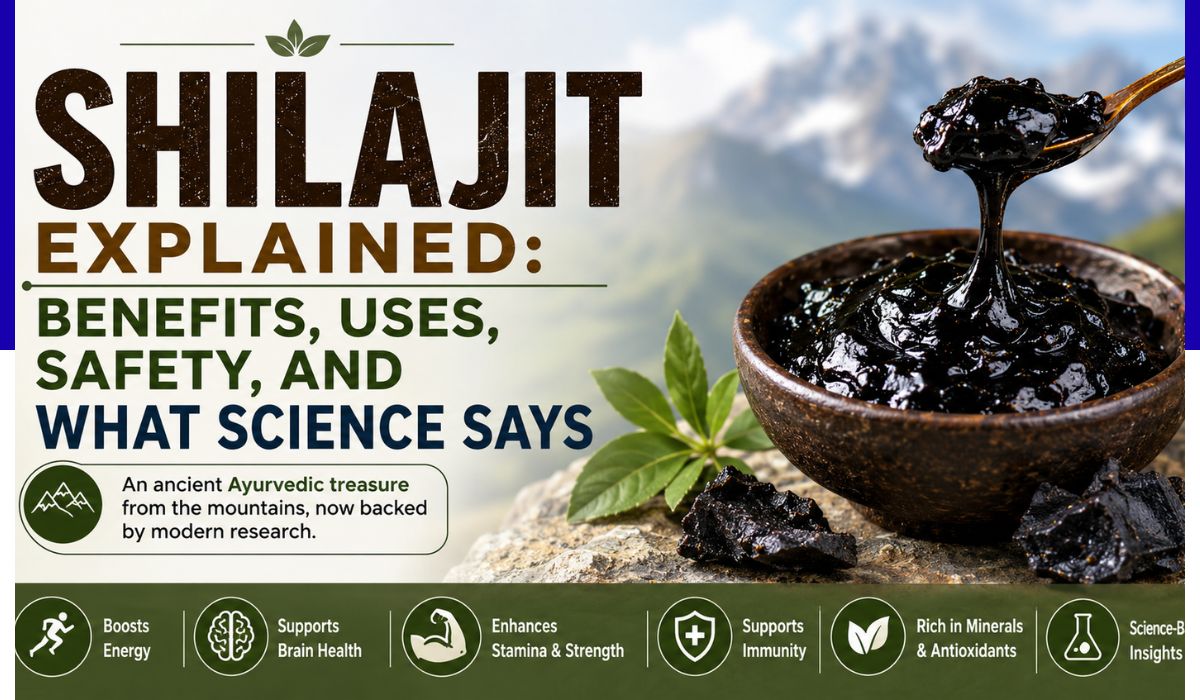
Shilajit has become one of the most talked-about natural supplements in recent years. Often described as a powerful mineral-rich substance from the mountains, Shilajit has a long history in traditional Ayurvedic medicine and is now attracting attention from researchers, wellness experts, and consumers worldwide. Supporters claim that Shilajit can boost energy, support healthy aging, improve fertility, enhance mental performance, and contribute to overall well-being.
While these claims sound impressive, many people wonder whether modern science supports them. The truth is that Shilajit contains several interesting natural compounds that may offer health benefits, but scientific research is still evolving. Understanding what Shilajit is, how it works, and what the evidence actually says can help you make informed decisions.
This guide explores the origins, composition, potential benefits, safety concerns, and current scientific understanding of Shilajit in a balanced and easy-to-understand way.
Quick Bio Information About Shilajit
| Fact | Information |
|---|---|
| Common Name | Shilajit |
| Traditional System | Ayurveda |
| Appearance | Black Or Dark Brown Resin |
| Origin | Mountain Rock Crevices |
| Main Active Compound | Fulvic Acid |
| Other Compounds | Humic Acid, Antioxidants |
| Typical Form | Resin, Capsules, Powder |
| Natural Source | Decomposed Plant Matter |
| Traditional Use | Vitality And Wellness |
| Age Of Formation | Hundreds To Thousands Of Years |
| Popular Region | Himalayan Mountains |
| Taste | Bitter And Earthy |
| Mineral Content | Rich In Trace Minerals |
| Research Status | Emerging |
| Common Purpose | Energy Support |
| Fertility Interest | Frequently Studied |
| Brain Health Interest | Under Investigation |
| Immune Support Claims | Being Researched |
| Safety Concern | Heavy Metal Contamination |
| Best Choice | Purified, Tested Products |
What Is Shilajit?
Shilajit is a naturally occurring substance that forms over centuries as plants and other organic materials slowly decompose within mountain rocks. It is most commonly found in the Himalayan Mountains, although deposits also exist in regions of Central Asia, Russia, Tibet, Mongolia, and South America.
In its natural state, Shilajit appears as a dark brown or black resin-like material with a sticky texture. When exposed to warmth, it becomes softer and easier to handle. Traditional healers have collected and purified Shilajit for thousands of years, believing it supports vitality, strength, and longevity.
Today, Shilajit is available in several forms, including purified resin, capsules, powders, tablets, and liquid extracts. The resin form is often considered the least processed and is preferred by many traditional users.
The History Of Shilajit In Traditional Medicine
Shilajit has been an important part of Ayurvedic medicine for more than 3,000 years. Ancient Ayurvedic texts described it as a rejuvenating substance capable of supporting physical strength, mental clarity, and overall health.
The name “Shilajit” comes from Sanskrit and is often translated as “Conqueror Of Mountains And Destroyer Of Weakness.” Traditional practitioners classified it as a Rasayana, a category of substances believed to promote healthy aging and improve vitality.
Historically, Shilajit was used for a wide range of purposes, including supporting digestion, enhancing stamina, promoting reproductive health, and helping the body adapt to physical stress. While many of these traditional uses remain popular today, modern science is still working to determine which claims are supported by strong evidence.
What Is Shilajit Made Of?
One reason Shilajit attracts so much scientific interest is its complex composition. Unlike many supplements that contain a single active ingredient, Shilajit contains hundreds of naturally occurring compounds.
The most studied component is Fulvic Acid. This natural substance forms during the breakdown of organic matter and is believed to play a role in nutrient transport and antioxidant activity.
Shilajit also contains Humic Acid, Dibenzo-Alpha-Pyrones, Amino Acids, Antioxidants, and Trace Minerals. Common minerals found in purified Shilajit include Iron, Magnesium, Zinc, Copper, Potassium, Manganese, and Selenium.
The exact composition varies depending on where the Shilajit was harvested, environmental conditions, and purification methods. This natural variation is one reason why product quality can differ significantly between brands.
How Shilajit Works In The Body
Researchers believe that Shilajit may work through several mechanisms. Fulvic Acid appears to help transport nutrients into cells while also acting as an antioxidant. Antioxidants help protect cells from damage caused by unstable molecules known as free radicals.
Some studies suggest that Shilajit may support the function of mitochondria, which are often called the powerhouses of cells because they produce energy. Better mitochondrial function could potentially explain why some users report increased energy levels and reduced fatigue.
Scientists also believe certain compounds in Shilajit may influence inflammation, immune function, and cellular repair processes. However, many of these proposed mechanisms have been observed primarily in laboratory settings, meaning more human research is needed.
Potential Energy And Performance Benefits
One of the most popular reasons people take Shilajit is to support energy levels. Traditional medicine has long considered it a natural tonic for physical stamina and endurance.
Several small studies suggest that Shilajit may help reduce feelings of fatigue and improve exercise recovery. Researchers believe this effect may be linked to its antioxidant properties and potential support for mitochondrial energy production.
People who experience demanding work schedules, intense physical activity, or age-related declines in energy often turn to Shilajit as part of their wellness routine. While early findings are encouraging, larger human studies are still needed to confirm these benefits.
Shilajit And Healthy Aging
Interest in Shilajit as an anti-aging supplement largely comes from its antioxidant content. Oxidative stress is a natural process that occurs when free radicals damage cells over time. Many scientists believe oxidative stress contributes to aging and age-related diseases.
The Fulvic Acid found in Shilajit may help neutralize some of these free radicals. Preliminary research has also explored whether Shilajit can support collagen production, muscle recovery, and cellular health.
Although these findings are promising, it is important to remember that no supplement can stop aging. Healthy aging depends on many factors, including nutrition, physical activity, sleep quality, and overall lifestyle.
Potential Benefits For Brain Health
Brain health is another area where Shilajit has attracted scientific attention. Researchers have investigated whether Fulvic Acid may help reduce the accumulation of harmful protein plaques associated with cognitive decline.
Laboratory studies suggest that compounds within Shilajit may help support healthy nerve cell function and reduce certain processes linked to neurodegenerative diseases. These findings have led to interest in its potential role in supporting memory and cognitive performance.
However, most of the evidence currently comes from laboratory and animal studies. Human research remains limited, so it is too early to conclude that Shilajit can prevent or treat cognitive disorders.
Shilajit And Male Fertility
Traditional Ayurvedic medicine has long used Shilajit as a reproductive health tonic. Modern research has explored whether these traditional uses may have a scientific basis.
Some small clinical studies found improvements in sperm count, sperm motility, and testosterone levels among men who used purified Shilajit over several months. These results generated significant interest within the fertility research community.
Despite these findings, researchers caution that larger and better-designed studies are needed before Shilajit can be recommended as a fertility treatment. It should be viewed as a potential supportive supplement rather than a medical solution for infertility.
Effects On Stress And Overall Wellness
Many users report feeling more resilient to stress while taking Shilajit. Although scientific evidence remains limited, there are several possible explanations for this effect.
Shilajit contains Magnesium and other minerals that play important roles in nervous system function. Some researchers also believe its antioxidant properties may help reduce certain biological effects associated with chronic stress.
In traditional medicine, Shilajit is often considered an adaptogenic substance, meaning it may help the body adapt to physical and mental challenges. While this concept is widely used in herbal medicine, further scientific validation is still needed.
Possible Immune And Inflammation Support
Inflammation is a normal part of the body’s defense system, but excessive or chronic inflammation can contribute to health problems. Some laboratory studies suggest that compounds within Shilajit may influence inflammatory pathways.
Researchers have also explored whether Shilajit has immunomodulatory properties. This means it may help regulate certain immune responses rather than simply increasing or decreasing immune activity.
These findings are interesting, but most research remains in early stages. There is currently insufficient evidence to recommend Shilajit as a treatment for immune-related conditions.
What Science Says About Shilajit
Scientific interest in Shilajit continues to grow, but it is important to separate promising research from proven facts. Many studies investigating Shilajit involve small groups of participants, laboratory experiments, or animal models.
This does not mean the research is unimportant. Early studies often provide valuable insights that guide future investigations. However, they are not enough to establish definitive health claims.
The current scientific consensus is that Shilajit shows potential in several areas, including energy production, fertility support, antioxidant activity, and cellular health. At the same time, stronger human clinical trials are needed before researchers can draw firm conclusions.
Common Uses Of Shilajit Today
Modern consumers use Shilajit for many reasons. Some take it to support energy and physical performance, while others use it for general wellness, healthy aging, cognitive support, or reproductive health.
Purified resin remains one of the most popular forms because it undergoes minimal processing. Capsules and tablets offer convenience, while powders can be mixed into beverages.
Usage patterns vary widely. Some individuals use Shilajit daily, while others cycle it periodically. Following product instructions and seeking professional medical guidance is generally recommended.
Safety Concerns And Potential Side Effects
Safety is one of the most important topics when discussing Shilajit. Raw, unprocessed Shilajit may contain contaminants such as heavy metals, fungi, bacteria, and other unwanted substances.
Research has identified possible contamination with Lead, Mercury, Arsenic, Cadmium, Chromium, and other toxic materials in some products. Proper purification is therefore essential.
Reported side effects may include digestive discomfort, nausea, diarrhea, dizziness, headaches, and allergic reactions. Some studies also suggest Shilajit may influence hormone levels, particularly testosterone.
Most available research indicates that purified Shilajit is generally well tolerated when used appropriately. Nevertheless, quality control remains a major concern.
Who Should Avoid Shilajit?
Certain groups should exercise caution when considering Shilajit supplementation. Pregnant women, breastfeeding mothers, and children should generally avoid it due to limited safety data.
People with iron overload disorders may also need to avoid Shilajit because of its mineral content. Individuals with chronic medical conditions involving the liver, kidneys, blood pressure, blood clotting, immune function, or blood sugar regulation should consult a healthcare professional before use.
Anyone taking prescription medications should discuss potential interactions with a qualified healthcare provider. This step can help reduce unnecessary risks and ensure safe supplement use.
How To Choose A High-Quality Shilajit Supplement
Because quality varies significantly between products, selecting a reputable supplement is essential. Look for products that clearly state they contain purified Shilajit and provide information about third-party testing.
Certificates Of Analysis can help verify purity and screen for heavy metals and microbial contamination. Transparent companies often provide detailed testing information and sourcing details.
Products with unrealistic marketing claims should be approached carefully. No supplement can cure every disease, and trustworthy manufacturers typically present balanced information supported by available evidence.
Final Thoughts
Shilajit is one of the most fascinating natural substances used in traditional medicine. Its rich history, unique composition, and growing scientific interest have made it a popular supplement among people seeking natural approaches to wellness.
Research suggests that Shilajit may support energy production, healthy aging, reproductive health, and cellular function. At the same time, many of its most popular health claims require stronger scientific confirmation through larger human studies.
For individuals interested in trying Shilajit, quality and safety should remain top priorities. Choosing purified, independently tested products and consulting a healthcare professional can help ensure a safer experience. While Shilajit is not a miracle cure, it remains an intriguing supplement with promising potential that researchers continue to explore.
FAQs About Shilajit
What Is Shilajit Used For?
Shilajit is commonly used to support energy, vitality, physical performance, healthy aging, cognitive function, and reproductive health. Traditional medicine has used it for centuries, while modern research continues to investigate its potential benefits.
Is Shilajit Safe To Take Daily?
Many people take purified Shilajit daily without significant problems. However, safety depends on product quality, dosage, individual health conditions, and professional guidance. Using tested and purified products is especially important.
How Long Does It Take For Shilajit To Work?
Results vary between individuals. Some people report noticeable changes in energy and well-being within a few weeks, while others may require several months of consistent use before experiencing benefits.
Does Shilajit Increase Testosterone?
Some small studies have reported increases in testosterone levels among men using purified Shilajit. However, more research is needed to confirm these findings and determine their long-term significance.
Can Women Take Shilajit?
Women can use Shilajit in certain circumstances, but those who are pregnant, breastfeeding, or managing medical conditions should first consult a healthcare professional to discuss safety and suitability.
What Is The Best Form Of Shilajit?
Many users prefer purified resin because it undergoes minimal processing. However, capsules, powders, and tablets can also be effective when purchased from reputable manufacturers that perform quality testing.
Are There Any Side Effects Of Shilajit?
Possible side effects include nausea, digestive discomfort, diarrhea, headaches, dizziness, and allergic reactions. Contaminated products may pose additional health risks, which is why quality testing is essential.
Is Shilajit Scientifically Proven?
Scientific research supports some potential benefits of Shilajit, particularly regarding antioxidant activity and energy metabolism. However, many claims remain under investigation, and additional large-scale human studies are needed before definitive conclusions can be made.
Recommended For You: Metamucil Explained: Benefits, Uses, and How It Supports Digestive Health Naturally