
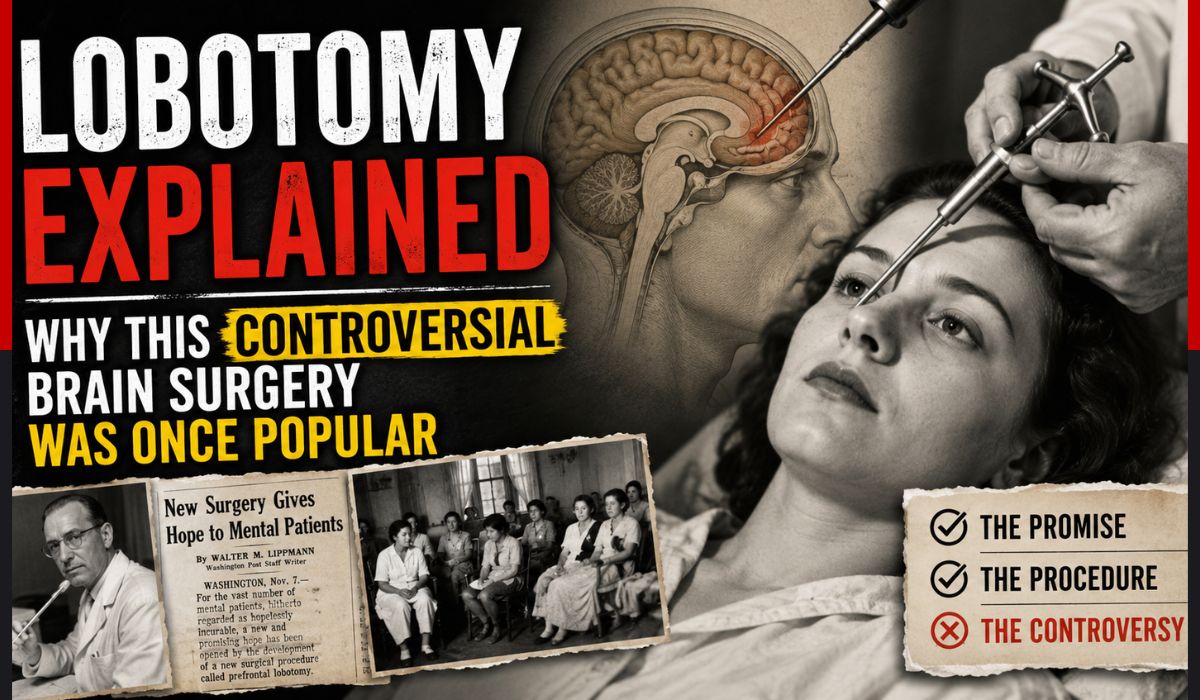
Few medical procedures have generated as much debate and controversy as the Lobotomy. Once promoted as a groundbreaking treatment for severe mental illness, the procedure later became a symbol of the dangers of poorly understood medical interventions. During the mid-20th century, thousands of people around the world underwent lobotomy surgery in the hope of relieving symptoms of schizophrenia, severe depression, anxiety, and other psychiatric conditions. At a time when effective medications and modern therapies did not exist, many doctors believed that altering the brain could offer relief to patients who had few other options.
Today, the history of the Lobotomy serves as an important lesson in medicine, ethics, and mental health care. While some patients appeared to experience reduced symptoms, many others suffered lasting physical, emotional, and cognitive harm. Understanding how lobotomies developed, why they became popular, and why they eventually disappeared provides valuable insight into the evolution of modern psychiatry. This article explores every aspect of the Lobotomy, from its origins and procedures to its risks, controversies, and lasting legacy.
Quick Bio Information
| Fact | Information |
|---|---|
| Medical Name | Lobotomy |
| Category | Psychosurgery |
| Main Brain Area | Frontal Lobe |
| Developed | Late 19th Century |
| Popular Period | 1930s–1950s |
| Early Pioneer | Gottlieb Burckhardt |
| Major Developer | António Egas Moniz |
| Common U.S. Advocate | Walter Freeman |
| Surgical Goal | Reduce Psychiatric Symptoms |
| Typical Patients | Severe Mental Illness Cases |
| Famous Method | Transorbital Lobotomy |
| Alternative Name | Leukotomy |
| Peak Use | Mid-20th Century |
| Main Criticism | Severe Side Effects |
| Modern Status | Largely Obsolete |
| Modern Equivalent | Neurosurgery For Mental Disorders |
| Key Ethical Concern | Informed Consent |
| Replacement Treatments | Medications And Therapy |
What Is A Lobotomy?
A Lobotomy is a type of brain surgery that involves cutting, damaging, or removing connections in the frontal lobe of the brain. The frontal lobe plays a major role in decision-making, emotional control, personality, behavior, planning, and problem-solving. Doctors who supported lobotomies believed that disrupting certain brain pathways could reduce severe psychiatric symptoms.
The term “Lobotomy” actually refers to several related procedures. Some involved removing small sections of brain tissue, while others focused on severing nerve connections between the frontal lobe and deeper structures of the brain. The most widely known form was the Transorbital Lobotomy, in which a surgical instrument was inserted through the eye socket to reach the frontal lobe. Although these procedures varied, they shared the same goal: altering brain function to change behavior and emotional responses.
Why Was Lobotomy Developed?
To understand why lobotomies became popular, it is important to understand the state of mental health care during the late nineteenth and early twentieth centuries. Hospitals and psychiatric institutions were overcrowded, and doctors had very few effective treatments available for severe mental illnesses. Conditions such as schizophrenia, major depression, and psychosis often left patients hospitalized for years or even decades.
Psychiatry was still developing as a medical field. Many theories about mental illness were based on limited scientific evidence, and treatments often focused on controlling symptoms rather than addressing underlying causes. Faced with large numbers of patients and few successful therapies, some physicians became interested in the idea that changing the physical structure of the brain might reduce distressing symptoms. This environment helped create the conditions that allowed the Lobotomy to emerge as a treatment option.
The Origins Of Lobotomy
The roots of the Lobotomy can be traced back to the late nineteenth century. In 1891, Swiss psychiatrist Gottlieb Burckhardt performed experimental brain surgeries on several patients with severe schizophrenia. His goal was not to cure mental illness but to reduce aggressive and disruptive behavior. Although some patients became calmer, the medical community largely rejected his work due to concerns about safety and effectiveness.
Interest in psychosurgery resurfaced decades later when Portuguese neurologist António Egas Moniz developed a procedure known as Leukotomy during the 1930s. Working with neurosurgeon Almeida Lima, Moniz believed that mental illnesses were caused by abnormal connections within the brain. By cutting these connections, he hoped to improve psychiatric symptoms. His work attracted international attention and eventually earned him the Nobel Prize in Physiology or Medicine in 1949, a decision that remains controversial today.
How Lobotomy Became Popular
The popularity of the Lobotomy increased rapidly during the 1930s and 1940s. Hospitals were searching for ways to manage growing numbers of patients with severe mental illnesses, and early reports suggested that some individuals became calmer after surgery. Although scientific evidence was limited by modern standards, many doctors viewed these results as promising.
In the United States, neurologist Walter Freeman became one of the most influential advocates of the procedure. Along with neurosurgeon James Watts, Freeman promoted lobotomy as a practical treatment for psychiatric disorders. He traveled extensively, demonstrating the surgery and encouraging hospitals to adopt it. As public awareness grew, thousands of patients underwent the procedure, making lobotomy one of the most widely known forms of psychosurgery in medical history.
The Different Types Of Lobotomy
Over time, doctors developed several versions of the procedure. The earliest forms involved open brain surgery, requiring surgeons to drill holes into the skull to access targeted areas of the brain. These operations were invasive and carried significant risks.
Leukotomy became one of the most common approaches. In this procedure, surgeons cut nerve fibers connecting the frontal lobe to other parts of the brain. Another variation, known as Topectomy, involved removing portions of frontal lobe tissue. The most famous technique, the Transorbital Lobotomy, used a slender instrument inserted through the eye socket to reach the brain without opening the skull. This method was faster and less expensive, contributing significantly to the widespread use of lobotomies during the 1940s and 1950s.
How Was A Lobotomy Performed?
Traditional lobotomy procedures usually took place in a hospital operating room. Surgeons drilled openings in the skull and used specialized instruments to cut connections within the frontal lobe. The procedure required anesthesia and a surgical team.
The Transorbital Lobotomy simplified the process considerably. Patients were often sedated using electroconvulsive therapy to induce unconsciousness. A long instrument resembling an ice pick was inserted above the eye and pushed through the thin bone of the eye socket. The surgeon then moved the instrument within the brain to sever nerve pathways. Although the technique was promoted as quick and efficient, it dramatically increased concerns about patient safety and surgical standards.
What Conditions Were Lobotomies Used To Treat?
Doctors used lobotomies to treat a wide range of psychiatric conditions. Schizophrenia was among the most common diagnoses associated with the procedure. Severe depression, chronic anxiety, obsessive behaviors, and psychosis were also frequent reasons for surgery.
Unfortunately, the procedure was sometimes used in ways that would be considered unethical today. Individuals with intellectual disabilities, behavioral problems, or socially undesirable behaviors were occasionally subjected to lobotomies. In some cases, prejudice influenced treatment decisions, reflecting broader societal attitudes rather than sound medical evidence. These practices remain a significant source of criticism in the history of mental health care.
What Effects Did Lobotomies Have On Patients?
The effects of a Lobotomy varied greatly from person to person. Supporters of the procedure often pointed to cases in which patients appeared calmer, less anxious, or less aggressive after surgery. In psychiatric hospitals, some individuals who had previously been difficult to manage became quieter and more cooperative. These outcomes were often presented as evidence that the procedure was successful.
However, the reality was far more complicated. Many patients experienced significant changes in personality and behavior. Apathy became one of the most common outcomes. People who once showed strong emotions, ambitions, or interests sometimes lost motivation and became emotionally detached. Others struggled with concentration, planning, and decision-making. Family members frequently reported that their loved ones seemed like completely different people after the operation. While symptoms of mental illness occasionally appeared less severe, the surgery often achieved this by reducing overall brain function rather than addressing the underlying condition.
The Risks And Dangers Of Lobotomy
Lobotomies carried serious medical risks, many of which would be considered unacceptable by modern standards. Because the procedure directly altered brain tissue, complications could occur during surgery or emerge later. Brain hemorrhages, infections, and seizures were among the most common immediate dangers.
Long-term consequences could be equally devastating. Some patients developed chronic headaches, memory problems, or cognitive impairments that affected daily life. Others experienced difficulties with speech, emotional regulation, or social interactions. In severe cases, permanent disability occurred. Death was also a recognized risk. Although some advocates minimized these dangers, growing evidence of harmful outcomes eventually led many doctors to question whether the potential benefits justified the risks.
Famous Lobotomy Cases That Shaped Public Opinion
One of the most well-known cases in the history of Lobotomy involved Rosemary Kennedy. Rosemary, the sister of future U.S. President John F. Kennedy, underwent the procedure in 1941 at the age of 23. The surgery was intended to address behavioral and emotional difficulties.
Instead of improving her condition, the operation left her with severe cognitive disabilities that required lifelong care. Although details remained private for many years, her story later became a powerful example of the potential harm caused by lobotomy. Similar stories emerged from hospitals around the world, contributing to growing public concern. As more families shared their experiences, public opinion began to shift away from viewing lobotomy as a medical breakthrough and toward seeing it as a dangerous and often tragic intervention.
Ethical Concerns And Controversies Surrounding Lobotomy
The ethical issues surrounding lobotomy remain a major reason why the procedure is remembered with such controversy. One of the most significant concerns involves informed consent. Many patients were unable to fully understand the procedure or its risks. In some cases, family members or institutions made decisions on behalf of patients without adequate discussion of potential consequences.
Questions also arose about who received lobotomies and why. Historical records suggest that women underwent the procedure at disproportionately high rates in some hospitals. Vulnerable populations, including people with intellectual disabilities and those living in long-term institutions, were often subjected to surgery despite limited evidence of benefit. These patterns have led historians and ethicists to view lobotomy as an example of how medical authority can sometimes be misused when proper safeguards are lacking.
Why Did Lobotomy Fall Out Of Favor?
Several factors contributed to the decline of lobotomy during the 1950s and 1960s. Perhaps the most important development was the introduction of effective psychiatric medications. The arrival of antipsychotic drugs such as Chlorpromazine offered doctors a non-surgical way to manage severe mental illness. These medications were not perfect, but they generally posed fewer risks than brain surgery.
At the same time, scientific standards in medicine became more rigorous. Researchers increasingly demanded strong evidence before accepting new treatments. Studies and patient reports revealed that many individuals who underwent lobotomies experienced significant harm. As awareness of these outcomes grew, hospitals gradually abandoned the procedure. By the late twentieth century, traditional lobotomy had largely disappeared from mainstream medical practice.
Do Doctors Still Perform Lobotomies Today?
Traditional lobotomies are extremely rare in modern medicine. Most neurologists, psychiatrists, and neurosurgeons consider the procedure obsolete. Advances in neuroscience have provided a far better understanding of how the brain functions, making broad and destructive operations such as lobotomy difficult to justify.
However, some forms of highly specialized brain surgery still exist for severe psychiatric conditions that do not respond to other treatments. These procedures are sometimes grouped under the term Neurosurgery For Mental Disorders. Unlike historical lobotomies, modern interventions are carefully targeted, supported by advanced imaging technology, and performed under strict ethical and legal oversight. They are considered only after less invasive treatments have failed.
Modern Alternatives To Lobotomy
Mental health treatment has changed dramatically since the era of lobotomies. Today, individuals with schizophrenia, depression, anxiety disorders, and related conditions have access to a wide range of evidence-based therapies. Psychiatric medications can help manage symptoms while allowing patients to maintain much of their normal functioning.
Psychotherapy has also become a cornerstone of modern treatment. Approaches such as Cognitive Behavioral Therapy help individuals understand and manage their thoughts, emotions, and behaviors. For some severe conditions, Electroconvulsive Therapy remains an option and is far safer than its historical reputation suggests. In rare and carefully selected cases, advanced procedures such as Deep Brain Stimulation may be considered. These treatments reflect a modern focus on preserving quality of life while minimizing harm.
Lessons Learned From The History Of Lobotomy
The story of the Lobotomy offers important lessons for medicine and society. It demonstrates how desperation for effective treatments can sometimes lead to the rapid adoption of procedures before their risks are fully understood. It also highlights the importance of scientific research, long-term follow-up studies, and ethical oversight.
Modern medicine places far greater emphasis on patient rights, informed consent, and evidence-based care. While the individuals who developed and promoted lobotomies often believed they were helping patients, the procedure reminds us that good intentions alone are not enough. Treatments must be supported by strong evidence and continuously evaluated to ensure that benefits outweigh risks.
Conclusion
The Lobotomy occupies a unique and troubling place in medical history. Once celebrated as a revolutionary treatment for severe mental illness, it eventually became a powerful example of the risks associated with poorly understood and inadequately tested interventions. During a time when treatment options were limited, many doctors believed lobotomies could provide relief for patients who seemed beyond help. While some individuals experienced reduced symptoms, many others suffered lasting harm that changed the course of their lives.
Today, the history of the Lobotomy serves as a reminder of how far mental health care has progressed. Modern psychiatry emphasizes evidence-based treatments, patient autonomy, and ethical responsibility. By studying the rise and fall of lobotomy, we gain a deeper appreciation for the importance of scientific rigor and compassionate care. Understanding this history not only honors those affected by the procedure but also helps ensure that future medical advances place patient well-being at the center of every decision.
FAQs About Lobotomy
What Exactly Did A Lobotomy Do?
A Lobotomy altered the brain by cutting or destroying connections involving the frontal lobe. Doctors believed this would reduce symptoms of mental illness, but it often caused significant changes in personality, emotions, and cognitive abilities.
Why Were Lobotomies Considered Effective?
Many doctors judged success based on whether patients became calmer or easier to manage. Some individuals appeared less distressed after surgery, but later analysis showed that these changes often resulted from reduced brain function rather than genuine recovery.
Did Lobotomies Cure Mental Illness?
No. Lobotomies did not cure conditions such as schizophrenia or depression. While some symptoms seemed to improve, the procedure frequently created new physical, emotional, and cognitive problems.
Who Invented The Lobotomy?
The earliest experiments were performed by Gottlieb Burckhardt in the late nineteenth century. The procedure later became widely known through the work of António Egas Moniz, who developed Leukotomy during the 1930s.
Are Lobotomies Still Legal?
Laws vary by country and region, but traditional lobotomies are rarely performed today. Modern psychiatric neurosurgery is heavily regulated and differs significantly from historical lobotomy techniques.
What Replaced Lobotomy Treatments?
Psychiatric medications, psychotherapy, Cognitive Behavioral Therapy, Electroconvulsive Therapy, and advanced neurosurgical techniques have largely replaced lobotomy as treatment options for severe mental health conditions.
What Was A Transorbital Lobotomy?
A Transorbital Lobotomy was a simplified version of the procedure in which a surgical instrument was inserted through the eye socket to reach the brain. It became one of the most widely recognized forms of lobotomy during the mid-twentieth century.
Why Is Lobotomy Considered Controversial Today?
The procedure is controversial because it often caused irreversible brain damage, personality changes, and other serious complications. Ethical concerns regarding consent and the treatment of vulnerable populations also contribute to its negative reputation.