
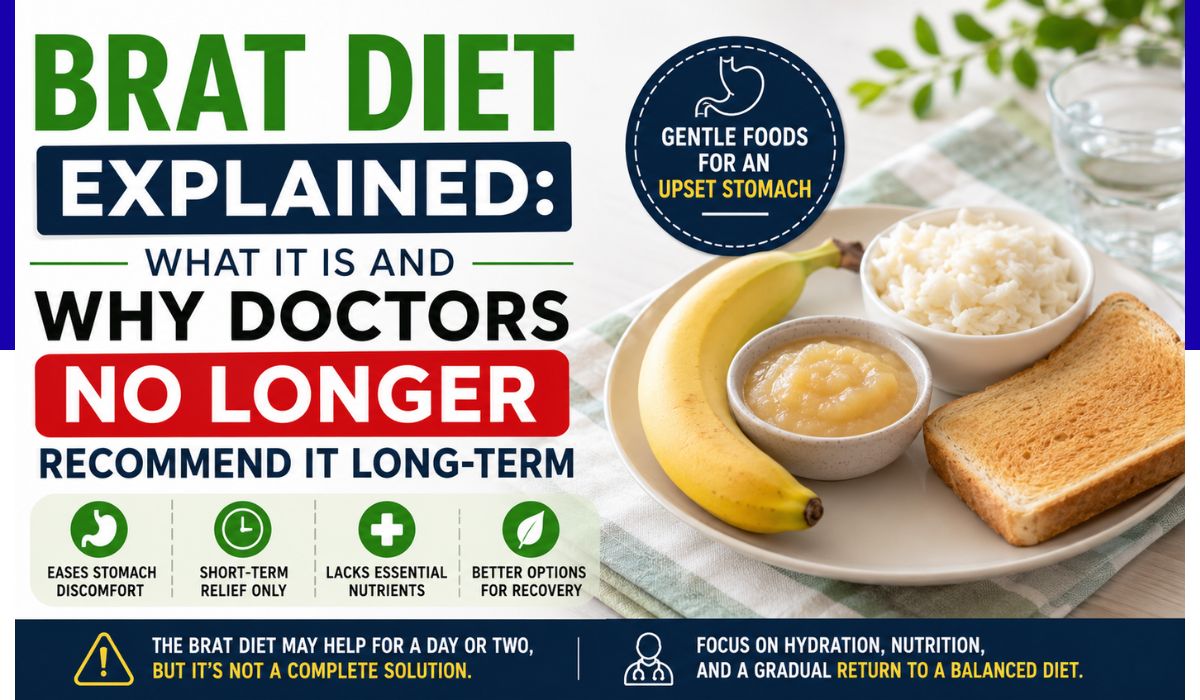
The BRAT Diet Has Been One Of The Most Well-Known Home Remedies For Stomach Illnesses For Decades. Many People Still Turn To It When They Experience Nausea, Vomiting, Or Diarrhea. The Idea Behind It Is Simple: Eat Bland Foods That Are Easy To Digest So The Stomach Can Rest And Recover.
However, modern medical understanding has changed how experts view this approach. While the BRAT Diet may still offer short-term comfort during digestive upset, doctors no longer recommend it as a long-term recovery plan. The reason is simple: it does not provide enough nutrients for proper healing.
In This Article, We Will Explore What The BRAT Diet Really Is, Why It Became Popular, How It Works, And Why Health Experts Now Suggest A More Balanced Approach For Recovery.
Quick Bio Information About BRAT Diet
The BRAT Diet Was Originally Developed As A Gentle Eating Plan For Digestive Illness Recovery
It Stands For Bananas Rice Applesauce And Toast
It Is Designed To Be Easy On The Stomach During Vomiting Or Diarrhea
It Is Low In Fiber And Fat Content
It Helps Reduce Digestive Stress In The Short Term
It Is Not A Complete Nutrition Plan
It Lacks Protein And Essential Vitamins
It Is Now Considered Outdated For Long-Term Use
It May Still Be Used For Short-Term Comfort
It Is Often Used For Stomach Flu Recovery
It Is Also Associated With Food Poisoning Relief
It Is Not Recommended For Children As A Strict Diet
It Should Be Replaced With A Balanced Diet Quickly
Doctors Now Recommend Broader Bland Food Options
Hydration Is More Important Than Food During Early Illness
Electrolyte Drinks Help Prevent Dehydration
Recovery Diet Should Include Protein And Nutrients
It Is A Temporary Strategy Not A Medical Treatment
Modern Guidelines Emphasize Flexible Eating Over Restriction
It Should Only Be Followed For One To Two Days
What Is The BRAT Diet
The BRAT Diet Is A Simple Eating Pattern Made Up Of Four Basic Foods: Bananas, Rice, Applesauce, And Toast. These Foods Are Soft, Bland, And Low In Fiber, Which Makes Them Easy On An Irritated Stomach.
The Main Idea Behind The BRAT Diet Is To Reduce Stress On The Digestive System During Illness. When Someone Is Vomiting Or Has Diarrhea, Their Stomach Becomes Sensitive. These Foods Were Traditionally Recommended Because They Were Less Likely To Trigger More Symptoms.
Although The Diet Is Easy To Remember, It Is Not A Complete Meal Plan. It Was Never Designed For Long-Term Nutrition, Only Short-Term Relief.
Why The BRAT Diet Became Popular
The BRAT Diet Became Popular In Households And Medical Practice Many Years Ago Because It Seemed Logical And Safe. Doctors And Parents Needed Simple Food Choices That Would Not Aggravate Stomach Illnesses Like Stomach Flu Or Food Poisoning.
Bananas And Rice Were Readily Available In Most Homes, And They Were Gentle Enough For Sick Patients. Over Time, The Diet Became A Common Recommendation For Both Adults And Children.
However, As Nutrition Science Advanced, Experts Began To Notice That This Approach Was Too Limited For Proper Recovery.
How The BRAT Diet Works On The Body
The BRAT Diet Works By Reducing The Workload On The Digestive System. Since The Foods Are Low In Fiber And Fat, They Are Easier To Break Down.
This Can Temporarily Help Calm Symptoms Like Nausea Or Stomach Discomfort. The Bland Nature Of These Foods Also Reduces The Chances Of Irritating An Already Sensitive Gut.
However, While This May Provide Short-Term Relief, It Does Not Actively Treat The Underlying Cause Of Illness Or Support Full Recovery.
Benefits Of The BRAT Diet In The Short Term
The BRAT Diet Can Be Helpful In The First Stage Of A Stomach Illness When Eating Anything Else Feels Difficult. It Is Gentle, Simple, And Easy To Prepare.
Many People Find That It Helps Them Slowly Reintroduce Solid Foods After Vomiting Or Diarrhea. It Can Also Be Useful When Appetite Is Low.
Still, These Benefits Are Only Temporary. It Should Not Be Used As A Long-Term Eating Plan Because It Does Not Meet The Body’s Nutritional Needs.
Why Doctors No Longer Recommend It Long Term
Doctors Now Advise Against Using The BRAT Diet For Extended Periods Because It Lacks Essential Nutrients. It Does Not Provide Enough Protein, Healthy Fats, Or Key Vitamins Needed For Recovery.
When The Body Is Fighting An Illness, It Needs More Than Just Simple Carbohydrates. Without Proper Nutrition, Healing Can Slow Down, And Weakness May Increase.
Modern Medical Guidance Encourages A More Balanced Diet That Includes A Variety Of Soft But Nutritious Foods Instead Of Restricting Choices Too Much.
Missing Nutrients In The BRAT Diet
The BRAT Diet Does Not Provide Several Important Nutrients Needed For Recovery. These Include Protein, Which Helps Repair Body Tissue, And Calcium, Which Supports Overall Health.
It Is Also Low In Vitamin B12, Which Is Important For Energy Production, And It Lacks Enough Fiber For Healthy Digestion Once Symptoms Improve.
Because Of These Gaps, Following The BRAT Diet For Too Long May Leave The Body Under-Fueled During A Time When It Needs Strength The Most.
Better Food Options For Recovery
Instead Of Relying Only On The BRAT Diet, Doctors Recommend A Wider Range Of Gentle Foods. These Include Oatmeal, Boiled Potatoes, Broth-Based Soups, And Scrambled Eggs.
As The Stomach Improves, Lean Proteins Like Skinless Chicken Or Turkey Can Be Added. Cooked Vegetables Are Also Helpful Because They Are Easier To Digest Than Raw Ones.
This More Flexible Approach Helps The Body Get The Nutrition It Needs Without Overloading The Digestive System.
Foods To Avoid During Stomach Illness
When Recovering From Digestive Problems, Certain Foods Can Make Symptoms Worse. Spicy Foods, Fried Meals, And Alcohol Can Irritate The Stomach.
Caffeine And Sugary Foods Can Also Increase Discomfort Or Worsen Dehydration. Dairy Products May Be Hard To Digest During The Early Stage Of Illness.
Avoiding These Foods Helps Prevent Further Irritation And Supports A Smoother Recovery Process.
What To Do If You Cannot Eat Solid Food
In The Early Stages Of A Stomach Illness, Some People May Not Be Able To Keep Any Food Down. In These Cases, Hydration Becomes The Most Important Focus.
Water, Electrolyte Drinks, Broth, And Ice Chips Can Help Replace Lost Fluids. Herbal Teas And Diluted Juices May Also Be Helpful.
Once Vomiting Decreases, Small Amounts Of Bland Food Can Be Slowly Introduced Again.
BRAT Diet For Adults Versus Children
For Adults, The BRAT Diet May Be Used Briefly For Comfort, But It Should Not Be Continued For More Than A Couple Of Days. Adults Generally Recover Faster When They Return To A Balanced Diet.
For Children, Modern Pediatric Guidelines Advise Against Strict Use Of The BRAT Diet. Children Need Proper Nutrition To Support Growth And Recovery.
Doctors Now Recommend A More Balanced Feeding Approach Even During Diarrhea Or Stomach Flu In Kids.
How Long Should The BRAT Diet Be Used
The BRAT Diet Should Only Be Used For A Very Short Time, Usually One To Two Days. After That, It Is Important To Slowly Add More Nutrient-Rich Foods.
Staying On A Limited Diet For Too Long Can Delay Recovery And Reduce Energy Levels. The Goal Is Always To Return To Normal Eating As Soon As The Body Can Tolerate It.
Listening To Your Body Is Key During This Process.
Warning Signs That Need Medical Attention
Sometimes Stomach Illness Can Become More Serious. If Vomiting Lasts More Than A Couple Of Days Or Diarrhea Does Not Improve, Medical Advice Is Needed.
Severe Dehydration, High Fever, Or Inability To Keep Fluids Down Are Also Warning Signs.
In Such Cases, Professional Medical Care Is Important To Prevent Complications.
Final Thoughts
The BRAT Diet Has Long Been A Simple And Familiar Option For Managing Stomach Illness, But Modern Medicine Now Offers A Clearer Understanding. While It Can Still Help In The Very Early Stages Of Nausea Or Vomiting, It Is No Longer Recommended As A Long-Term Solution.
A More Balanced Approach That Focuses On Hydration, Gradual Food Reintroduction, And Proper Nutrition Is Now Preferred By Health Experts. This Method Supports Faster Recovery And Better Overall Health.
In The End, The Goal Is Not Just To Calm The Stomach, But To Help The Body Fully Heal And Regain Strength.
Frequently Asked Questions About BRAT Diet
Is The BRAT Diet Still Recommended Today
The BRAT Diet Is Still Sometimes Used For Very Short-Term Relief, But It Is No Longer Recommended As A Long-Term Recovery Diet Because It Lacks Important Nutrients.
Can I Follow The BRAT Diet For Three Days
It Is Not Ideal To Follow The BRAT Diet For More Than One To Two Days. After That, You Should Start Adding More Nutritious Foods.
What Foods Can I Eat Instead Of The BRAT Diet
You Can Eat Oatmeal, Soup, Boiled Potatoes, Scrambled Eggs, And Lean Chicken Once You Start Feeling Better.
Is The BRAT Diet Safe For Children
Modern Medical Guidelines Do Not Recommend A Strict BRAT Diet For Children Because They Need Proper Nutrition For Recovery.
What Should I Drink During Stomach Illness
Water, Electrolyte Solutions, Broth, And Diluted Juice Are Good Choices To Stay Hydrated.
When Should I See A Doctor
If Vomiting Or Diarrhea Lasts More Than A Couple Of Days Or You Cannot Keep Fluids Down You Should Seek Medical Help.
Why Was The BRAT Diet Originally Used
It Was Used Because It Was Easy To Digest And Helped Reduce Stomach Irritation During Illness.
What Is The Biggest Problem With The BRAT Diet
The Main Problem Is That It Does Not Provide Enough Nutrients For Proper Healing And Recovery.
Recommended For You: Voltaren Gel Explained: How It Works For Pain Relief And Inflammation