
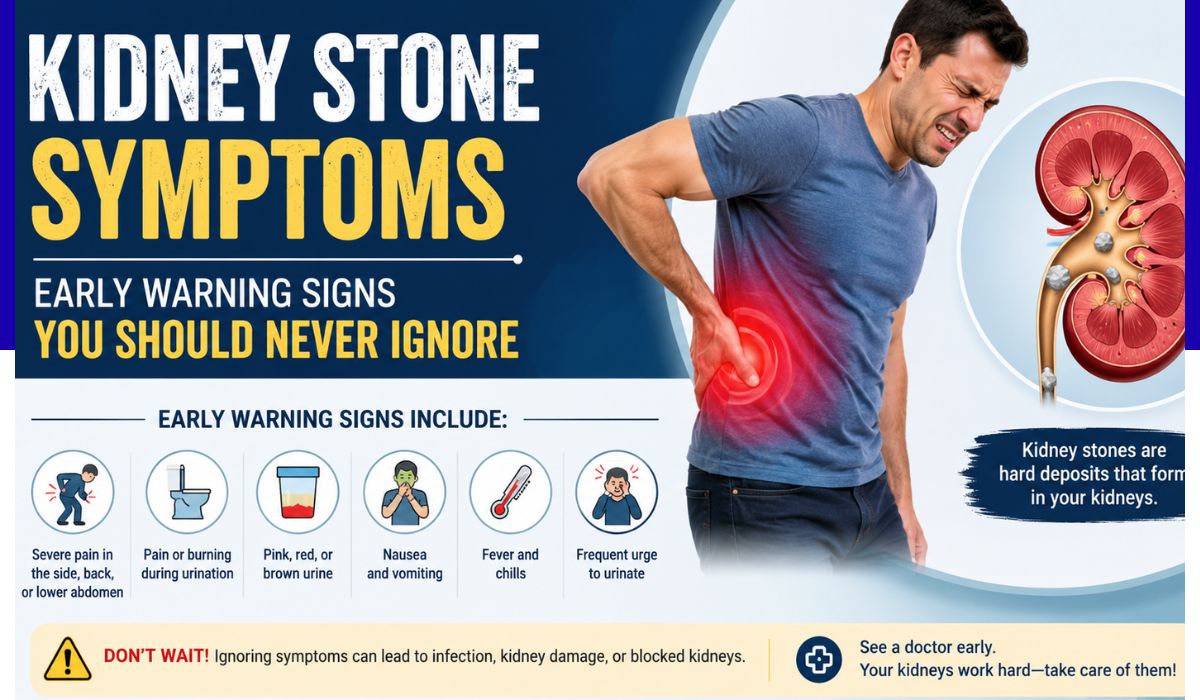
Kidney Stone Symptoms are among the most painful and alarming health signals a person can experience. Many people describe the pain as one of the strongest they have ever felt, often arriving suddenly and without warning. Kidney stones form when minerals and salts in urine crystallize and build hard deposits inside the kidneys. These stones can stay in place or move through the urinary tract, triggering intense discomfort and a variety of symptoms.
Understanding Kidney Stone Symptoms early is important because quick recognition can prevent complications, reduce pain, and help avoid long-term kidney damage. In many cases, early signs are mild and easy to ignore, but they gradually become more severe as the stone moves. This article explains everything in simple language so anyone can recognize warning signs, understand causes, and learn prevention strategies for kidney stones in 2026 and beyond.
Quick Bio Information On Kidney Stones
Kidney Stones Form When Urine Becomes Highly Concentrated
Dehydration Is The Leading Cause Of Kidney Stone Formation
Calcium Oxalate Is The Most Common Type Of Kidney Stone
Kidney Stone Pain Often Starts In The Back Or Side
Pain Can Move Toward The Groin As Stones Travel
Blood In Urine Is A Common Kidney Stone Symptom
Frequent Urination Can Signal Early Kidney Stones
Small Stones May Pass Without Medical Treatment
Large Stones May Require Medical Procedures
CT Scan Is The Most Accurate Diagnostic Tool
Hydration Helps Prevent Most Kidney Stones
High Salt Diet Increases Kidney Stone Risk
Family History Raises Chances Of Kidney Stones
Obesity Is Linked To Higher Stone Formation Risk
Certain Medications Can Increase Stone Risk
Urinary Tract Infections Can Lead To Struvite Stones
Men Are Slightly More Likely To Develop Kidney Stones
Kidney Stones Can Recur If Lifestyle Is Not Adjusted
Dietary Calcium Does Not Always Increase Risk
Early Detection Reduces Complications Significantly
What Are Kidney Stones?
Kidney stones are hard mineral deposits that form inside the kidneys when urine becomes too concentrated. When there is not enough fluid in the body, minerals like calcium, oxalate, and uric acid begin to stick together and form crystals. Over time, these crystals grow into stones of different sizes.
Kidney Stones can remain inside the kidney or move into the ureter, which is the tube connecting the kidney to the bladder. When this happens, symptoms usually begin suddenly. Some stones are small enough to pass naturally, while larger ones may block urine flow and require medical treatment.
Kidney stones are common worldwide, especially among adults aged 30 to 60. Dehydration, diet, genetics, and certain medical conditions play a major role in their formation.
Early Kidney Stone Symptoms You Should Never Ignore
Early Kidney Stone Symptoms are often mild and easily mistaken for other conditions. Many people do not realize they have a stone until pain becomes severe.
One of the earliest signs is a slight discomfort in the lower back or side. This pain may come and go and is often ignored as muscle strain. Some individuals notice changes in urination, such as needing to go more frequently or feeling slight discomfort while urinating.
These early Kidney Stone Symptoms are important warning signals. Recognizing them early can lead to faster diagnosis and simpler treatment before the stone grows or moves.
Severe Kidney Stone Symptoms That Require Immediate Attention
As Kidney Stones move into the ureter, symptoms become more intense and noticeable. The most common severe symptom is sharp, cramping pain in the back or side, often called renal colic. This pain can spread to the lower abdomen and groin.
Another major symptom is burning or pain during urination. Many people also notice blood in the urine, which may appear pink, red, or brown. This happens because the stone irritates the urinary tract lining.
At this stage, Kidney Stone Symptoms can interfere with daily activities, making it difficult to sit, walk, or find a comfortable position.
What Does Kidney Stone Pain Feel Like?
Kidney Stone Pain is often described as wave-like pain that comes in cycles of intensity. It may start suddenly and increase rapidly. Unlike muscle pain, it does not improve with rest or position changes.
The pain usually begins in the back or side and moves toward the groin as the stone travels. This shifting pattern is a key sign of Kidney Stones.
Many patients compare the pain to childbirth or severe cramping, making it one of the most intense medical pain experiences.
Symptoms Of Kidney Stones In Men And Women
Kidney Stone Symptoms are generally similar in both men and women, but there are slight differences in how pain is perceived.
In men, pain may radiate toward the testicles or groin area, making it more noticeable in the lower body. In women, Kidney Stone Symptoms can sometimes be mistaken for menstrual cramps or gynecological pain.
Both men and women commonly experience urinary urgency, burning during urination, nausea, and severe back or side pain.
Signs That A Kidney Stone May Be Causing An Infection
When Kidney Stones block urine flow, they can lead to infection. This condition is serious and requires immediate medical attention.
Fever and chills are strong indicators of infection. Urine may appear cloudy or have a strong odor. Some people experience nausea and vomiting along with Kidney Stone Symptoms.
Infections combined with Kidney Stones can become dangerous quickly, so early treatment is essential to prevent complications.
What Causes Kidney Stone Symptoms?
Kidney Stone Symptoms occur when a stone moves inside the urinary tract and causes irritation or blockage. The pain and discomfort are caused by pressure buildup in the kidney and spasms in the ureter.
Dehydration is one of the biggest contributors to Kidney Stones. When urine becomes concentrated, minerals crystallize more easily. Diets high in sodium, sugar, or animal protein also increase risk.
Other causes include obesity, family history, certain medications, and medical conditions that affect how the body processes minerals.
How Doctors Diagnose Kidney Stones
Doctors diagnose Kidney Stones using a combination of symptoms, tests, and imaging.
A urine test helps detect blood, infection, or excess minerals. Blood tests check kidney function and calcium levels. Imaging tests like CT scans and ultrasounds help confirm the presence, size, and location of stones.
These diagnostic tools help doctors decide the best treatment plan based on the severity of Kidney Stone Symptoms.
Kidney Stone Treatment Options
Treatment depends on the size and location of the stone.
Small Kidney Stones often pass naturally with increased water intake and pain management. Doctors may prescribe medications to help relax the ureter and reduce pain.
For larger stones, medical procedures may be required. Shock wave therapy breaks stones into smaller pieces. Ureteroscopy allows doctors to remove or break stones using a small instrument. In severe cases, surgical removal may be necessary.
How Long Do Kidney Stone Symptoms Last?
The duration of Kidney Stone Symptoms depends on the size and movement of the stone. Small stones may pass within a few days to a couple of weeks.
Larger stones may cause symptoms for longer periods or require medical intervention. Pain usually decreases once the stone leaves the urinary tract.
If symptoms last too long or worsen, medical evaluation is necessary to prevent complications.
How To Prevent Kidney Stones
Preventing Kidney Stones starts with proper hydration. Drinking enough water helps dilute minerals in urine and reduces crystal formation.
A balanced diet low in salt and processed foods also helps. Reducing excessive animal protein and sugar intake can lower risk significantly.
Maintaining a healthy weight and staying active improves overall kidney health. Doctors may also recommend dietary adjustments based on individual risk factors.
Conclusion
Kidney Stone Symptoms are often the body’s clear warning that something is wrong in the urinary system. From mild discomfort in the back or side to severe, wave-like pain that spreads to the groin, these symptoms should never be ignored. Early recognition plays a key role in preventing complications, reducing pain, and ensuring faster recovery.
While Kidney Stones can be extremely painful, the good news is that most cases are treatable with proper hydration, medication, and sometimes simple medical procedures. Understanding the risk factors and making healthy lifestyle changes can also significantly reduce the chances of developing stones again in the future.
The most important takeaway is to listen to your body. If you notice Kidney Stone Symptoms such as persistent pain, changes in urination, or blood in urine, seeking medical attention early can make all the difference. With timely care and preventive habits, kidney stones can be managed effectively and future episodes can often be avoided.
FAQs About Kidney Stone Symptoms
Kidney Stone Symptoms can appear suddenly or gradually depending on how the stone moves inside the urinary tract. One of the most common questions is whether kidney stones always cause pain. The answer is no, small stones may remain silent until they start moving.
Another frequent question is how to tell kidney stone pain from back pain. Kidney Stone Pain usually comes in waves and moves toward the groin, while muscle pain stays in one location and improves with rest.
People often ask if Kidney Stones can pass naturally. Yes, many small stones pass on their own with proper hydration and pain control.
Another concern is whether kidney stones can come back. Unfortunately, recurrence is common without lifestyle changes.
Some also wonder if diet alone causes kidney stones. Diet is a major factor, but hydration, genetics, and health conditions also play key roles.
Many ask how long kidney stone symptoms last. It varies, but symptoms usually stop once the stone passes or is removed.
Finally, people ask if kidney stones are dangerous. While most are treatable, complications can occur if infection or blockage develops.
Recommended For You: BDSM Test Guide: Discover Your Preferences, Boundaries, And Desires