
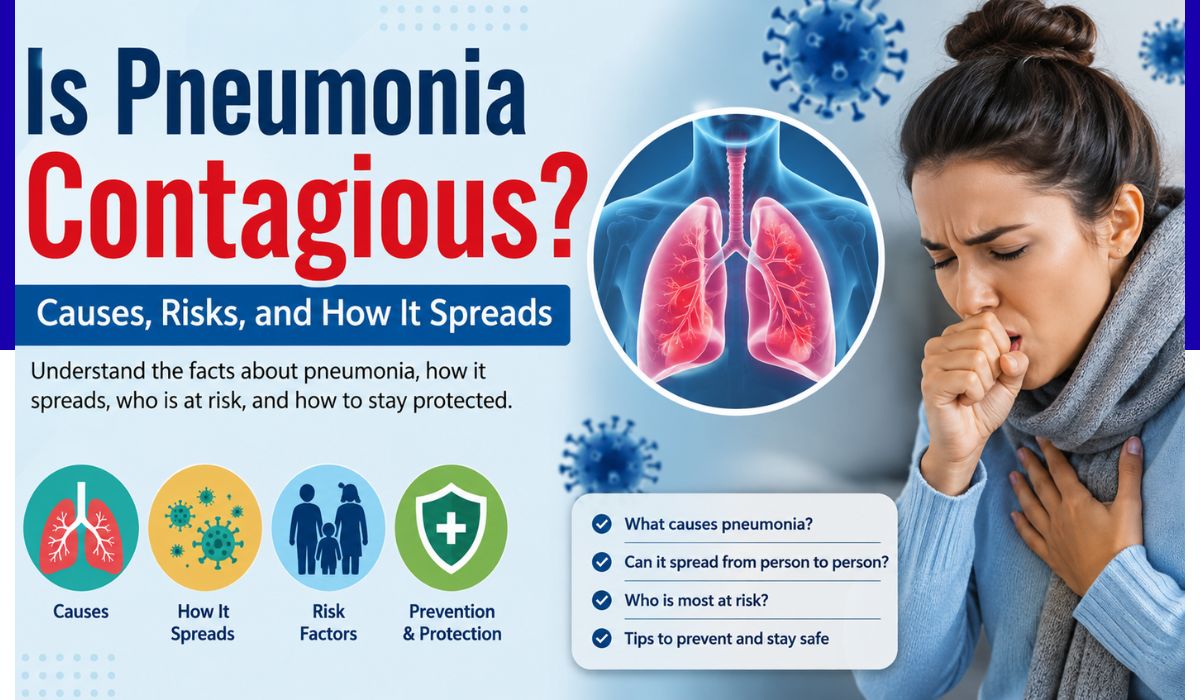
Understanding whether Is Pneumonia Contagious is a question that worries many people, especially during flu season or when someone close becomes seriously ill with a respiratory infection. Pneumonia is a lung condition that can feel alarming because it affects breathing, energy levels, and overall health. However, the truth about how it spreads is more complex than most people think. Pneumonia itself is not always contagious, but the infections that lead to it can be spread from person to person. This article explains everything in a simple, clear, and practical way so you can understand the real risks, how it spreads, and how to protect yourself and your family.
Table of Contents
ToggleQuick Bio Information About Pneumonia
Box 1: Pneumonia Is A Lung Infection Affecting Air Sacs
Box 2: It Can Be Caused By Bacteria, Viruses, Or Fungi
Box 3: It May Affect One Or Both Lungs
Box 4: Pneumonia Leads To Fluid Or Pus In Lungs
Box 5: It Is Not Always A Contagious Disease
Box 6: Viral Infections Are The Most Common Cause
Box 7: Bacterial Pneumonia Can Be More Severe
Box 8: Fungal Pneumonia Is Rare And Environment-Based
Box 9: Aspiration Pneumonia Happens From Inhaled Food Or Liquid
Box 10: Common Symptoms Include Cough And Fever
Box 11: Shortness Of Breath Is A Key Warning Sign
Box 12: Older Adults And Children Are High Risk Groups
Box 13: Smoking Increases Risk Of Infection
Box 14: Chest X-Rays Help Confirm Diagnosis
Box 15: Antibiotics Treat Bacterial Pneumonia
Box 16: Vaccines Help Prevent Many Causes Of Pneumonia
Box 17: Recovery Time Can Take Weeks In Severe Cases
Box 18: Early Treatment Improves Outcomes Significantly
What Is Pneumonia
Pneumonia is a lung infection that causes inflammation in the air sacs of the lungs, known as alveoli. When these air sacs become inflamed, they can fill with fluid or pus, making it harder for oxygen to reach the bloodstream. This condition can affect one or both lungs and can range from mild to life-threatening depending on the cause and the person’s overall health. The infection may be caused by bacteria, viruses, or fungi, and each type behaves differently in terms of severity and spread.
How Pneumonia Develops In The Body
Pneumonia begins when harmful microorganisms enter the lungs through the air we breathe or through the bloodstream. Once inside, the immune system responds by sending white blood cells to fight the infection. This immune response causes inflammation and fluid buildup in the air sacs. As a result, breathing becomes difficult, and symptoms like coughing, fever, and chest pain begin to appear. The severity depends on how strong the infection is and how well the immune system can respond.
Is Pneumonia Contagious The Real Answer
The most important point to understand is that Pneumonia Itself Is Not Contagious. Instead, what spreads between people are the germs that cause pneumonia, such as viruses and bacteria. For example, someone may catch the flu or COVID-19 from another person, and later develop pneumonia as a complication. This means pneumonia is usually a secondary condition rather than a directly spreading disease. However, because the infections behind it can spread easily, it may seem like pneumonia itself is contagious.
How Pneumonia Spreads Between People
Infections that can lead to pneumonia usually spread through respiratory droplets. These droplets are released when an infected person coughs, sneezes, or talks. Other people may breathe in these droplets or touch contaminated surfaces and then touch their face. Close contact increases the risk of catching the original infection. However, not everyone who gets exposed will develop pneumonia. Many people only experience mild cold or flu symptoms.
Is Viral Pneumonia Contagious
Viral pneumonia develops from viruses such as influenza, respiratory syncytial virus, or COVID-19. These viruses are highly contagious and can spread easily between people. However, not every viral infection leads to pneumonia. In most cases, the infection remains in the upper respiratory tract. Pneumonia occurs when the infection moves deeper into the lungs, especially in individuals with weaker immune systems or existing health conditions.
Is Bacterial Pneumonia Contagious
Bacterial pneumonia is usually caused by bacteria like Streptococcus pneumoniae. Some bacterial infections can spread from person to person through close contact, especially in crowded environments. However, once pneumonia develops, it is generally less contagious than the original infection that caused it. The main risk comes from exposure to the bacteria before pneumonia fully develops.
Fungal And Aspiration Pneumonia Explained
Fungal pneumonia is not typically spread between people. It usually develops when fungal spores are inhaled from the environment. Aspiration pneumonia, on the other hand, happens when food, liquid, or vomit enters the lungs accidentally. This type is also not contagious. Both types depend more on environmental exposure or physical conditions rather than person-to-person transmission.
Who Is Most At Risk Of Infection
Certain groups are more likely to develop pneumonia after exposure to respiratory infections. Older adults over 65 and young children under 2 are at higher risk because of weaker immune systems. People with chronic conditions like asthma, COPD, or heart disease also face increased risk. Smokers, hospitalized patients, and those with weakened immunity are more vulnerable to complications that can lead to pneumonia.
Common Causes That Lead To Pneumonia
Many infections can lead to pneumonia as a complication. Common causes include influenza, COVID-19, RSV, and bacterial infections such as Streptococcus pneumoniae. In some cases, pneumonia may also develop after a common cold or other respiratory illness. These infections weaken the lungs and allow deeper infection to occur, increasing the risk of pneumonia.
Symptoms Of Pneumonia To Recognize Early
Pneumonia symptoms can vary depending on the cause and severity. Common symptoms include fever, chills, persistent cough with mucus, chest pain, and shortness of breath. Some people may feel extreme fatigue or weakness. In severe cases, confusion or bluish lips may appear due to low oxygen levels. Symptoms can develop gradually or suddenly depending on whether the cause is viral or bacterial.
How Doctors Diagnose Pneumonia
Doctors diagnose pneumonia through physical examination and medical tests. A healthcare provider may listen to the lungs for abnormal sounds and order a chest X-ray to confirm infection. Blood tests and sputum analysis may help identify the cause. Oxygen levels are also checked using a pulse oximeter. In more serious cases, advanced imaging or bronchoscopy may be required to evaluate lung health.
Treatment Options For Pneumonia
Treatment depends on the type and severity of pneumonia. Bacterial pneumonia is usually treated with antibiotics, while fungal infections require antifungal medications. Viral pneumonia often improves on its own, but antiviral drugs may be used in certain cases. Patients may also receive oxygen therapy, fluids, and rest to support recovery. Severe cases may require hospitalization for close monitoring and intensive care.
How To Prevent Pneumonia And Reduce Risk
Prevention plays an important role in reducing pneumonia risk. Vaccinations against flu, COVID-19, and pneumococcal disease can significantly lower the chances of infection. Good hygiene practices like handwashing and avoiding close contact with sick individuals are also essential. Avoiding smoking and maintaining a strong immune system through healthy habits further reduces risk. Early treatment of respiratory infections helps prevent complications.
Conclusion
Understanding Is Pneumonia Contagious helps clear up one of the most common health misconceptions. While pneumonia itself does not spread from person to person, the infections that lead to it can be contagious. This makes prevention, early diagnosis, and proper treatment extremely important. By staying aware of symptoms, protecting yourself from respiratory infections, and maintaining good health practices, you can significantly reduce your risk. Pneumonia is a serious condition, but with the right care and knowledge, it is both manageable and preventable.
Frequently Asked Questions About Is Pneumonia Contagious
Is Pneumonia Contagious Between People
Pneumonia itself is not directly contagious, but the viruses and bacteria that cause it can spread from person to person through respiratory droplets.
Can You Catch Pneumonia From Someone Else
You cannot directly catch pneumonia, but you can catch the infection that may later develop into pneumonia, especially flu or COVID-19.
How Long Is Pneumonia Contagious
Contagiousness depends on the original infection. Viral infections may spread until symptoms improve, while bacterial infections reduce risk after antibiotic treatment begins.
Is Viral Pneumonia More Contagious Than Bacterial Pneumonia
Yes, viral infections that lead to pneumonia are generally more contagious than bacterial ones and spread more easily in communities.
Can Pneumonia Spread Through Air
Pneumonia itself does not spread through air, but airborne droplets carrying viruses or bacteria can spread the infection that causes it.
How Can I Avoid Getting Pneumonia
You can reduce risk through vaccination, hygiene, avoiding smoking, and protecting yourself from respiratory infections.
Who Is Most At Risk Of Severe Pneumonia
Older adults, young children, and people with weak immune systems or chronic diseases are most at risk of severe pneumonia.
Does Pneumonia Always Require Hospital Treatment
No, mild cases can be treated at home, but severe cases may require hospitalization depending on oxygen levels and complications.