
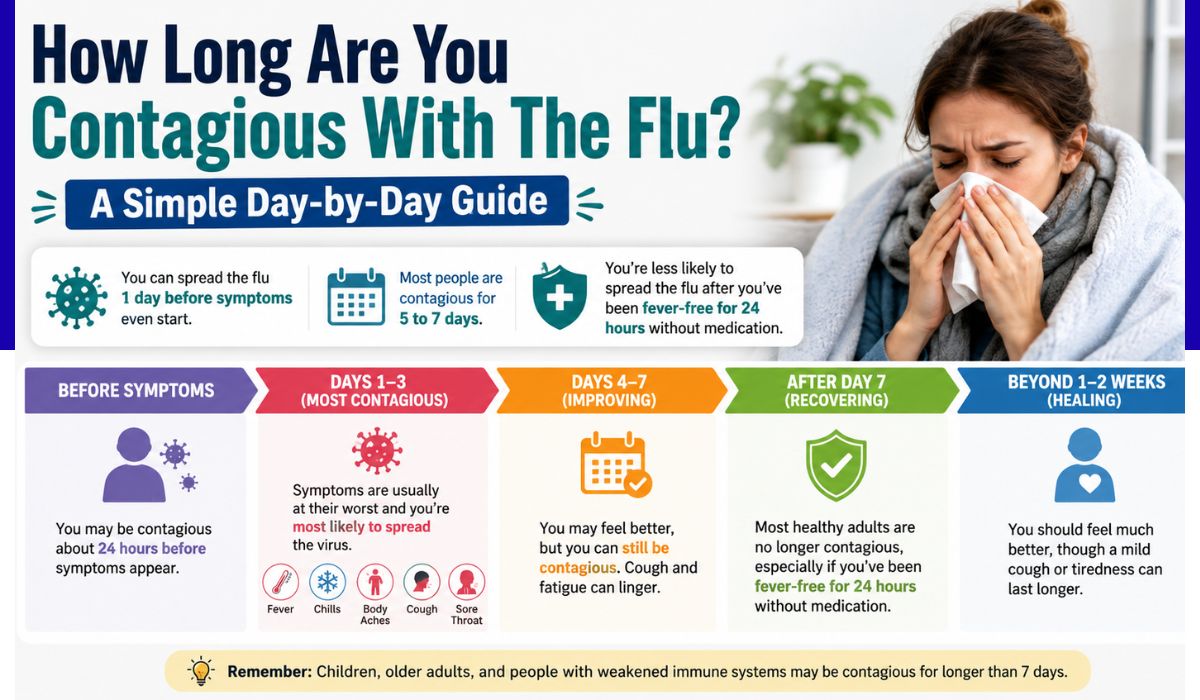
Getting The Flu Can Turn A Normal Week Upside Down Very Quickly. One Day You Feel Fine, And The Next You Are Dealing With Fever, Chills, Body Aches, Exhaustion, And A Cough That Seems To Come Out Of Nowhere. During Flu Season, One Of The Biggest Questions People Ask Is: How Long Are You Contagious With The Flu?
It Is An Important Question Because The Flu Spreads Easily In Homes, Schools, Offices, Public Transportation, And Crowded Places. Many People Want To Know When It Is Safe To Return To Work, Send A Child Back To School, Visit Family Members, Or Resume Everyday Activities Without Risking The Health Of Others.
The Challenging Part Is That Flu Symptoms And Flu Contagiousness Do Not Always Follow The Same Timeline. Some People Continue Feeling Tired After They Stop Spreading The Virus, While Others May Still Be Contagious Even Though They Feel Better. Understanding The Flu Recovery Timeline Can Help You Make Safer Decisions And Protect The People Around You.
This Detailed Guide Explains How Long The Flu Is Contagious, What Happens During Each Stage Of Illness, How The Flu Spreads, When To Return To Normal Activities, And What You Can Do To Recover Safely While Preventing Transmission.
Quick Bio Information About The Flu
| Flu Fact | Helpful Information |
|---|---|
| Flu Medical Name | Influenza |
| Main Cause | Influenza Viruses |
| Common Types | Influenza A And Influenza B |
| Typical Contagious Period | Five To Seven Days |
| Most Contagious Stage | Days One Through Three |
| Pre-Symptom Spread | About One Day Before Symptoms |
| Common Symptom | Fever |
| Other Symptoms | Cough, Fatigue, Chills, Body Aches |
| Flu Spread Method | Respiratory Droplets |
| High-Risk Groups | Older Adults, Children, Pregnant Women |
| Fever-Free Rule | Twenty-Four Hours Without Medication |
| Common Recovery Time | One To Two Weeks |
| Lingering Symptom | Dry Cough |
| Best Prevention | Annual Flu Vaccine |
| Helpful Treatment | Rest And Hydration |
| Antiviral Medication Window | Within Forty-Eight Hours |
| Surface Survival | Several Hours On Some Surfaces |
| Common Flu Season | Fall And Winter |
What Is The Flu?
The Flu, Also Called Influenza, Is A Viral Respiratory Infection That Mainly Affects The Nose, Throat, And Lungs. It Is Different From The Common Cold Because Flu Symptoms Usually Appear Suddenly And Tend To Be More Intense.
Common Flu Symptoms Include Fever, Chills, Headache, Muscle Pain, Fatigue, Sore Throat, Cough, Congestion, And Weakness. Some People Also Experience Nausea Or Vomiting, Especially Children.
The Flu Is Caused By Influenza Viruses, Mainly Influenza A And Influenza B. These Viruses Change Over Time, Which Is Why Flu Vaccines Are Updated Every Year To Match The Most Common Strains.
Because The Virus Spreads Easily Through Tiny Respiratory Droplets, Flu Outbreaks Often Increase During Colder Months When People Spend More Time Indoors Close To Others.
How Long Are You Contagious With The Flu?
Most Adults Are Contagious With The Flu For About Five To Seven Days. However, The Contagious Period Usually Starts Before Symptoms Appear.
In Many Cases, A Person Can Spread The Flu About One Day Before Symptoms Begin. This Means Someone May Infect Others Without Realizing They Are Sick.
The Flu Is Usually Most Contagious During The First Three Days After Symptoms Start. During This Time, The Body Is Shedding The Highest Amount Of Virus.
Children, Older Adults, And People With Weakened Immune Systems May Remain Contagious Longer Than A Week. In Some Cases, Young Children Can Spread The Flu For More Than Ten Days.
A Lingering Cough Or Fatigue Does Not Always Mean Someone Is Still Contagious. Many Symptoms Continue Even After The Immune System Has Mostly Cleared The Virus.
A Simple Day-By-Day Flu Timeline
Understanding The Day-By-Day Flu Recovery Timeline Makes It Easier To Know What To Expect.
Before Symptoms Begin, The Virus May Already Be Spreading. This Pre-Symptomatic Stage Is One Reason Flu Season Moves Quickly Through Families And Workplaces.
During Days One Through Three, Symptoms Often Reach Their Peak. Fever, Chills, Headaches, Muscle Aches, And Severe Tiredness Are Common. This Is Usually The Most Contagious Phase Of The Illness.
During Days Four Through Seven, Many People Begin Feeling Slightly Better. Fever May Improve, But Coughing And Fatigue Often Continue. Although Symptoms Are Improving, Some Viral Shedding Can Still Occur.
After Day Seven, Most Healthy Adults Are No Longer Contagious If They Have Been Fever-Free For At Least Twenty-Four Hours Without Fever Medication. However, Full Recovery May Still Take Another Week Or Two.
Why The Flu Spreads So Easily
The Flu Virus Travels Through Respiratory Droplets Released During Talking, Sneezing, Coughing, Or Even Breathing. These Tiny Droplets Can Land On Another Person’s Nose, Mouth, Or Eyes.
The Virus Can Also Spread Through Surfaces. If Someone Touches A Contaminated Door Handle, Phone, Keyboard, Or Countertop And Then Touches Their Face, Infection Can Occur.
Flu Viruses Survive Longer Indoors In Cool, Dry Conditions, Which Helps Explain Why Flu Season Peaks During Winter In Many Places.
Crowded Environments Such As Schools, Airplanes, Offices, And Public Transportation Increase Exposure Risk Because People Spend Long Periods Close Together.
Signs That You May Still Be Contagious
One Of The Most Reliable Signs Of Contagiousness Is Fever. If You Still Have A Fever, Your Body Is Likely Actively Fighting The Virus.
Healthcare Experts Generally Recommend Staying Home Until You Have Been Fever-Free For At Least Twenty-Four Hours Without Using Fever-Reducing Medication Such As Acetaminophen Or Ibuprofen.
Persistent Coughing May Also Increase The Chance Of Spreading Respiratory Droplets, Especially In Crowded Indoor Spaces.
Extreme Fatigue, Heavy Congestion, Or Ongoing Body Aches May Suggest Your Immune System Is Still Recovering, Even If Viral Shedding Has Slowed.
When In Doubt, It Is Better To Take Extra Time To Rest Rather Than Risk Spreading The Flu To Others.
How Long Does The Flu Last?
Most Flu Cases Improve Within One To Two Weeks, But The Timeline Varies Depending On Age, Overall Health, And Immune Strength.
The First Few Days Are Usually The Hardest. Fever And Body Aches Often Improve Within Four To Five Days, But Tiredness Can Continue Much Longer.
Some People Experience A Lingering Cough For Several Weeks After Infection. This Happens Because The Airways Remain Inflamed Even After The Virus Is Gone.
Children And Older Adults Sometimes Recover More Slowly. People With Chronic Conditions Such As Asthma, Diabetes, Or Heart Disease May Also Need More Time To Fully Heal.
When Is It Safe To Return To Work Or School?
Returning To Normal Activities Too Soon Can Increase The Risk Of Spreading The Flu To Others.
Most Healthcare Professionals Recommend Waiting Until You Have Been Fever-Free For At Least Twenty-Four Hours Without Fever Medication. You Should Also Feel Well Enough To Handle Daily Activities Safely.
If Severe Fatigue, Heavy Coughing, Or Weakness Continues, Additional Rest May Be Necessary.
Schools, Daycare Centers, And Workplaces Sometimes Have Their Own Illness Policies, Especially During Heavy Flu Seasons.
Even After Returning To Public Spaces, Wearing A Mask For A Few Extra Days May Help Reduce The Risk Of Passing Along Remaining Respiratory Droplets.
Flu Vs Cold Vs COVID-19 Vs RSV
Many Respiratory Illnesses Share Similar Symptoms, Which Can Make It Hard To Know Exactly What You Have.
The Flu Usually Starts Suddenly With Fever, Body Aches, Chills, And Significant Fatigue. The Common Cold Typically Develops More Slowly And Causes Milder Symptoms Such As Sneezing And Congestion.
COVID-19 May Include Fever, Cough, Fatigue, And Sometimes Loss Of Taste Or Smell. RSV Often Causes Heavy Congestion And Breathing Problems, Especially In Young Children And Older Adults.
Testing Can Help Confirm Which Illness Is Present. This Is Important Because Certain Antiviral Treatments Work Only For Specific Viruses.
How To Prevent Spreading The Flu At Home
If Someone In Your Household Has The Flu, Taking Extra Precautions Can Lower The Risk Of Everyone Getting Sick.
Creating Physical Distance Helps. If Possible, The Sick Person Should Rest In A Separate Room And Use A Separate Bathroom.
Frequent Handwashing Is Extremely Important. Soap And Water Should Be Used For At Least Twenty Seconds, Especially After Touching Shared Surfaces.
Cleaning High-Touch Areas Such As Phones, Light Switches, Remote Controls, And Door Handles Can Reduce Viral Spread.
Fresh Air And Good Ventilation Also Matter. Opening Windows Or Using Air Purifiers Can Help Improve Indoor Air Quality During Flu Season.
Can You Be Contagious Without A Fever?
Yes, It Is Possible To Spread The Flu Without Having A Fever. Some People Experience Mild Flu Symptoms Or Never Develop A High Temperature At All.
Even Without Fever, Viral Shedding May Still Occur During The Early Days Of Illness. This Is Why Paying Attention To Symptoms Such As Coughing, Fatigue, Or Sore Throat Is Important.
Children Are Especially Likely To Spread Respiratory Viruses Even When Symptoms Appear Mild.
Because Not Every Flu Case Looks The Same, It Is Best To Stay Home When Feeling Sick Rather Than Assuming It Is Safe To Continue Normal Activities.
How Antiviral Medicines Affect Contagiousness
Antiviral Medications Such As Oseltamivir May Help Reduce Flu Severity And Shorten Illness Duration If Started Early.
These Medicines Work Best When Taken Within Forty-Eight Hours Of Symptom Onset. In Some Cases, They May Also Reduce The Amount Of Virus Being Shed.
Antivirals Are Often Recommended For High-Risk Individuals, Including Older Adults, Pregnant Women, And People With Chronic Health Conditions.
However, Medication Does Not Instantly Stop Contagiousness. People Taking Antivirals Should Still Follow Isolation And Recovery Guidelines.
Flu Complications To Watch For
Most People Recover From The Flu Without Serious Problems, But Complications Can Develop.
Pneumonia Is One Of The Most Serious Flu Complications. Warning Signs Include Chest Pain, Shortness Of Breath, High Fever, Or Worsening Symptoms After Initial Improvement.
The Flu Can Also Trigger Asthma Attacks, Sinus Infections, Ear Infections, Or Severe Dehydration.
Young Children, Older Adults, Pregnant Women, And People With Weak Immune Systems Face A Higher Risk Of Severe Flu Illness.
Seeking Medical Care Early Can Help Prevent Complications From Becoming Dangerous.
When To See A Doctor
Medical Attention May Be Necessary If Flu Symptoms Become Severe Or Do Not Improve.
You Should Contact A Healthcare Provider If Fever Lasts More Than Several Days, Breathing Becomes Difficult, Chest Pain Develops, Or Severe Weakness Appears.
Confusion, Blue Lips, Persistent Vomiting, Or Signs Of Dehydration Require Immediate Medical Care.
People At Higher Risk For Complications Should Speak With A Doctor Early, Especially During Intense Flu Seasons.
Timely Treatment Can Sometimes Prevent Hospitalization And Speed Recovery.
Why Flu Vaccines Still Matter In 2026
Flu Vaccines Continue To Play A Major Role In Reducing Severe Illness, Hospitalization, And Death.
Even Though Flu Vaccines Do Not Prevent Every Infection, They Often Make Symptoms Milder And Shorten Recovery Time.
Vaccination Also Helps Reduce Community Spread, Protecting Vulnerable People Such As Older Adults And Infants.
Because Flu Viruses Change Frequently, Annual Vaccination Remains Important Every Year.
Combining Vaccination With Good Hygiene, Proper Rest, And Early Isolation Creates The Strongest Protection During Flu Season.
Final Thoughts
Understanding How Long You Are Contagious With The Flu Helps You Protect Yourself And Others While Recovering Safely. In Most Cases, People Spread The Flu From About One Day Before Symptoms Begin Until Five To Seven Days After Becoming Sick. The First Few Days Are Usually The Most Contagious.
Although Symptoms Like Fatigue Or Coughing May Continue Longer, That Does Not Always Mean You Are Still Infectious. Paying Attention To Fever, Energy Levels, And Overall Recovery Can Help Guide Decisions About Returning To Work, School, Or Social Activities.
The Flu Can Feel Miserable, But Most People Recover Fully With Rest, Hydration, Proper Care, And Time. Simple Steps Such As Staying Home When Sick, Washing Hands Frequently, Improving Indoor Airflow, And Getting A Yearly Flu Vaccine Can Make A Big Difference During Flu Season.
By Understanding The Flu Recovery Timeline And Taking Smart Precautions, You Can Help Keep Yourself, Your Family, And Your Community Healthier Throughout The Year.
FAQs About How Long Are You Contagious With The Flu
How Long Are You Contagious With The Flu After Symptoms Start?
Most People Remain Contagious For About Five To Seven Days After Symptoms Begin. The First Three Days Are Usually The Most Contagious Because Viral Shedding Is Highest During This Time.
Can You Spread The Flu Before Symptoms Appear?
Yes. Many People Become Contagious About One Day Before Flu Symptoms Begin. This Early Spread Is One Reason The Flu Moves Quickly Through Schools, Offices, And Families.
Are You Still Contagious If You Still Have A Cough?
Not Always. A Lingering Cough Can Continue For Several Weeks After The Virus Has Mostly Cleared. However, Heavy Coughing During Early Illness Can Still Spread Respiratory Droplets.
How Long Should Children Stay Home With The Flu?
Children Should Stay Home Until They Have Been Fever-Free For At Least Twenty-Four Hours Without Fever Medicine And Feel Well Enough To Return To Normal Activities Safely.
Does Taking Antiviral Medicine Stop Contagiousness?
Antiviral Medication May Shorten Illness Duration And Reduce Viral Shedding, But It Does Not Instantly End Contagiousness. Isolation Guidelines Should Still Be Followed.
Can You Catch The Flu Twice In One Season?
Yes. Different Flu Strains Circulate Each Season, So It Is Possible To Recover From One Type Of Flu And Later Become Infected With Another Strain.
Is The Flu More Contagious Than The Common Cold?
The Flu Often Spreads More Quickly Than The Common Cold Because Symptoms Appear Suddenly And Viral Shedding Can Start Before People Realize They Are Sick.
When Should You Go To The Hospital For The Flu?
Emergency Care May Be Needed For Severe Breathing Problems, Chest Pain, Blue Lips, Confusion, Severe Dehydration, Or Symptoms That Suddenly Worsen After Improving.
Recommended For You: Understanding Lumbago: Common Causes Of Lower Back Pain And Relief Tips