
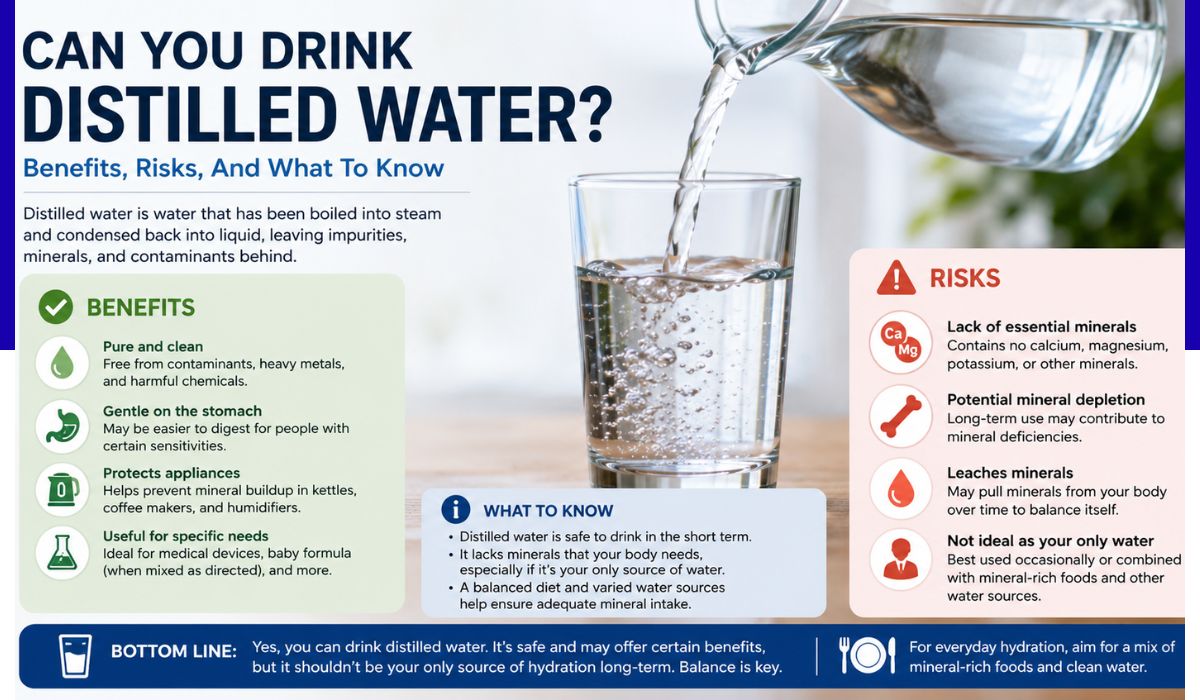
Can You Drink Distilled Water safely every day? This is a common question people ask when they see distilled water in stores, hospitals, laboratories, or household appliances. Some people believe distilled water is the purest and healthiest form of water, while others worry it may remove minerals from the body or cause health problems over time.
The truth is much simpler than many online claims suggest. Distilled water is generally safe to drink for most healthy people. It is highly purified and free from many contaminants, chemicals, and impurities. However, it also lacks the natural minerals found in tap water, spring water, and many bottled waters.
Understanding how distilled water works can help you decide whether it fits your lifestyle, health needs, and drinking preferences. This guide explains everything you need to know about drinking distilled water, including its benefits, risks, side effects, taste, everyday uses, and how it compares with purified water and tap water.
Table of Contents
ToggleQuick Bio Information About Distilled Water
| Topic | Details |
|---|---|
| Water Type | Highly Purified Water |
| Main Process | Distillation |
| Mineral Content | Very Low |
| Common Taste | Flat Or Neutral |
| Safe To Drink | Yes |
| Main Benefit | Removes Many Contaminants |
| Main Drawback | Lacks Minerals |
| Hydration Ability | Good |
| Common Household Use | Steam Irons |
| Medical Use | CPAP Machines |
| Laboratory Use | Scientific Experiments |
| Industrial Use | Cooling Systems |
| Good For Appliances | Yes |
| Better Than Polluted Tap Water | Often Yes |
| Natural Electrolytes | Mostly Removed |
| Popular Myth | Removes Minerals From Body |
| Scientific Evidence | Limited Support For Health Claims |
| Shelf Life | Long If Stored Properly |
| Best Stored In | Clean Sealed Containers |
| Often Compared With | Purified Water |
What Is Distilled Water?
Distilled water is water that has gone through a process called distillation. During this process, water is heated until it turns into steam. The steam is then collected and cooled back into liquid form. As the steam rises, many impurities are left behind.
This method removes a wide range of substances, including bacteria, viruses, salts, heavy metals, minerals, and many chemical contaminants. Because of this, distilled water is considered one of the purest forms of water available.
Distillation works similarly to the natural water cycle on Earth. Water evaporates, forms clouds, and returns as rain. In a controlled environment, this process creates highly purified water with very low levels of dissolved solids.
One important thing to understand is that distillation removes both harmful contaminants and beneficial minerals. Minerals such as calcium, magnesium, and potassium are naturally present in many drinking water sources, but they are mostly absent in distilled water.
Can You Drink Distilled Water Safely?
Yes, most healthy adults can safely drink distilled water. It hydrates the body just like other types of clean water. There is no strong scientific evidence showing that drinking distilled water in moderation is dangerous for healthy individuals.
Many concerns about distilled water come from the fact that it contains almost no minerals. However, most of the minerals your body needs come from food, not water. Fruits, vegetables, dairy products, nuts, seeds, and proteins provide the majority of important nutrients and electrolytes.
For people who eat a balanced diet, drinking distilled water occasionally or even regularly is unlikely to cause mineral deficiencies. Still, relying only on distilled water for long periods may not be ideal for everyone, especially people with poor nutrition or heavy electrolyte loss from exercise or illness.
Distilled water can also be safer than untreated tap water in areas where water supplies are contaminated by chemicals, heavy metals, or harmful microorganisms.
What Does Distilled Water Taste Like?
Many people notice that distilled water tastes different from regular drinking water. The taste is often described as flat, bland, or less refreshing. This happens because minerals play a major role in the flavor of water.
Tap water, spring water, and mineral water usually contain calcium, magnesium, sodium, and other dissolved minerals that give water a distinct taste. Since distilled water has most of these minerals removed, the flavor can seem unusually plain.
Taste preferences vary widely. Some people enjoy the clean and neutral taste of distilled water, while others find it less satisfying. People who switch from mineral-rich water to distilled water often notice the difference immediately.
Temperature and storage can also affect flavor. Cold distilled water may taste more refreshing than water stored at room temperature for long periods.
Benefits Of Drinking Distilled Water
One of the biggest advantages of distilled water is purity. Distillation removes many contaminants that may be present in untreated water sources. This includes certain bacteria, viruses, heavy metals, pesticides, and chemical pollutants.
For people living in areas with poor water quality, distilled water may offer additional peace of mind. It can also help reduce exposure to chlorine and other substances that affect the smell and taste of tap water.
Some people prefer distilled water because it does not contain fluoride or added chemicals commonly found in municipal water systems. Others choose it for medical reasons or temporary use during health treatments.
Distilled water is also useful for individuals with weakened immune systems who need especially clean water sources. In hospitals and medical environments, highly purified water is often preferred for specific procedures and devices.
Although distilled water is not a miracle health drink, it can be a clean and reliable option when used appropriately.
Risks And Side Effects Of Distilled Water
The main concern with distilled water is the lack of natural minerals. Calcium and magnesium contribute small amounts of nutrition and help improve water taste. Since distilled water removes these minerals, some people worry about long-term use.
For most healthy adults with balanced diets, this is not usually a serious problem. However, people who sweat heavily, have poor nutrition, or lose electrolytes frequently may benefit more from mineral-containing water sources.
Another possible drawback is reduced electrolyte intake. Electrolytes such as sodium, potassium, and magnesium help regulate hydration, muscle function, and nerve activity. Water alone is not the main source of electrolytes, but mineral-rich water can contribute small amounts.
The flat taste of distilled water may also cause some people to drink less water overall, which could indirectly affect hydration habits.
It is important to avoid exaggerated claims online. Distilled water is neither a dangerous toxin nor a magical detox solution.
Does Distilled Water Remove Minerals From Your Body?
One of the most common myths about distilled water is that it “pulls” minerals out of your body. This claim is often repeated online, but scientific evidence supporting it is very limited.
The human body carefully regulates mineral balance through the kidneys, digestive system, and hormones. Minerals are constantly absorbed, stored, and released based on the body’s needs.
Drinking distilled water does not suddenly strip calcium from bones or remove magnesium from muscles. If someone eats a healthy diet with enough nutrients, the body can maintain normal mineral levels without problems.
The idea likely comes from the fact that distilled water has low mineral content and can dissolve substances easily. However, normal digestion and metabolism are far more complex than simple chemistry experiments.
Most health experts agree that overall nutrition matters much more than the mineral content of drinking water alone.
Distilled Water Vs. Purified Water
Many people confuse distilled water with purified water, but they are not exactly the same. Distilled water is one type of purified water, but purified water can be made using several different methods.
Purified water may go through reverse osmosis, carbon filtration, ultraviolet treatment, deionization, or distillation. Depending on the method used, some minerals may remain in purified water.
Distilled water usually has fewer dissolved solids than many purified waters because the distillation process removes almost everything except pure water molecules.
Taste is another major difference. Purified water often tastes more similar to regular drinking water because some minerals remain. Distilled water typically tastes flatter because nearly all minerals are removed.
Both types are generally safe to drink, but the better choice depends on personal preference, local water quality, and intended use.
Distilled Water Vs. Tap Water
Tap water quality varies greatly depending on where you live. In many countries, municipal tap water is carefully treated and tested for safety. However, contamination problems can still happen through aging pipes, industrial pollution, or poor infrastructure.
Distilled water offers higher purity because it removes many contaminants and dissolved substances. However, tap water often contains beneficial minerals and fluoride that support dental health.
Cost is another difference. Tap water is usually much cheaper and more environmentally friendly than bottled distilled water. Producing distilled water also requires energy because water must be boiled during processing.
For most people living in areas with safe tap water, there may not be a major health advantage to drinking only distilled water. However, in areas with questionable water quality, distilled water may be a safer option.
Who Should Drink Distilled Water?
Distilled water may be useful for certain individuals and situations. People living in regions with contaminated water supplies may prefer distilled water for added safety. Individuals with weakened immune systems may also benefit from highly purified water sources during specific treatments.
Some athletes and health-conscious individuals choose distilled water temporarily during detox programs, although scientific support for detox benefits remains limited.
Distilled water can also be useful during emergencies when local water safety becomes uncertain.
However, people who sweat heavily or need increased electrolyte intake may prefer mineral-containing water sources. Children and older adults can safely drink distilled water, but balanced nutrition remains especially important for these groups.
Overall, distilled water is best viewed as one safe hydration option rather than the perfect water for every situation.
Common Uses Of Distilled Water
Distilled water is widely used outside of drinking. Because it contains very few minerals, it helps prevent mineral buildup and scaling in appliances and equipment.
Steam irons often work better with distilled water because mineral deposits can clog steam vents over time. CPAP machines for sleep apnea commonly use distilled water to reduce residue and bacterial growth.
Humidifiers and aquariums may also require distilled water in certain situations. In laboratories, distilled water is important because minerals and contaminants could interfere with experiments and scientific measurements.
Cars use distilled water in cooling systems and batteries because mineral-free water reduces corrosion and buildup inside mechanical parts.
These practical uses explain why distilled water remains popular even among people who do not drink it regularly.
Can You Drink Distilled Water Every Day?
Most healthy adults can drink distilled water every day without serious problems. The body will still absorb and use the water for hydration normally.
The key issue is overall nutrition. Since distilled water contains very few minerals, it should not be relied upon as a major mineral source. A healthy diet filled with nutrient-rich foods is far more important.
Some people choose to combine distilled water with mineral-rich foods or electrolyte beverages when needed. Others prefer alternating between distilled water and other water sources.
If someone experiences fatigue, weakness, or dehydration concerns, the issue is more likely related to diet, electrolyte imbalance, or medical conditions rather than distilled water alone.
Moderation and balance remain the best approach.
Distilled Water And Detox Claims
The internet often promotes distilled water as a detox drink that removes toxins from the body. While hydration is important for health, the body already has natural detoxification systems.
The liver, kidneys, lungs, digestive system, and skin work continuously to process and eliminate waste products. Drinking enough clean water supports these functions, but distilled water does not possess special detox powers.
There is also little scientific evidence showing that distilled water directly causes weight loss. Some people may lose temporary water weight when changing diets or hydration habits, but distilled water itself is not a proven fat-burning solution.
Readers should be cautious about extreme online health claims and focus on evidence-based wellness practices instead.
Final Thoughts
Can You Drink Distilled Water safely? For most healthy people, the answer is yes. Distilled water is highly purified, free from many contaminants, and useful in both drinking and household applications.
At the same time, distilled water is not automatically healthier than all other water sources. It lacks minerals naturally found in tap water and spring water, and its flat taste may not appeal to everyone.
The most important factor is overall hydration and nutrition. People who eat balanced diets and stay hydrated can generally drink distilled water without concern. Whether you choose distilled water, purified water, or tap water, the best option depends on your health needs, local water quality, and personal preference.
Clean water matters far more than trendy health claims. Understanding the facts about distilled water can help you make informed choices that support your daily health and lifestyle.
FAQs About Can You Drink Distilled Water
Can You Drink Distilled Water Every Day?
Yes, most healthy adults can safely drink distilled water daily. The body mainly gets minerals from food rather than water, so a balanced diet is usually enough to maintain proper nutrition.
Is Distilled Water Better Than Purified Water?
Not necessarily. Distilled water is one type of purified water. Some purified waters keep beneficial minerals, while distilled water removes nearly everything. The better choice depends on your needs and taste preference.
Does Distilled Water Hydrate The Body?
Yes, distilled water hydrates the body effectively just like other clean water sources. Hydration mainly depends on fluid intake rather than mineral content alone.
Why Does Distilled Water Taste Flat?
Distilled water tastes flat because the distillation process removes dissolved minerals that normally give water flavor and texture.
Can Distilled Water Remove Toxins From The Body?
There is no strong scientific evidence showing that distilled water detoxifies the body better than regular clean water. The liver and kidneys naturally handle detoxification.
Is Distilled Water Safe For Children?
Yes, distilled water is generally safe for children in moderation. However, children still need balanced nutrition and proper electrolyte intake from food and beverages.
Can Pets Drink Distilled Water?
Most pets can safely drink distilled water occasionally, but many veterinarians recommend balanced mineral intake through food and regular drinking water sources.
Is Distilled Water Good For Plants?
Distilled water can help sensitive plants avoid mineral buildup and chemical exposure. However, some plants may still need nutrients added through soil or fertilizers.
Recommended For You: Why AFC Urgent Care Is A Trusted Choice For Fast Medical Care