
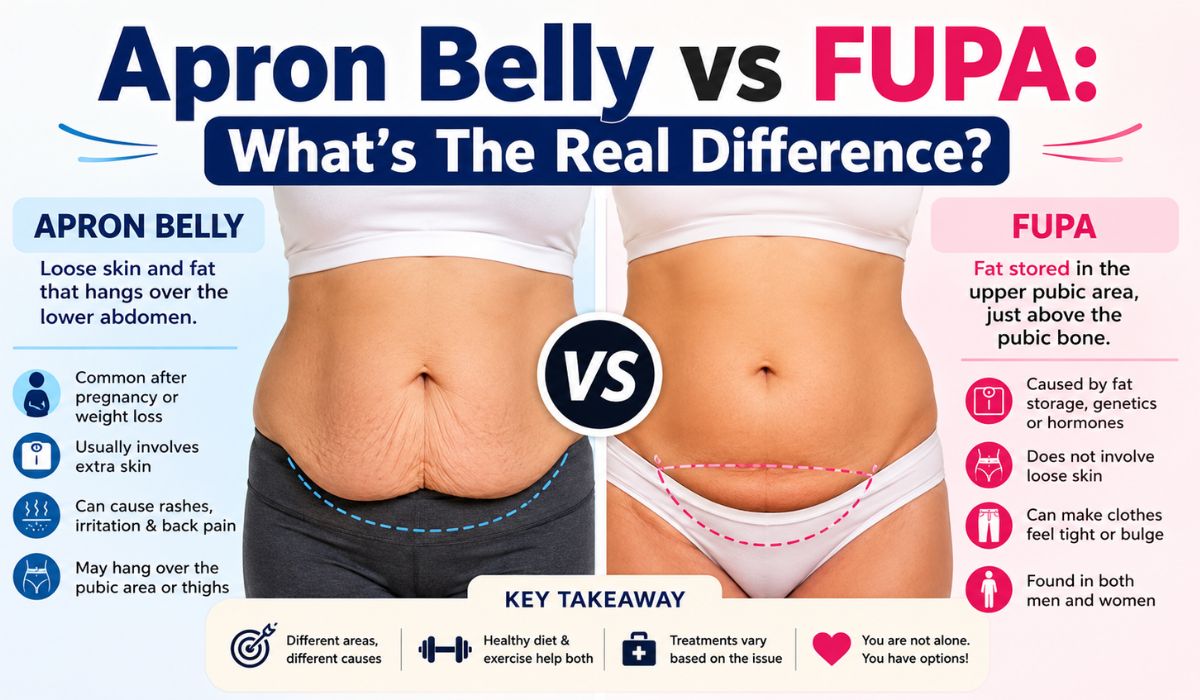
Many people use the terms “Apron Belly” and “FUPA” as if they mean the same thing. While both involve extra fat or loose tissue around the lower stomach area, they are actually different conditions. Understanding the difference between Apron Belly vs FUPA can help you choose the right lifestyle changes, exercises, or treatments for your body goals and overall health.
An Apron Belly usually refers to loose skin and fat that hangs down from the abdomen, often after pregnancy, major weight loss, or obesity. A FUPA, which stands for Fat Upper Pubic Area, is extra fat stored above the pubic bone. The two conditions may appear similar at first glance, but they develop differently and affect the body in different ways.
In 2026, more people are openly discussing body changes caused by weight fluctuations, childbirth, hormonal shifts, and aging. This has made topics like Apron Belly vs FUPA more common in health and wellness conversations. The good news is that both conditions are manageable, and there are many ways to improve comfort, confidence, and overall health.
Quick Bio Information
| Topic | Quick Fact |
|---|---|
| Medical Name For Apron Belly | Abdominal Pannus |
| FUPA Meaning | Fat Upper Pubic Area |
| Main Cause Of Apron Belly | Pregnancy Or Major Weight Loss |
| Main Cause Of FUPA | Fat Storage In Pubic Area |
| Common Age Group | Adults Of All Ages |
| Can Men Have FUPA? | Yes |
| Can Men Have Apron Belly? | Yes |
| Loose Skin Common? | Mostly With Apron Belly |
| Fat Tissue Common? | Both Conditions |
| Linked To Pregnancy? | Very Common |
| Linked To Obesity? | Yes |
| Linked To Weight Loss? | Especially Apron Belly |
| Common Skin Problem | Rashes In Skin Folds |
| Exercise Helps? | Yes, Over Time |
| Surgery Available? | Yes |
| Spot Reduction Possible? | No |
| Hormones Affect Fat Storage? | Yes |
| Most Common Treatment | Diet And Exercise |
| Recovery From Surgery | Several Weeks To Months |
| Is It Dangerous? | Usually Not, But Complications Can Happen |
What Is An Apron Belly?
An Apron Belly happens when excess skin and fatty tissue hang over the lower abdomen. In mild cases, the overhang may only cover the lower stomach. In more severe cases, it can extend over the pubic area or upper thighs. Medical professionals sometimes call this condition a pannus stomach or abdominal pannus.
Apron Belly often develops after pregnancy because the skin stretches rapidly to make room for the growing baby. It can also appear after major weight loss, especially if the weight is lost quickly. Obesity is another common cause because excess fat in the abdomen puts stress on the skin and connective tissue.
Unlike normal belly fat, an Apron Belly often includes loose skin in addition to fat. This is why some people notice hanging tissue even after losing weight. Age can also play a role because skin naturally loses collagen and elasticity over time.
What Is A FUPA?
A FUPA refers to extra fat located above the pubic bone and below the lower abdomen. The term stands for Fat Upper Pubic Area. Unlike an Apron Belly, a FUPA usually does not involve large amounts of hanging skin.
A FUPA can happen in both men and women. Weight gain is one of the biggest causes, but genetics and hormones also affect where the body stores fat. Some people naturally carry more fat in the lower abdominal and pubic region even if they are otherwise healthy.
Pregnancy and C-sections may also contribute to a FUPA because the body stores protective fat around the pelvis during and after childbirth. Hormonal changes during aging can make this area more noticeable as well.
Apron Belly Vs FUPA: The Biggest Differences
The biggest difference between Apron Belly vs FUPA is location and appearance. An Apron Belly hangs downward from the abdomen and often includes stretched skin. A FUPA is usually a smaller pocket of fat above the pubic bone.
An Apron Belly may cause physical discomfort because the skin folds can trap moisture and create friction. Some people experience rashes, irritation, or lower back pain due to the extra weight. A FUPA is usually more cosmetic, although it can still affect body confidence.
Another important difference is what causes them. Apron Belly is strongly linked to stretched skin after pregnancy or major weight loss. A FUPA is more related to localized fat storage. Because of this, treatment methods can differ depending on which condition a person has.
Why Pregnancy Changes The Body
Pregnancy is one of the most common reasons people develop an Apron Belly or FUPA. During pregnancy, the abdominal skin and muscles stretch to support the growing uterus. After childbirth, the body slowly recovers, but the skin may not fully tighten again.
Some women also develop Diastasis Recti, a condition where the abdominal muscles separate. This can make the lower belly stick out more and create the appearance of an Apron Belly. Hormonal changes during pregnancy can also increase fat storage in the lower abdomen and pubic area.
The postpartum body goes through major changes, and recovery often takes longer than many people expect. Genetics, age, and the number of pregnancies all influence how the body heals after childbirth.
How Weight Loss Affects Loose Skin
Rapid weight loss can improve overall health, but it can also leave behind loose skin. This is especially common after bariatric surgery or dramatic fat loss. When the skin stretches for a long time, it may lose the ability to fully shrink back.
This is why some people still have an Apron Belly even after reaching a healthy weight. The fat may be gone, but the stretched skin remains. In contrast, a FUPA often becomes smaller with gradual fat loss because it mainly consists of fatty tissue.
Skin elasticity plays a huge role in recovery. Younger people often experience better skin tightening because their collagen levels are higher. Staying hydrated, eating enough protein, and avoiding smoking may also help support skin health.
Health Problems Related To Apron Belly And FUPA
Apron Belly can sometimes cause physical problems beyond appearance. Skin folds trap sweat and moisture, which may lead to fungal infections, irritation, and painful rashes. Some people also develop ulcers or skin breakdown in severe cases.
Lower back pain is another common issue because the extra abdominal weight changes posture and body balance. Mobility can also become more difficult when the overhang is large.
A FUPA is usually less physically uncomfortable, but it can still affect emotional health and body image. Many people feel embarrassed or frustrated when clothing fits poorly or when they struggle to reduce fat in that area.
Mental health matters too. Feeling unhappy with body appearance may contribute to stress, anxiety, or low confidence. Supportive healthcare providers and realistic expectations can make a big difference.
Can Diet Help Reduce Apron Belly And FUPA?
Healthy eating is one of the most important ways to reduce body fat and improve overall health. While no diet can target only one body part, losing overall fat can help both an Apron Belly and a FUPA become less noticeable.
A balanced diet rich in lean protein, fruits, vegetables, fiber, and healthy fats supports weight management and skin health. Protein is especially important because it helps preserve muscle while losing fat.
Highly processed foods, sugary drinks, and excess fast food are linked to increased abdominal fat. Drinking enough water may also improve skin elasticity and help the body function properly.
Slow and steady weight loss is often better than crash dieting because it gives the skin more time to adjust.
Best Exercises For Apron Belly And FUPA
Exercise can strengthen the core, improve posture, and support fat loss. Cardio exercises like walking, swimming, cycling, and jogging help burn calories and improve heart health.
Core exercises strengthen the abdominal muscles underneath the fat and loose skin. Planks, mountain climbers, squats, and pelvic floor exercises are popular choices.
For postpartum individuals, gentle movements are often safest at first. Overly intense workouts too soon after childbirth may worsen muscle separation or strain healing tissues.
Consistency matters more than perfection. Small daily habits often produce better long-term results than extreme exercise routines that are difficult to maintain.
Non-Surgical Treatments In 2026
In 2026, non-surgical body contouring treatments are more advanced than ever. Some people choose treatments like Radiofrequency Skin Tightening, which uses heat to stimulate collagen production and improve skin firmness.
Cryolipolysis, also known as fat freezing, targets small pockets of stubborn fat. This treatment may help reduce a FUPA or mild lower belly fat, though it does not remove large amounts of loose skin.
Laser treatments and ultrasound-based skin tightening procedures are also becoming more common. However, results vary from person to person, and multiple sessions are usually needed.
These treatments work best for mild to moderate concerns. Severe Apron Belly cases often require surgery for significant improvement.
Surgical Options For Apron Belly
Surgery is sometimes the most effective option for severe loose skin. A Tummy Tuck, also called Abdominoplasty, removes excess skin and tightens the abdominal muscles.
A Panniculectomy specifically removes the hanging pannus or abdominal overhang. Unlike a Tummy Tuck, it focuses more on function than cosmetic appearance.
Liposuction may help reduce fat deposits, but it does not tighten loose skin by itself. Recovery from surgery usually takes several weeks or months depending on the procedure.
Doctors usually recommend maintaining a stable weight before surgery because future weight changes can affect results.
Can Apron Belly Or FUPA Go Away Naturally?
A FUPA may improve naturally with weight loss, regular exercise, and healthy habits because it mostly involves fat tissue. An Apron Belly is more complicated because loose skin often remains even after fat loss.
Skin sometimes tightens gradually over time, especially in younger people. However, severe stretched skin rarely disappears completely without surgery.
Building muscle underneath the abdomen may improve body shape and posture, making the area appear firmer. Good hydration and nutrition also support healthier skin.
The most important thing is having realistic expectations. Bodies change throughout life, and improvement often happens slowly rather than overnight.
Lifestyle Tips For Better Comfort And Confidence
Daily comfort matters just as much as appearance. Wearing breathable clothing can help reduce sweating and irritation in skin folds. Supportive shapewear may also improve comfort and posture for some people.
Keeping skin clean and dry is very important for preventing rashes and infections. Anti-chafing creams or moisture barriers may help if skin friction is a problem.
Confidence also grows from focusing on overall wellness rather than perfection. Stronger muscles, better energy, improved mobility, and healthier habits often matter more than achieving a perfectly flat stomach.
Everyone’s body responds differently to pregnancy, weight changes, and aging. Comparing yourself to unrealistic online images can create unnecessary stress.
Final Thoughts
Understanding Apron Belly vs FUPA is important because the two conditions are not the same. An Apron Belly usually involves loose hanging skin and fat in the lower abdomen, while a FUPA mainly refers to fat stored above the pubic area.
Both conditions are extremely common and can happen after pregnancy, weight gain, aging, or major weight loss. Although they may affect confidence, there are many ways to improve comfort, strength, and overall health.
Healthy eating, exercise, gradual weight loss, and supportive self-care habits can all make a meaningful difference over time. Non-surgical treatments and surgery may also help in certain cases.
Most importantly, body changes are a normal part of life. Focusing on long-term health, realistic goals, and self-confidence is often far more valuable than chasing perfection.
FAQs About Apron Belly Vs FUPA
Is Apron Belly The Same As A FUPA?
No. An Apron Belly involves hanging skin and fat from the lower abdomen, while a FUPA is a smaller fat deposit above the pubic area.
Can Exercise Remove A FUPA?
Exercise can help reduce overall body fat, which may make a FUPA smaller over time. However, spot reduction is not possible.
Can Men Have An Apron Belly Or FUPA?
Yes. Both men and women can develop these conditions due to weight gain, genetics, aging, or lifestyle factors.
Does Loose Skin Tighten After Weight Loss?
Sometimes. Mild loose skin may improve naturally over time, especially in younger people. Severe loose skin often requires surgery for major improvement.
Is Surgery The Only Way To Remove An Apron Belly?
Not always. Lifestyle changes and non-surgical treatments may help mild cases, but surgery is usually the most effective option for severe loose skin.
What Causes A Postpartum Apron Belly?
Pregnancy stretches the abdominal skin and muscles. After childbirth, loose skin and weakened muscles can create an Apron Belly appearance.
How Long Does It Take To Reduce A FUPA?
Results vary depending on body type, diet, exercise habits, hormones, and consistency. Gradual progress over several months is common.
Can Apron Belly Cause Health Problems?
Yes. Severe cases may lead to skin irritation, fungal infections, back pain, posture problems, and reduced mobility.
Please Read Also: Whats A FUPA? Meaning, Causes, And Simple Ways To Reduce It